
It actually is $9000 now, for Series II pickups, electronics, power supply and cord (upgrade price for non series Alembics)

TalkBass has been independent since 1998. Add your voice.
Create a free account to reply to discussions, view embedded media, and browse with fewer display ads.
Join free Log in
Want zero display ads or expanded classifieds tools? Compare plans.


That's totally insane.It actually is $9000 now, for Series II pickups, electronics, power supply and cord (upgrade price for non series Alembics)


I'm pretty new to Alembics, but so far I've found the Q switch on my Distillate to be of no use to me.
It kinda is I guessThat's totally insane.


Well, that makes the cost justifiable, now....Though insane, I think its worth it (and you get a cord!)

I don't think they do it with instruments that aren't thick enough...What does Alembic do the deepen/thicken the body? Do they just make a whole new body, or do they actually slice the back off and add on to it?
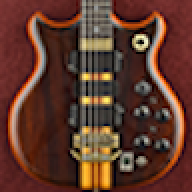
I'm pretty new to Alembics, but so far I've found the Q switch on my Distillate to be of no use to me.
That make more sense. I had a '87 Persuader and an '84 Exploiter, and can only image what it would have taken to make the bodies deeper!I don't think they do it with instruments that aren't thick enough...
They did it with a couple of Jason Newsted's basses (Persuader and Elan) and Mica (or Susan) said they won't do it again ever (too much work)

I added two-position Q switches to the two Alembics I had, along with some other electronic mods (all Alembic parts - except for one thing on each bass), which switched between the high Q filter and a standard tone roll-off control. Surprisingly, I preferred the latter, tonally.The affect of the Q-switch can mainly be heard in the "attack" of the note and is more pronounced in the lower range of the filter. There are a lot of unique tones to be found in the lower ranges of the filter, definitely worth taking time to explore. I rarely have the filters fully open and if I do never use the Q-switch in conjunction with higher frequencies. Enjoy your new Distillate!
Maybe one of the pickups has a low gain setting? You can set the gain for each pickup with the blue trimpots on the electronics board.Excellent! Thanks for the reply.
I've only had it about a week, so will definitely be playing around with it more. I have to say I was pleasantly surprised just how great this bass sounds. The neck pick-up is warm and punchy and the bridge is very Rick'ish, and to top it off, it's dead quiet! There's an awful lot of volume drop with both pu's selected, though. I'm not sure if there's something I can do to compensate for that through adjustments.
That wasn't the case with my two basses. I had to solder in the switch, in line with a resistor that I had to pull one leg out of its solder pad on a circuit board to install the switch. Not difficult but it definitely was not P-'N-P. Perhaps, after a certain date they became easy to swap out....it is easy to swap the two-position one for the three (0/+6/+9dB), circuit is modular so it is a plug and play mod.
I always thought the actual Series I and Series II pickups were the same, and that the difference was in the controls. Is that correct or am I mistaken?
Thanks, but you left out the master volume knob on the Series II.You are correct. The only electronic difference is that the Series I has a 3 position switch for adjusting the “Q” (the amount of resonance at the filter’s cut-off frequency) while the Series II allows for a continuously variable adjustment of that value via a knob.
That wasn't the case with my two basses. I had to solder in the switch, in line with a resistor that I had to pull one leg out of its solder pad on a circuit board to install the switch. Not difficult but it definitely was not P-'N-P. Perhaps, after a certain date they became easy to swap out.
Thanks, but you left out the master volume knob on the Series II.


