
• TalkBass has been independent since 1998. Add your voice.
    Create a free account to reply to discussions, view embedded media, and browse with fewer display ads.
    Join freeLog in
    Want zero display ads or expanded classifieds tools? Compare plans.

Alternative to my mini rig

never heard of them :)

Sorry, I'm not sure if the :) means you just happened to close with a :) or if you have heard of Tecamp and I missed something
scratchhead.gif


Anyway there's threads and reviews, if you're inclined to search.
 
No it is.

What is it, a sealed cabinet with ports?

"This cabinet has extra sound ports on the lower sides of the cabinet that allow more sound from the lower woofer, it also has a unique new interior structure design which now allows the woofer to work at extreme high volumes with very little effort."

Looks like ports on the bottom here:
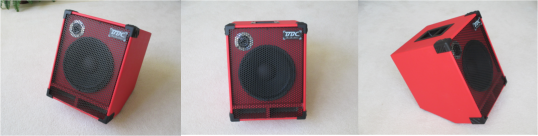
cabinet-product-rotate.png
 
What is it, a sealed cabinet with ports?

"This cabinet has extra sound ports on the lower sides of the cabinet that allow more sound from the lower woofer, it also has a unique new interior structure design which now allows the woofer to work at extreme high volumes with very little effort."

Looks like ports on the bottom here:

cabinet-product-rotate.png

You are mixing your marketing and cabs up. This kick back cab may have ports, but the cabs referenced with mixed drivers are sealed in the sense that the air space behind the drivers is sealed. The bottom drivers are in a sort of modified horn path, but you are only getting sound off of one side of the driver.
 
You are mixing your marketing and cabs up. This kick back cab may have ports, but the cabs referenced with mixed drivers are sealed in the sense that the air space behind the drivers is sealed. The bottom drivers are in a sort of modified horn path, but you are only getting sound off of one side of the driver.

Well besides what Brad said about it keeping up with a 810, I talked to someone today(not a salesperson) that told me that the cab sounds "massive", so it must perform very well.
 
Right. There are guys out there that thing 210 combo's are massive. Ask Brad what drivers are used in that cab. It will be telling.

So far it sounds like your basing your statements off your experience with the drivers and not have heard the cab. So until I hear it for myself I'll trust the ears of the guys I know.

 
So far it sounds like your basing your statements off your experience with the drivers and not have heard the cab. So until I hear it for myself I'll trust the ears of the guys I know.

I know the speakers, and the specs are posted. The nature of the design is as well. In a sealed cab, there is no way that driver paring will best an 810.

Physics dont lie, even if people on the internet tell tall tales.
 
  • Like
Reactions: seamonkey
I know the speakers, and the specs are posted. The nature of the design is as well. In a sealed cab, there is no way that driver paring will best an 810.

Physics dont lie, even if people on the internet tell tall tales.

Is there even a cab that small that cab surpass an 810?
Methinks it's unlikely.
That being said, I didn't notice their tank series handles 1200 watts... that's a helluva lot of juice.
 
Is there even a cab that small that cab surpass an 810?
Methinks it's unlikely.
That being said, I didn't notice their tank series handles 1200 watts... that's a helluva lot of juice.

I would also call that spec in to question. That is "peak" ratings. The 12PR300 can handle an honest 300 watts, and the 15PR400 is good for ~450 or so. They are adding the peak power handling of the drivers including the tweeter, when they should just be doubling the power handling of the 12.

 
I would also call that spec in to question. That is "peak" ratings. The 12PR300 can handle an honest 300 watts, and the 15PR400 is good for ~450 or so. They are adding the peak power handling of the drivers including the tweeter, when they should just be doubling the power handling of the 12.
Okay, now that is ridiculous. I've heard of people rating their setups using just peak power (mindly, it's mostly car sub lovers that do that), but all the drivers at once? That's a bit of a shady business strategy.
 
  • Like
Reactions: CL400Peavey
I tried something similar to the format in that cuboid 1215 with the down-firing 15, only I had the 12 down-firing and the 15 front-firing, and the box was ported. This was several years ago, before Glasstone or Xsonics or BoomBass. It was challenging and educational.
 
I tried something similar to the format in that cuboid 1215 with the down-firing 15, only I had the 12 down-firing and the 15 front-firing, and the box was ported. This was several years ago, before Glasstone or Xsonics or BoomBass. It was challenging and educational.

Any comments on the results? I guess you don't like the design or you would make a similar product.
 
Any comments on the results? I guess you don't like the design or you would make a similar product.


The basic configuration does some things well. It warms up the response and does have a bigger-cab feel. The low end still trades off against box size and efficiency just as Hoffman would have predicted. If a small cab with a lot of cone area is desired, this is a good way to do that. There is an interaction in the midrange caused by the path length difference that may or may not be desirable, depending on the specifics and what your goals are.

Using dissimilar woofers in the same airspace presents some challenges if we don't want one woofer to prematurely become the limiting factor. We have to take into account the cone area, motor strength, excursion, compliance, thermal characteristics, and impedance curve of each woofer, and then model them in a box whose internal pressure is being modulated by the other woofer. This isn't trivial... there's no relevant handy cookbook formula or computer program that I'm aware of, so the designer is pretty much on his own. However if carefully matching the woofers based on these characteristics isn't a high priority, then it gets a lot simpler - just figure out which woofer will be the limiting factor and rate the cab accordingly.

In addition, using a downfiring woofer with precision calls for taking the airmass in the slot into account (it partially couples to the cone, increasing the effective moving mass and thus modifying the T/S parameters accordingly), and calculating the amount of cone sag due to gravity (which reduces the effective xmax of that woofer). Andy Lewis of Acme wrote an article on the subject of downfiring woofer analysis for SpeakerBuilder magazine years ago. I think it used to be on his website but I don't see it now.
 
Last edited: