
After riding along with this. I remember doing silly things too! My tri-amped system 

TalkBass has been independent since 1998. Add your voice.
Create a free account to reply to discussions, view embedded media, and browse with fewer display ads.
Join free Log in
Want zero display ads or expanded classifieds tools? Compare plans.


I don't see the isobaric part, I do see a simple push-pull driver pair.
So it's a VENT-ed box with an ISO-baric driver arrangement. Hence Iso-Vent. I get it. Didn't someone say exactly that on about page 1? Why has there been all this folderol about folded horns?
That's what I understood...but then I'm new around here.Because the air pressure between the speakers is supposed to be constant? ….

After riding along with this. I remember doing silly things too! My tri-amped system
I don't see the isobaric part, I do see a simple push-pull driver pair.
Trouble is, I still use this, in part or wholeAnd you survived to tell the tale!
Im not defending the OP. I see he is overlooking good advice (Ive followed the whole thread), but there is no need for us to get bent out of shape.
Not sayin you in particular DJ Bebop...its just seemd like a good time to chime in.
I think Mr Andy is handling this rather well.
Nicholas Orick please run the test!

Ahhh...the venerable old 4530. It did indeed operate as described, working primarily as a direct radiator with the back-loaded horn supplementing it in the lower range. JBL offered several variations on this concept--with dual 12's and single and dual 15 versions. The horn was more curved than folded. They rocked pretty good for the day, and as direct radiators, sounded pretty good above 150 Hz or so. For the era...I believe the JBL 4530 is supposed to work the opposite. The driver functions as direct radiators at the top of the cabs range and the horn takes over at the bottom of the range. The length of the horn is much longer on the JBLs.
Thank you for that!And you survived to tell the tale!
Im not defending the OP. I see he is overlooking good advice (Ive followed the whole thread), but there is no need for us to get bent out of shape.
Not sayin you in particular DJ Bebop...its just seemd like a good time to chime in.
I think Mr Andy is handling this rather well.
Nicholas Orick please run the test!
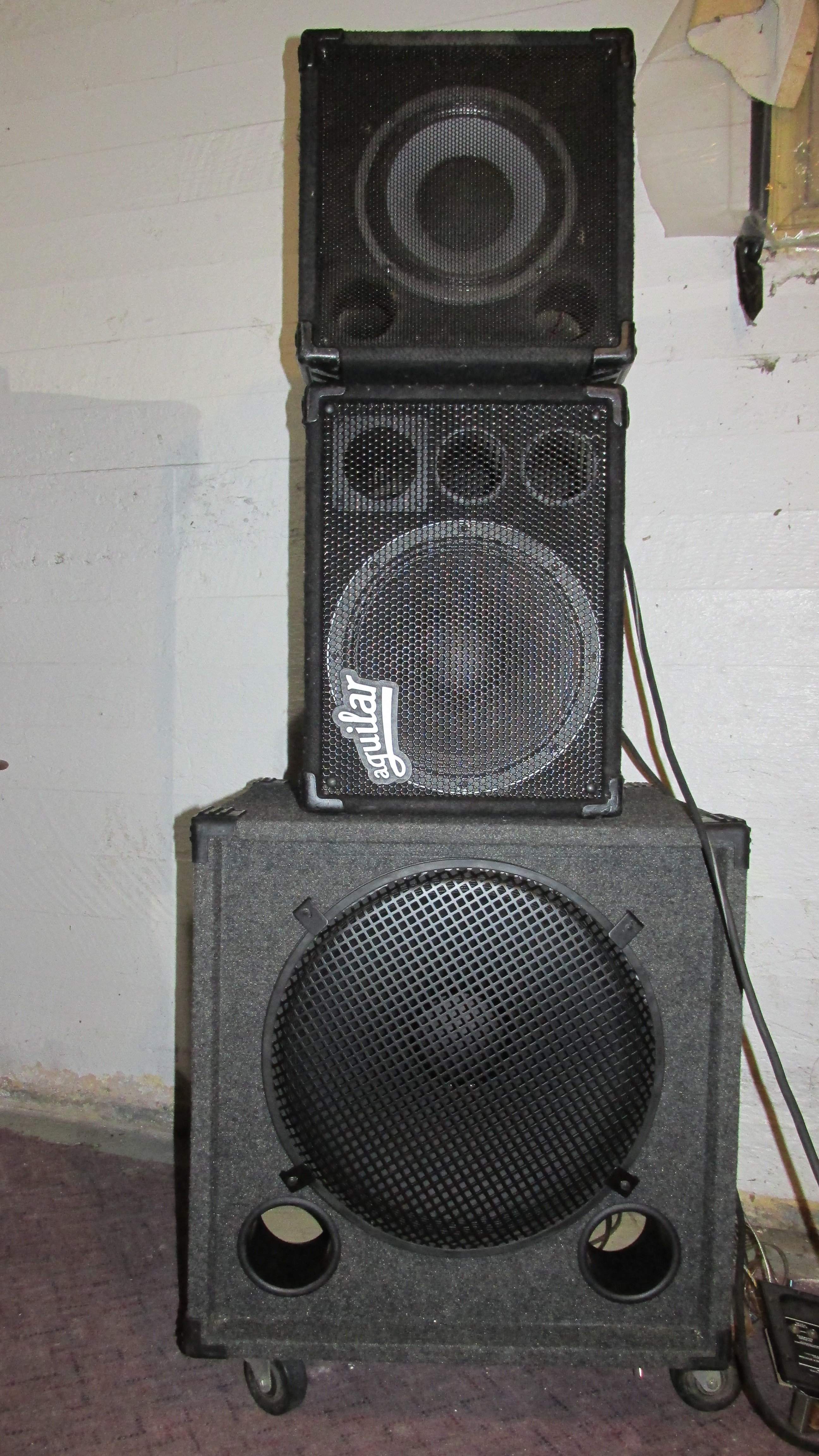
I still use the Aguilar 1x12 with the 1x18 bi-amped as my imitation mini Phil Leah systemAnd you survived to tell the tale!
Im not defending the OP. I see he is overlooking good advice (Ive followed the whole thread), but there is no need for us to get bent out of shape.
Not sayin you in particular DJ Bebop...its just seemd like a good time to chime in.
I think Mr Andy is handling this rather well.
Nicholas Orick please run the test!
I still use the Aguilar 1x12 with the 1x18 bi-amped as my imitation mini Phil Leah system
Now that he's gone Hartke though...
Ahhh...the venerable old 4530. It did indeed operate as described, working primarily as a direct radiator with the back-loaded horn supplementing it in the lower range. JBL offered several variations on this concept--with dual 12's and single and dual 15 versions. The horn was more curved than folded. They rocked pretty good for the day, and as direct radiators, sounded pretty good above 150 Hz or so. For the era...

It may be worth noting that the Orange Isobaric design sounds much tighter, and didn't have any of the weird headache inducing low-mid honk that the Ampeg cab produced. The speakers Orange put into their boxes are nothing like the push-pull drivers in that Ampeg cab.
Every time I used the IsoVent, it gave me terrible headaches because of how it coloured the signal.
In fact, before I stopped using one entirely, I was taking Tylenol prophylactically.
The 15s in the lower chamber aren't really subwoofers. They're still bass-guitar low-mid drivers.
That B52 looks like a copy of the Cerwin Vega folded horns my DJ buddy used to use. Those have completely different drivers again. Just because something is a folded horn, doesn't mean all folded horns act the same. Those CW folded horns definitely had a "brown note" that rang much louder and harder than the rest. They were pretty peaky.
Also, I was struck by your mentioning those JBL VRX array speakers. You know the tweeters in those will rip right through you, right? They're designed for very, very long throw with knife-sharp projection. Even mounted high up, we still had to dial them back in the controller because they are so powerful. You really don't want to use one as a bass cabinet.
Was... I thought we had established that it isn't a folded horn...just a plain old bass reflex, i.e., a 'vented' box. Try to keep up....If the Isovent is constructed similar to this,
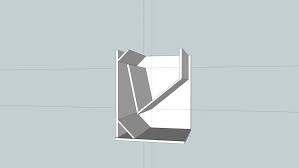
IMHO it has elements of a short folded horn. Like the EV cabs I listed, the horn probably operates at the top of the cabs range rather than at the bottom.
If the Isovent is constructed similar to this,
View attachment 3681807
then I see it more of a pure vented design.
Do you need for me to post some giant, irrelevant pics for you?I am not saying it's a folded horn. My contention is it's an experiment that is caught somewhere between ported, folded horn, and tapped horn. IMHO it's neither of these in a pure sense. It's closest to what we commonly call a sub scoop.
It's most like an EV T18, EV SH-1800, or JBL 4530 except it uses isobarik loading.
T18
View attachment 3681792 View attachment 3681793
SH-1800 Basically the same cab at the T18, but different woofer in a different orientation.
View attachment 3681784
4530
View attachment 3681794 View attachment 3681785
Electro Voice SH-1810L-ER literature say the box operates as a horn for much of it's range and works as a ported box in the low frequencies. The box is described as a "SubScoop".
I believe the JBL 4530 is supposed to work the opposite. The driver functions as direct radiators at the top of the cabs range and the horn takes over at the bottom of the range. The length of the horn is much longer on the JBLs.
See my other post Ampeg Isovent - Jack Plate Circuit Board.
And here's what the inside of a 4530 looks like.
View attachment 3681786
The term isobaric is highly misleading, by the same definition a conventional 210 or 410 is isobaric since there is no pressure difference between the front surfaces of the drivers or the back surfaces of the drivers.
IMO, push-pull is a much more accurate description of this configuration.
Was... I thought we had established that it isn't a folded horn...just a plain old bass reflex, i.e., a 'vented' box. Try to keep up....
 .
.



