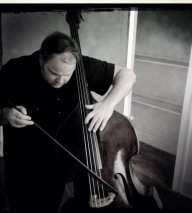
I say "no," but I understand the temptation. Our concept of what is enough bass in an orchestra has been influenced by decades of producers and recording engineers boosting the bass in the final mixes of orchestral recordings. You can never have enough bass anymore, to keep up with these idealized recordings that are really only possible in real-life with 10-12 double bassists. The major European orchestras can easily field 10 and do so for the big works (and they sound amazing in-person), but the major metropolitan North American orchestras are battling to keep 8 on the payroll. As you go down the totem pole, 6, 5, 4 . . . . pathetic, but that's the reality. So audiences, conductors, and musicians themselves are expecting a bass sound that they hear on youtube, and you ain't doin' it, so they think you play like a wus. So that's why you want to play louder. I've been there. It sucks. And that's when I, myself, considered amplification. I never actually did it. Here's why.
Remember that this bass boost was also exacerbated by cost-saving motives, when recording studio contractors figured out that you can hire one bass player and make them sound like 8. We've done those recording gigs, where you, the only bassist, draws your sound, and in your headphones, you hear this amazing giant bass section.
If I would have suggested the amplifier, it would give the orchestras, the conductors, & the contractors, absolutely no reason to find a way to make the bass sections bigger.
Playing louder than is possible on the bass, not only creates a gross sound, you're not giving anyone any reason to solve the not-enough-bassists problem.
I've played late 18th century/early 19th century Germanic opera orchestra gigs where they will contract six+ french horn players, but only contract four bassists. Then they expect the bassists to overplay to match the ideal recording that everyone has in their head. And of course, we do, because we don't want to look like wusses, but really when we do that, you eliminate further, any chances of the orchestra actually fielding the correct size of the bass section. Bring an amp, and the this problem increases exponentially.
Remember that this bass boost was also exacerbated by cost-saving motives, when recording studio contractors figured out that you can hire one bass player and make them sound like 8. We've done those recording gigs, where you, the only bassist, draws your sound, and in your headphones, you hear this amazing giant bass section.
If I would have suggested the amplifier, it would give the orchestras, the conductors, & the contractors, absolutely no reason to find a way to make the bass sections bigger.
Playing louder than is possible on the bass, not only creates a gross sound, you're not giving anyone any reason to solve the not-enough-bassists problem.
I've played late 18th century/early 19th century Germanic opera orchestra gigs where they will contract six+ french horn players, but only contract four bassists. Then they expect the bassists to overplay to match the ideal recording that everyone has in their head. And of course, we do, because we don't want to look like wusses, but really when we do that, you eliminate further, any chances of the orchestra actually fielding the correct size of the bass section. Bring an amp, and the this problem increases exponentially.