
Enjoy the benefits of a premium membership!
Upgrade Account
-
TalkBass has been independent since 1998. Add your voice.
Create a free account to reply to discussions, view embedded media, and browse with fewer display ads.
Join free Log in
Want zero display ads or expanded classifieds tools? Compare plans.
You are using an out of date browser. It may not display this or other websites correctly.
You should upgrade or use an alternative browser.
You should upgrade or use an alternative browser.
Another neck dive thread (G&L L2500 Trib)
- Thread starter Raman
- Start date
More options
Who Replied?

No need to mod the bass itself.I’ve been blessed with very comfy basses for the better part of my playing years. For instance, the bass that I most played and gigged with in the last 20 years was an Ibanez EDA905, which was perfectly light and well balanced.
Then a few years back, I switched to a G&L L2500 Tribute, because I fell in love with its heavier body, pickups and tones. And I’m still in love with it!
Except it came with neck dive. At first, I thought I would get used to it. But a few years have gone by and it still bothers me. I especially feel it limits my right hand, because my right forearm must permanently push down on the body in order to keep my left hand from having to hold the neck up. All in all, I lose dexterity on both hands, however little.
I’ve been reading about solutions, such as getting a wider leather strap. But I fear that would just further involve my shirt in the diving situation… I also checked about replacing the tuners for ultra-light ones. But between their price, the shipping and import fees, plus the luthier job in drilling new holes for them, it’s a costly solution. Then I read about adding weight to the bottom half of the bass, which plainly seems wrong…
Then I read about one guy who simply moved his strap peg (bridge side) up on the body of his instrument, so as to better redistribute and balance the weight. Now that sounds like a smart solution!
Has anybody ever tried this? How does one go about finding the perfect spot? Any warnings about drilling a new peg hole in a bass?
Easy solution.
I wrapped this tape around the bottom of one of my straps, then covered the lead tape with duct tape, and covered the whole thing with a seat-belt pad.
I've been using this strap for three years.

Another vote for Hipshot Ultralite tuners (or the Gotoh Resolites). Very good tuners, much lighter - you'll find they improve the situation dramtically. I have a 6.6 pound P bass that balances beautifully - in part because the tuners are light. That wouldn't happen with those old clunky steel tuners.
The thing about the strap idea is it doesn't solve the basic problem that the bass is out of balance. All it does is transfer the imbalance from your supporting hand onto your left shoulder. Even a slight imbalance will stop you from playing your best, especially over a 3 hour gig. Light tuners may work, or moving the strap buttons, as others have said. I moved a Sire bass on because it was marginally out of balance, not much but I soon enough decided I didn't want to get used to it. Replaced with a Yamaha, perfectly balanced, never looked back. Brutal decision, but could be best for you in the long run

Adding a new button is really no big deal. I suggest adding the new button but leave the old one there. No empty hole to plug.
You can Youtube plenty of videos showing how to install a strap button. If you're not comfortable doing it, then any tech or luthier will do it for not much money.
You can Youtube plenty of videos showing how to install a strap button. If you're not comfortable doing it, then any tech or luthier will do it for not much money.

It might be worth experimenting with exactly what weight will solve your problem.
DIY approach, no drilling:
First, find out what your current tuners weigh.
Second, find out what the G&L light tapered tuners weigh.
Third, find out how many of your current tuners have to be removed to make the bass sit properly (ie. no neck dive).
Fourth, do the math whether going with the replacement G&L tuners will solve your problem.
If the math shows a borderline situation consider if a combination of strap button relocation with replacement G&L tuners would solve the problem.
If not, you should buy another L2500. They are very consistent in quality and you already love it.
If it were me, and I loved my tribby too much to part with, I`d buy an appropriately sized reamer, rent/borrow a table top drill press, install a Gotoh Carbon fiber tuner set (lightest tuners available) and feel very accomplished at the end of it all.
I hope you find a good solution that makes you happy.
DIY approach, no drilling:
First, find out what your current tuners weigh.
Second, find out what the G&L light tapered tuners weigh.
Third, find out how many of your current tuners have to be removed to make the bass sit properly (ie. no neck dive).
Fourth, do the math whether going with the replacement G&L tuners will solve your problem.
If the math shows a borderline situation consider if a combination of strap button relocation with replacement G&L tuners would solve the problem.
If not, you should buy another L2500. They are very consistent in quality and you already love it.
If it were me, and I loved my tribby too much to part with, I`d buy an appropriately sized reamer, rent/borrow a table top drill press, install a Gotoh Carbon fiber tuner set (lightest tuners available) and feel very accomplished at the end of it all.
I hope you find a good solution that makes you happy.

I love everything about my tribby L2500 except this. I've considered investing in light-weight tuners, but had a hard time finding which ones would fit with minimal fuss and also shave off enough weight to make it hang right. It's an expensive upgrade to a mid priced import that may not fix the problem.
At the end of the day, I don't play it enough to justify the expense, but I'm curious what you decide to do.
At the end of the day, I don't play it enough to justify the expense, but I'm curious what you decide to do.

- Aug 21, 2003
- 11,588
- 18,607
- Disclosures
- A-Designs Mike Lull GK Tsunami Cables GHS Strings RMI Basswitch Nordstrand Pickups Darkglass
I have a couple of Tribute L2500s and I’m not noticing it BUT I’m using a 4” wide leather strap.

THIS is a cautionary tale for those building parts basses: It's often possible, as we have here, of spec'ing a very light body and buying serious (heavy) tuners for the neck, and provoking Gravity to pull this on you.
Over the years, I've read tons of suggestions as to how to 're-balance' a bass, but the only successful method I found was a replacement bass that DID balance well.
Over the years, I've read tons of suggestions as to how to 're-balance' a bass, but the only successful method I found was a replacement bass that DID balance well.
I had a neck divey Gibson SG faded bass & I just dealt with it. Sold it & a few months later found a SG Standard bass that was much much heavier, but not absurdly so. Love it just as I love the previous bass.. score.
I seem to have lucked out, because I own a Gibson Thunderbird that balances perfectly, even with a 2" strap. I must have hit the lotto because it's also relatively light @ 9#ish & has an ebony fretboard. Killer instrument.
I seem to have lucked out, because I own a Gibson Thunderbird that balances perfectly, even with a 2" strap. I must have hit the lotto because it's also relatively light @ 9#ish & has an ebony fretboard. Killer instrument.

A high mass bridge adds weight to the body. Just another thing to help balance neck dive.

Put this on your strap
https://www.amazon.com/gp/aw/d/B085Z1MC7R/ref=ox_sc_saved_image_2?smid=A2CA4S7KGMT2N3&psc=1
https://www.amazon.com/gp/aw/d/B085Z1MC7R/ref=ox_sc_saved_image_2?smid=A2CA4S7KGMT2N3&psc=1
As an Amazon Associate, TalkBass may receive commissions from qualifying purchases made via links on this site.

I have the same bass and no neck dive at all. I have a wide leather strap...

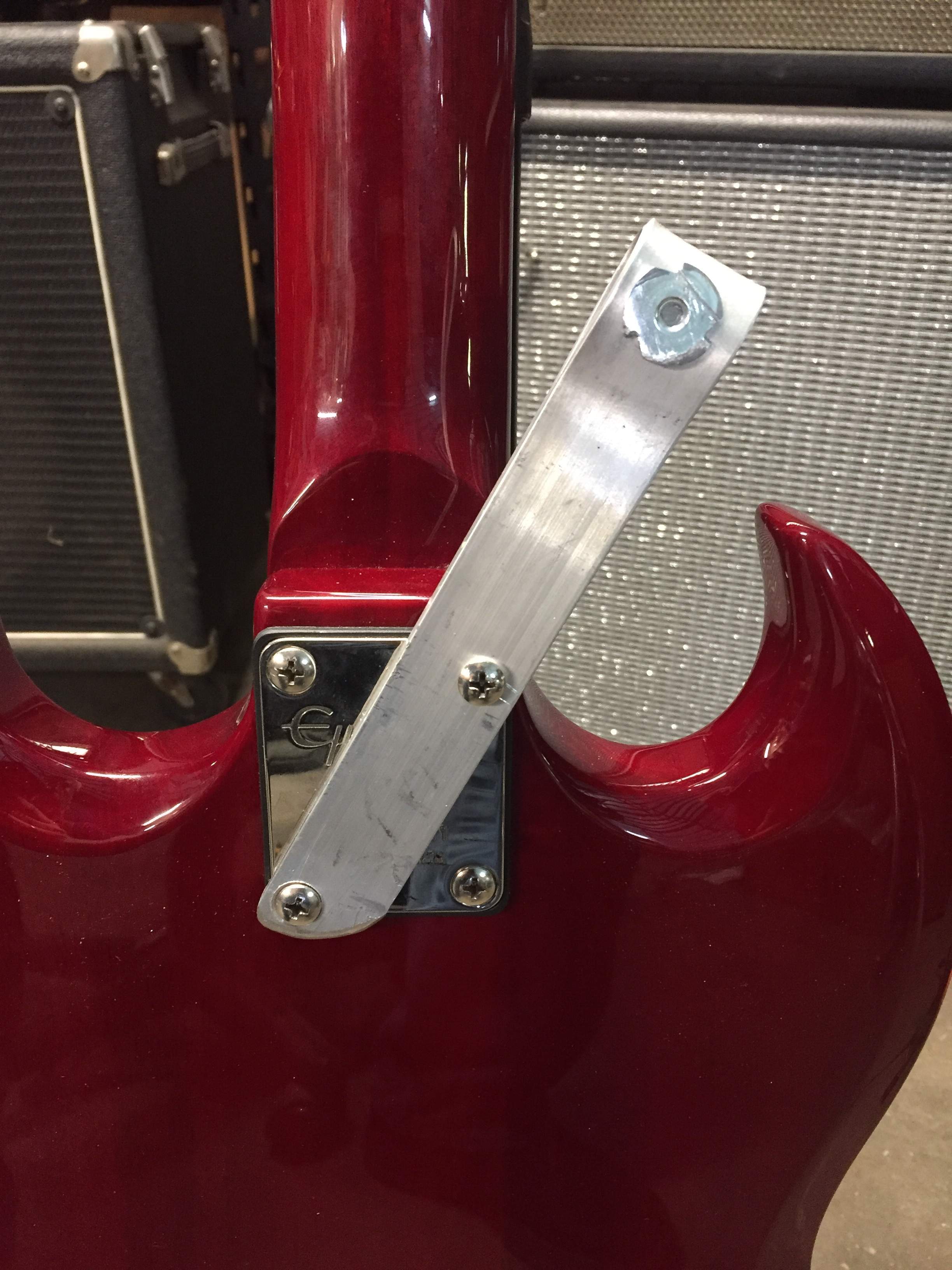
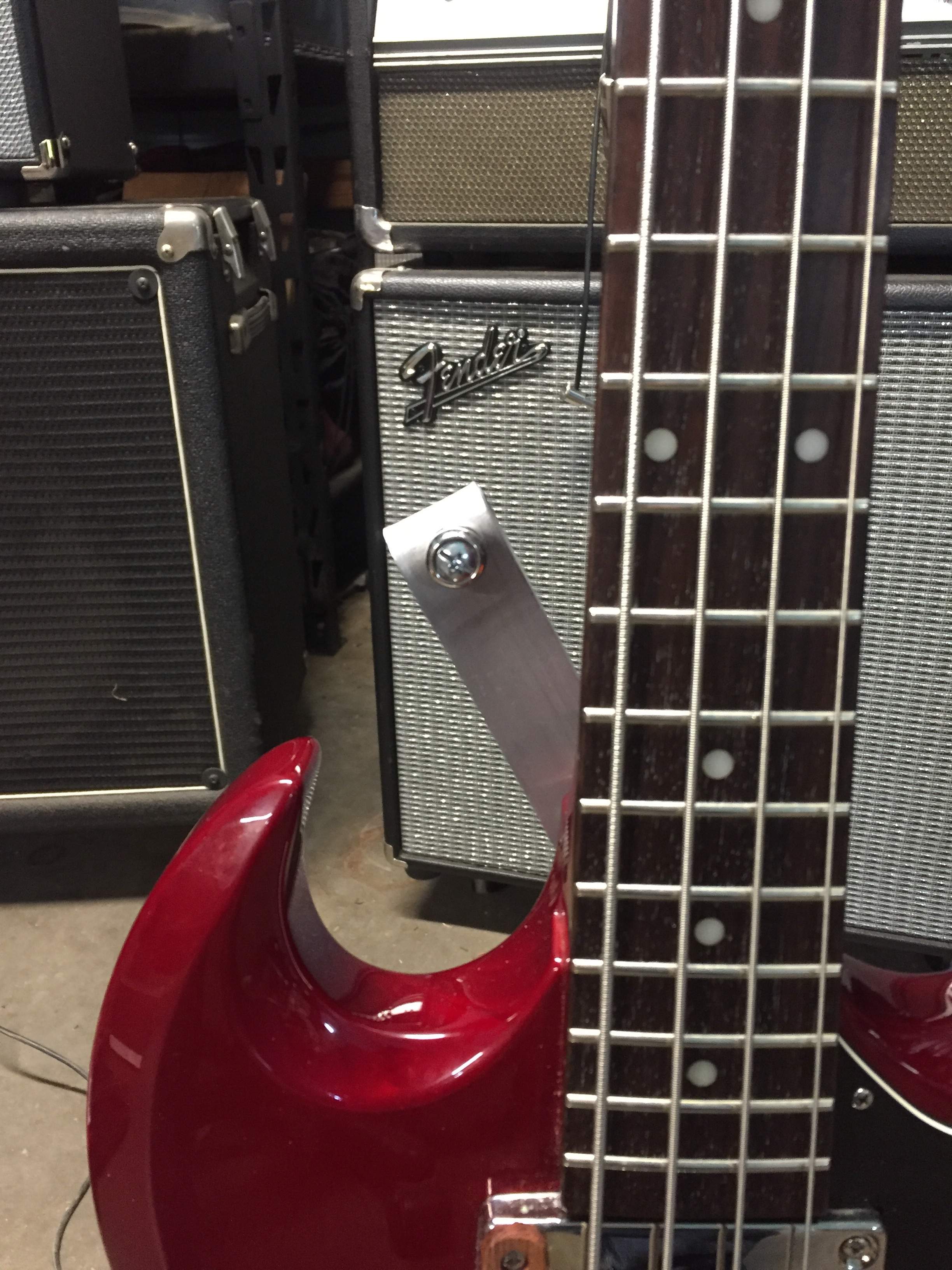
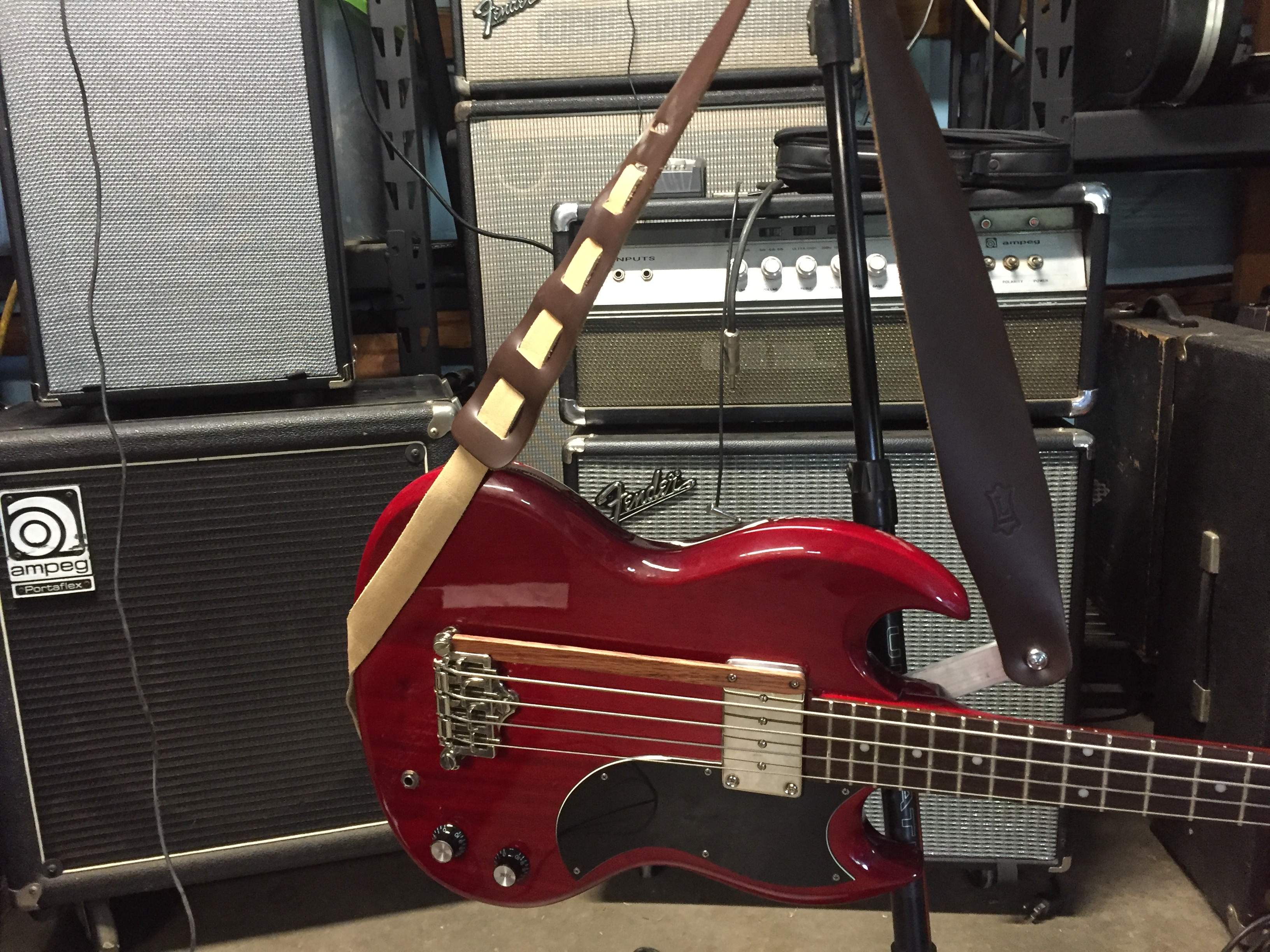
Aluminum strap across the neck screws to put the neck strap button closer to the headstock works well.
A couple attached photos should give you the idea, but it’s on an Epiphone EB0 that I guarantee had worse neck dive than your G&L prior to the modification. Its neck strap button was originally on the upper right neck screw.
Total material cost was about $8. Total time was about an hour.
A couple attached photos should give you the idea, but it’s on an Epiphone EB0 that I guarantee had worse neck dive than your G&L prior to the modification. Its neck strap button was originally on the upper right neck screw.
Total material cost was about $8. Total time was about an hour.

Finally! Someone who did it. I was going with this video, which seems pretty convincing to me. I was hoping for more people having successfully done it to confirm before I myself drill a hole in my bass. But unless I missed it, you're the 1st one with direct testimony.I repositioned the strap pin on my G&L 2500, and most of my other basses too. It changes the center of balance and has made my life MUCH easier!
It just seems like the most elegant and economic solution.
I might try adding some Guitar Gummy to my strap first and see how that goes. But the idea of the bass itself being balanced appeals more to me than fighting an unbalanced instrument with friction.
Last edited:

I have several basses with the button moved up and none have any neck dive, but my USA L2500 balances perfectly on a 3"-3.5" leather strap with the button in the standard position. I don't know about a narrow nylon strap, but it's never been an issue with any of my leather straps.
If moving the button doesn't completely fix it, you can order the USA G&L ultralight tuners directly from the G&L online store at glguitars.com.
It doesn't get much higher mass than a stock G&L bridge.

If moving the button doesn't completely fix it, you can order the USA G&L ultralight tuners directly from the G&L online store at glguitars.com.
A high mass bridge adds weight to the body. Just another thing to help balance neck dive.
It doesn't get much higher mass than a stock G&L bridge.
I just remembered I had a clamp that would be strong enough to hold my strap against the body of the bass, while having rubber ends so it wouldn't damage the finish. So I clamped the end of my strap at around the spot where the dude in the video above put his peg. It does reduce the diving a lot! I think I have my solution then.
I'm thinking I'd put the new peg around the same height, but maybe at the back of the bass rather than on the edge of the body.
Now, I've never drilled a hole in finished wood (or nowhere that it mattered). Can I just drill away or are there precautions to take: For example in order to avoid cracking the finish around the hole?
I'm thinking I'd put the new peg around the same height, but maybe at the back of the bass rather than on the edge of the body.
Now, I've never drilled a hole in finished wood (or nowhere that it mattered). Can I just drill away or are there precautions to take: For example in order to avoid cracking the finish around the hole?


