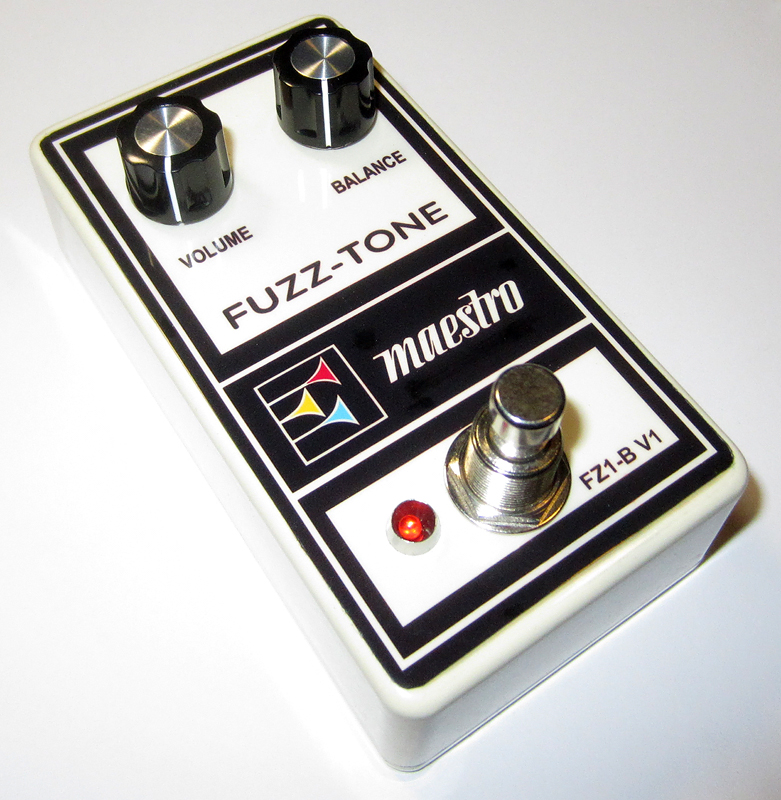
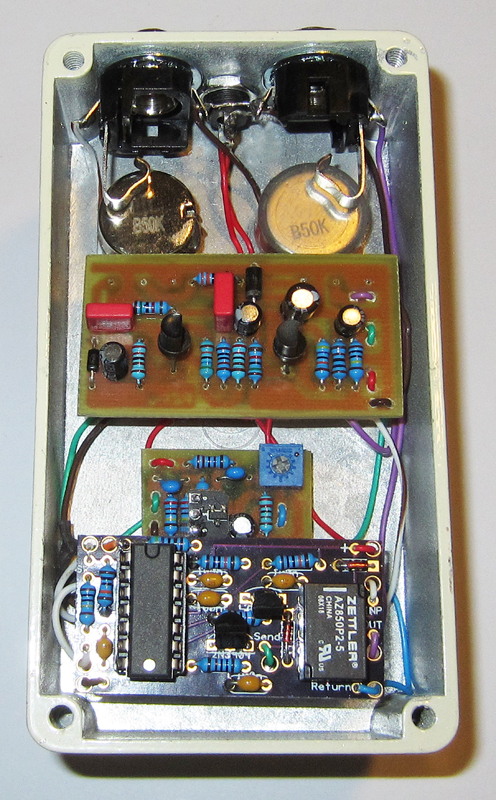
I posted this to Pedal PCB, but thought I'd post it here as well in case anyone has thoughts (I'm sure you do) about bassifying the muff circuit:
I think if you are going this route, there are a few things that matter to bass and that you can socket:
1: Clipping caps: seems like 47n is ideal, but worth experimenting
2: Coupling caps: standard is 100n. I thought that 220n might be a little high. I have read that it may not matter if you change all of them.
3: C2, C5, C8 (at least on the Mudbunny schematic): Russian/Ram's are 470 and the Civil War is 430. Civil War has a tighter bottom end with a little more grit on top. Russian/Ram's have a looser bottom end with a smoother top. Both are good, just depends on what you'd like. I haven't tried 450, but would like to.
4: Clipping diodes: all kinds of things possible. Leave first ones out for more low end. Standard seems SI first pari and then a switch on the second pair. I like LED in the 2nd set.
Resistors: Of course, these matter, esp in making it higher or lower gain and the overall sound that makes the version—gives it the fuzziness of a ram's head. In terms of the bass response, though, the resistors seem to matter less. If you aren't using a mids switch/pot, then there are some things that do matter: R18/R19 (on madbean) 22/20 for Russian/Civil War and 33/33 for Ram's Head. Higher values roughly equal more mids. They work in tandem with C10/C11, so if you are thinking mids, think about how those two caps/resistors work together.
Transistors: Lots of people say they don't really matter as long as you get the HFE that you want. I've experimented a bunch and in the mix of things, it's hard to say what really matters. I will say that the W&C TFR uses 5088's for the first three and then a mystery transistor in the last/volume position (Q4 on madbean). The last transistor determines output. So, if you want to mess around with transistors a little bit, just make the first three 5088's and experiment with the last one.
And, of course, everything is interactive. You can get lost in the weeds with the intricacies of the muff. I think that the W&C TFR is the best one that I've tried. It has a very mellow, laid back tone that you can have on all the time. They have figured out a really sweet deep dive combo of parts. That said, side jack only without clipping options and only a flat mids option... so the form factor isn't ideal for modern pedalboards. So, it's still worth rolling your own AND I think that if you experiment with the caps, you will get pretty close to the bass tone/response that works for you.
When experimenting and listening to the results, ask yourself:
- How tight is the bass? Does it matter if it's tight or loose? Does that matter to how it sits in the mix?
- Is the bass heavy but the rest of the signal kind of weak/ill defined? Does that matter?
- Where is the signal being clipped? Top end, or all through?
- Is there enough clean bass coming through?
- Is the lower end clipped in a way that works or makes the signal ultimately less distinct?
- If I put a boost/drive in front of the muff, does it resolve some of the eq issues?
- Is the overall sound strong/intense, or looser and less intense? What works better?
- Are there dynamics to the tone? Or is it one intense pulse?
Pitfalls: See what sits in the mix best and not what is the loudest/gnarliest/fuzziest. A little subtlety can be good.
- Adding too much bass
- Overpowering with the mids
- Clipping the whole signal so that it gets mushy
- Making it too high gain