
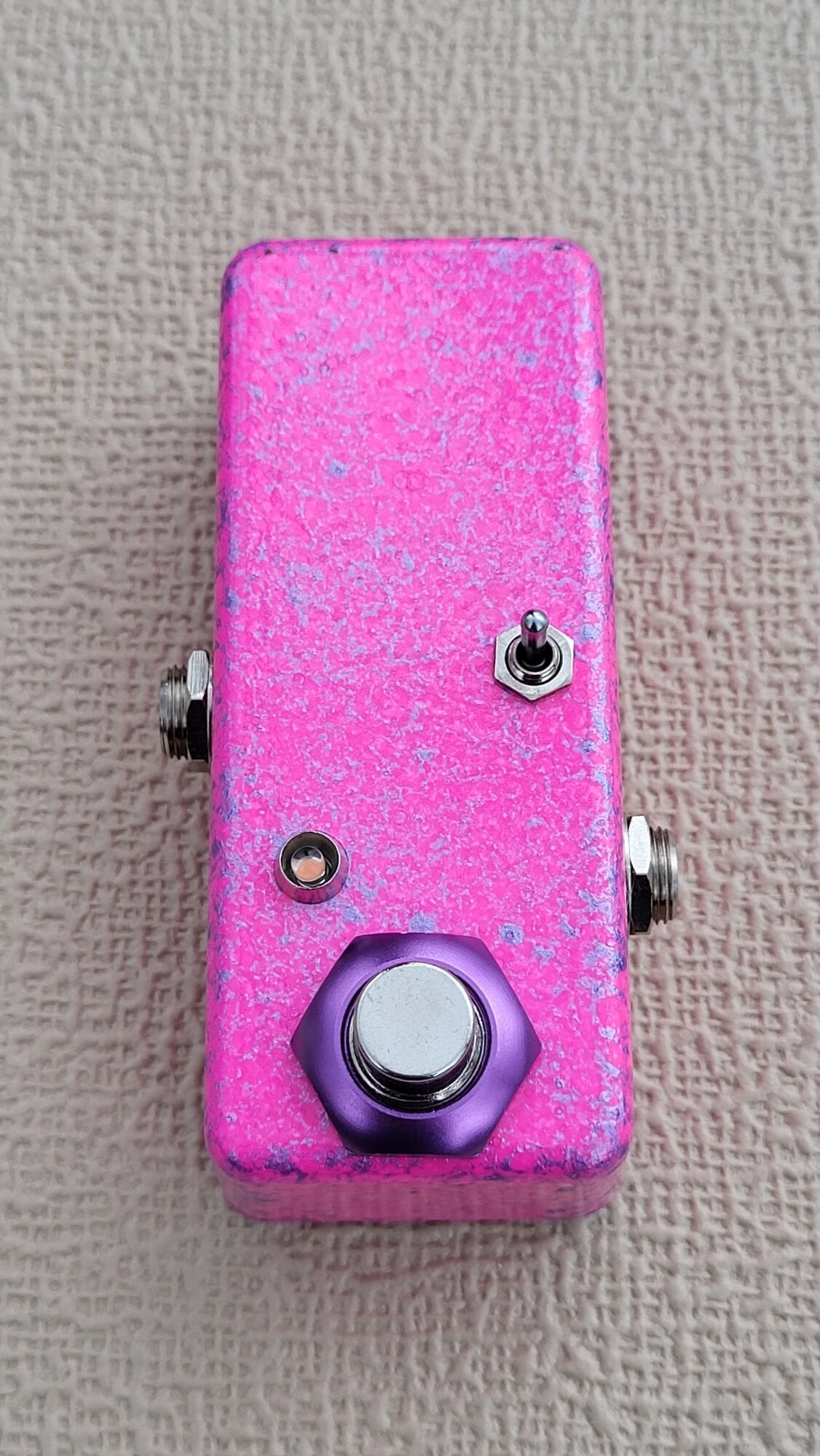
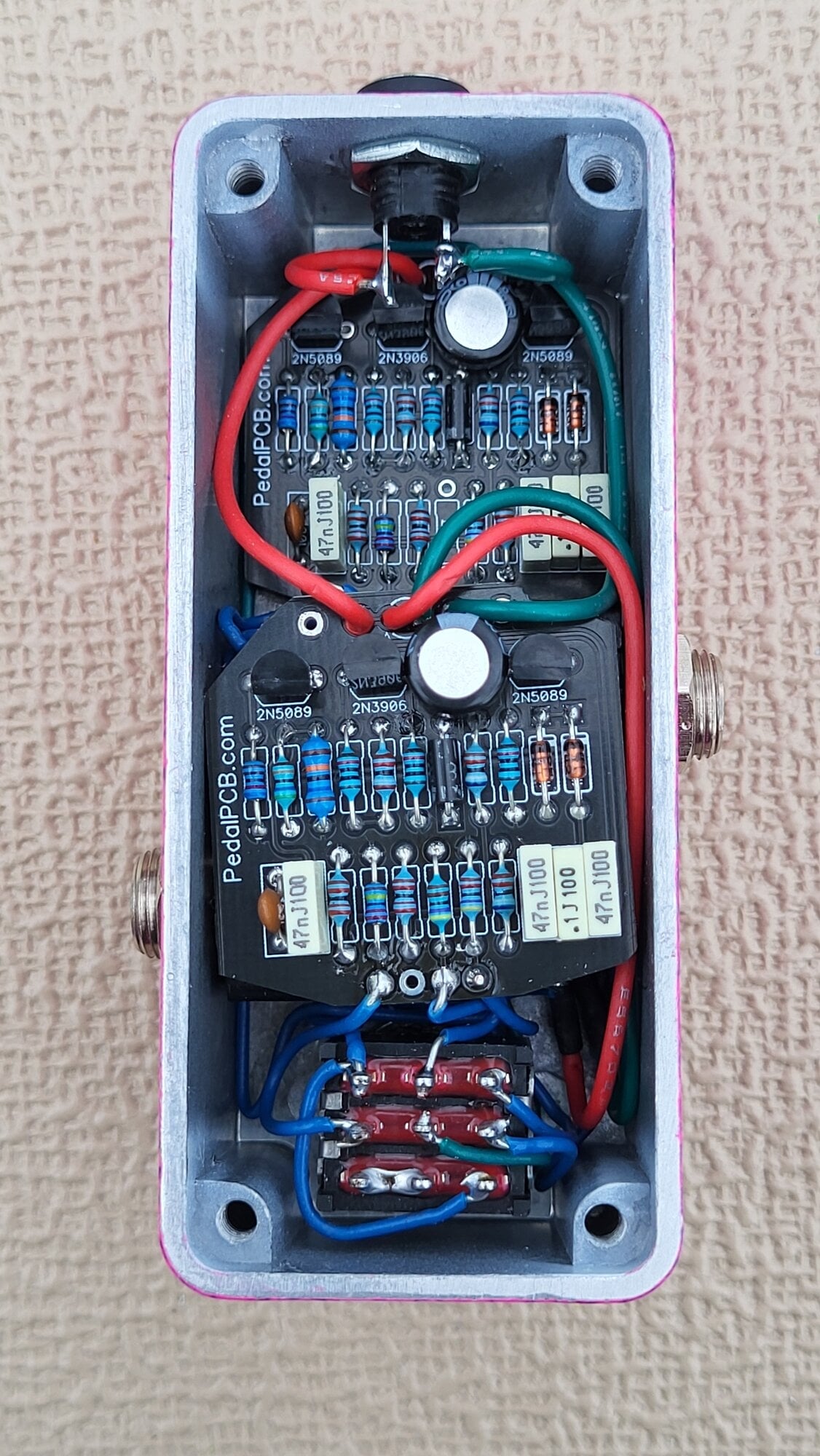
My first new build of 2026. Two PedalPCB Squidward octavers squeezed into a 1590A enclosure. There's a sub-mini DPDT switch to bypass the second pcb. This pedal has no knobs and only two options: dirty +1 octave fuzz, or very dirty +2 octave fuzz.

Enjoy the benefits of a premium membership!
Upgrade Account
-
TalkBass has been independent since 1998. Add your voice.
Create a free account to reply to discussions, view embedded media, and browse with fewer display ads.
Join free Log in
Want zero display ads or expanded classifieds tools? Compare plans.
You are using an out of date browser. It may not display this or other websites correctly.
You should upgrade or use an alternative browser.
You should upgrade or use an alternative browser.
Any DIY pedal builders on TB? Strut your stuff!
- Thread starter SubHuman
- Start date
More options
Who Replied?


Love the vibe/look of the finish & that contrasting washer on the footswitch! What a head turner!!!!My first new build of 2026. Two PedalPCB Squidward octavers squeezed into a 1590A enclosure. There's a sub-mini DPDT switch to bypass the second pcb. This pedal has no knobs and only two options: dirty +1 octave fuzz, or very dirty +2 octave fuzz.
View attachment 7453972
View attachment 7453973

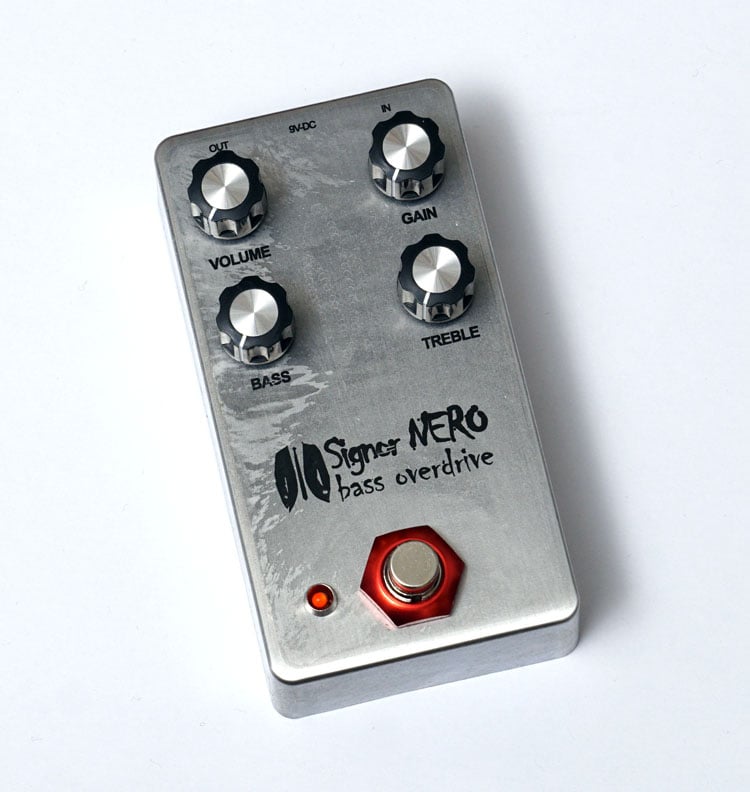
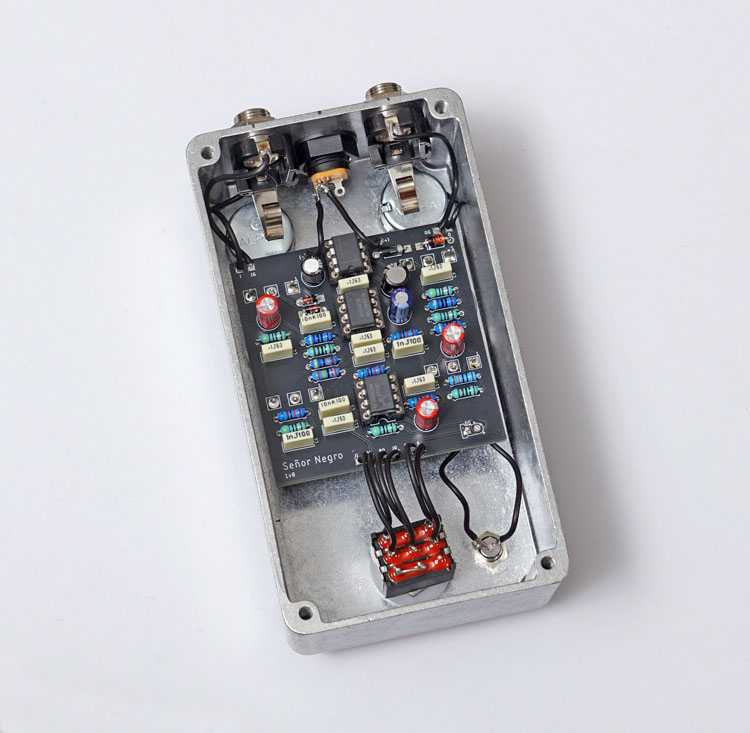
Mr. Black BassOverdrive
"The best overdrive/pre-amp available for your bass"
It is a slightly modified Mr. Black ThunderClaw
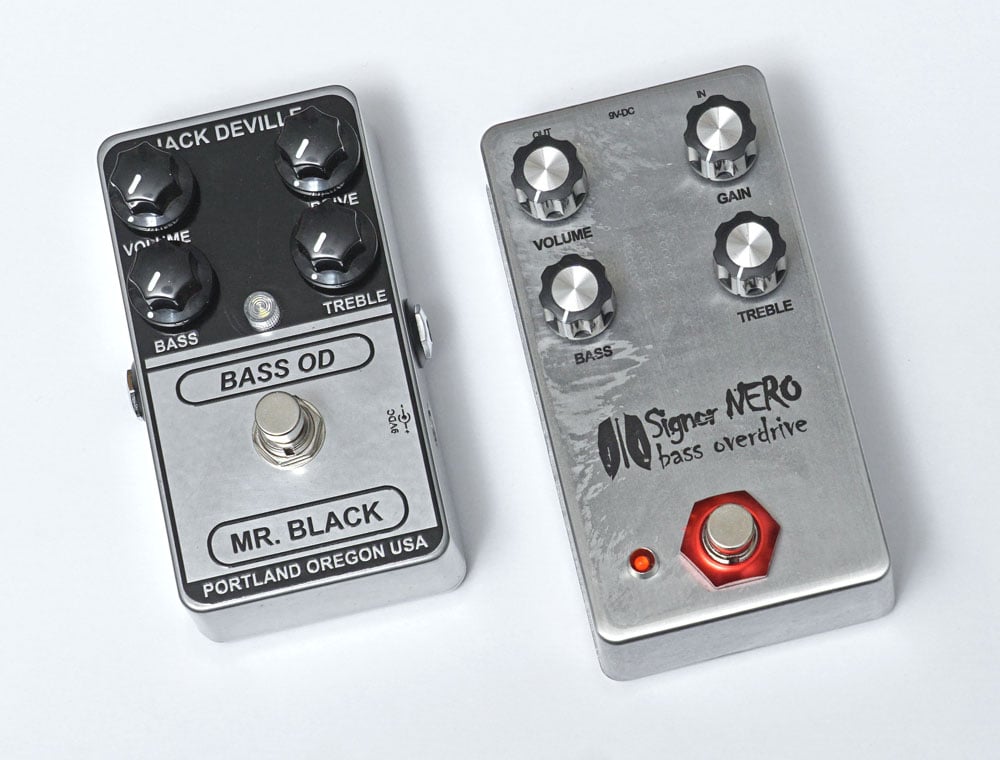
"The best overdrive/pre-amp available for your bass"
It is a slightly modified Mr. Black ThunderClaw

Passinwind
I know nothing.
- Dec 3, 2003
- 23,079
- 46,048
- Disclosures
- Designer/Toaster Tech @ Passinwind Electronics
Taking a break from pedals and finally finishing up my long delayed 100 watt tube amp build:
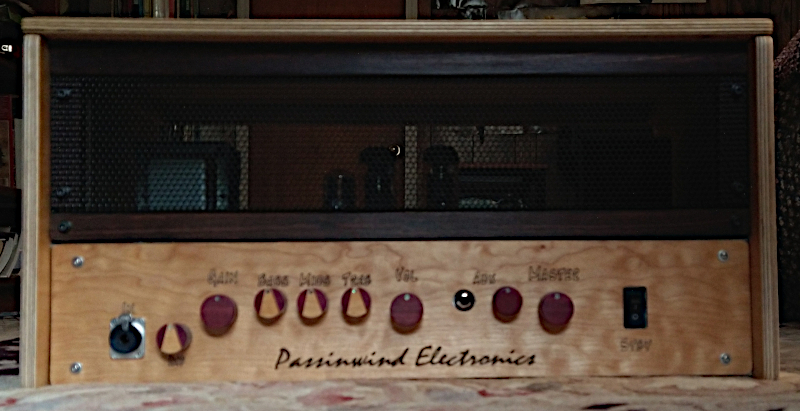
12SL7, 2 x 12AU7, 4 x EL-34. I'll do a hardwood shell eventually, probably myrtle wood. Not even all the way bolted together yet, but it already sounds quite good.
12SL7, 2 x 12AU7, 4 x EL-34. I'll do a hardwood shell eventually, probably myrtle wood. Not even all the way bolted together yet, but it already sounds quite good.
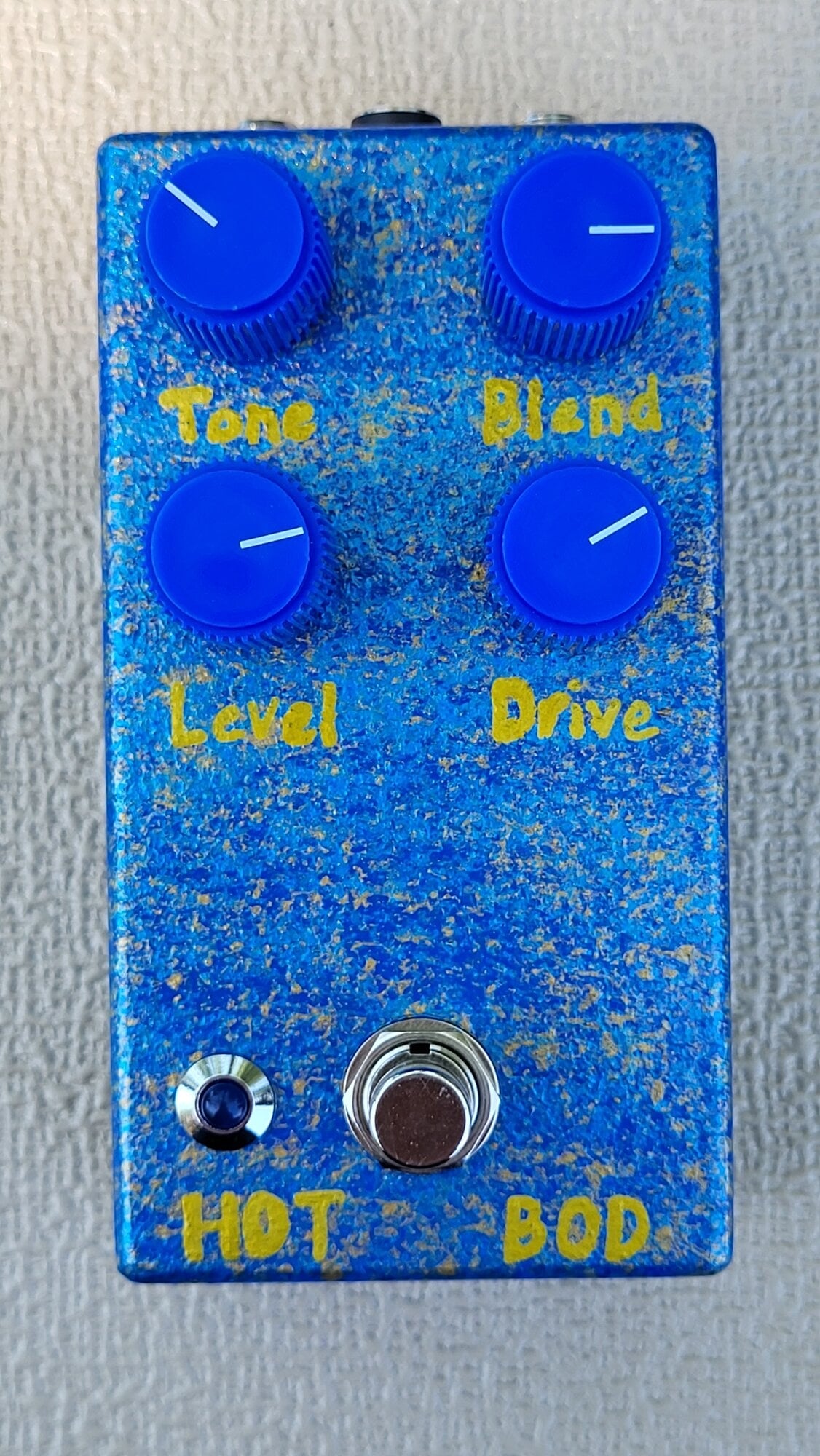
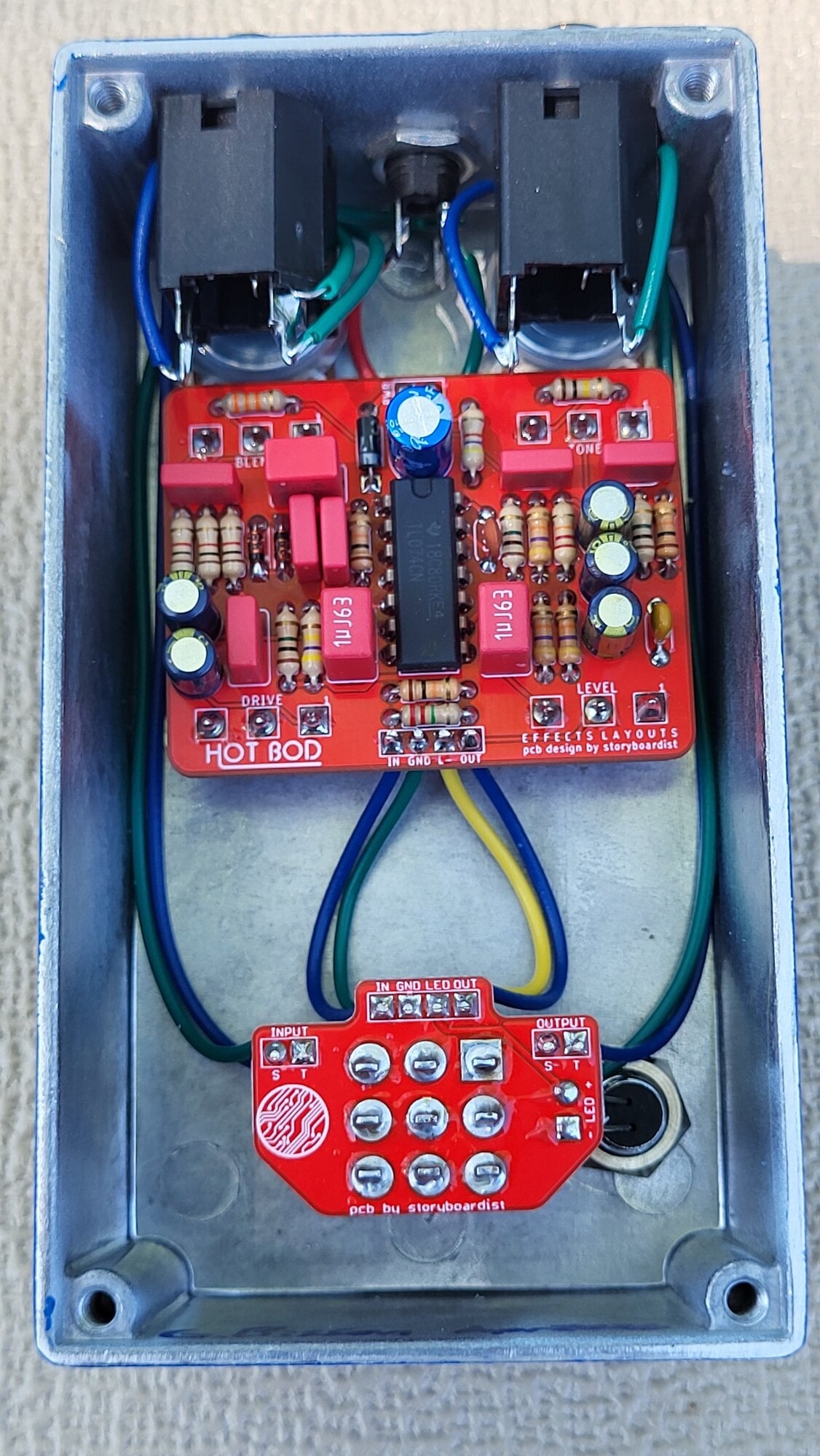
Effects Layouts Hot Bod, based on DOD bass overdrive. Painted in two shades of blue and topped with a light touch of gold.
Aion FX Lumitron. A compact DIY clone of a Mutron envelope filter.
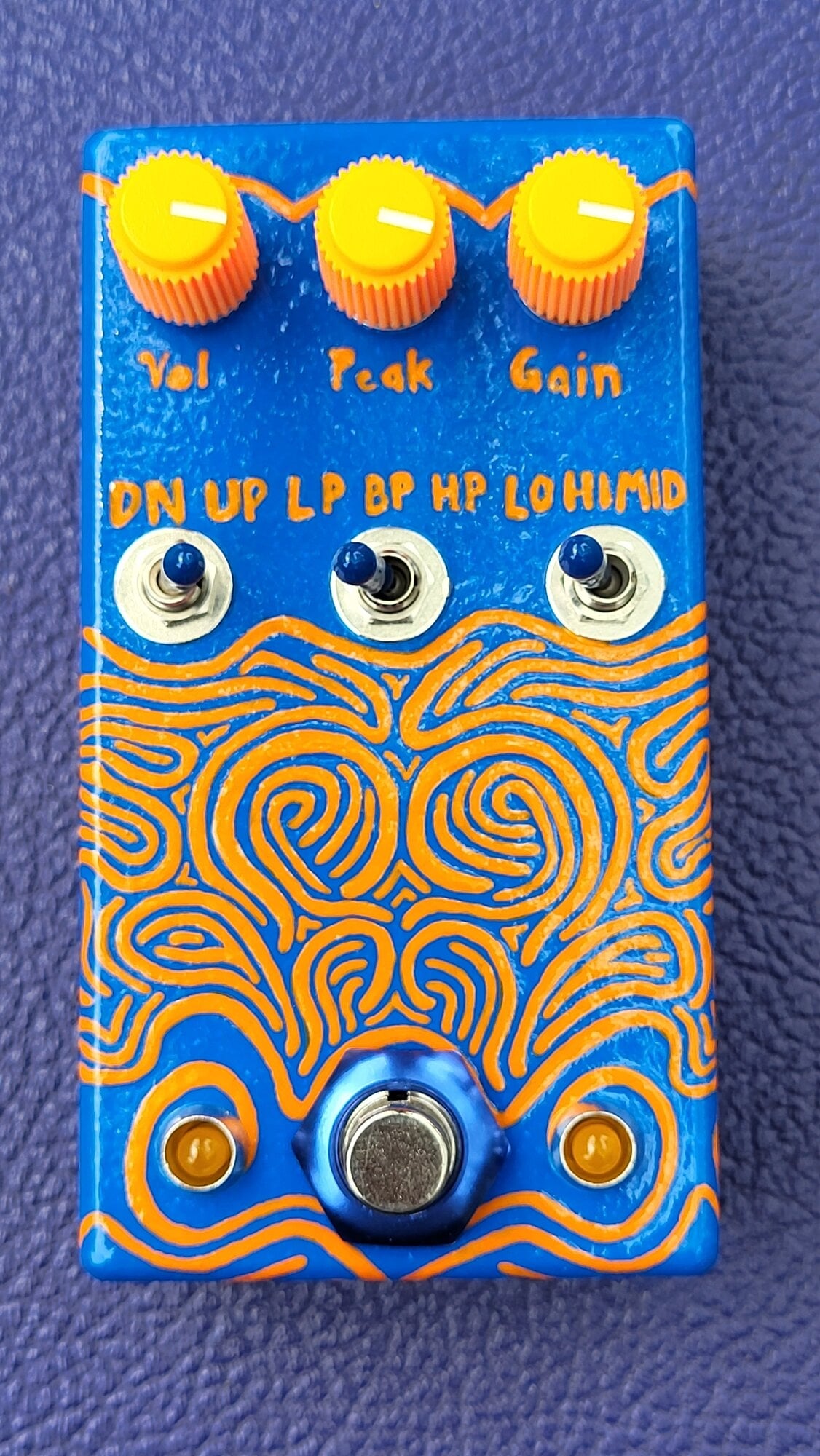
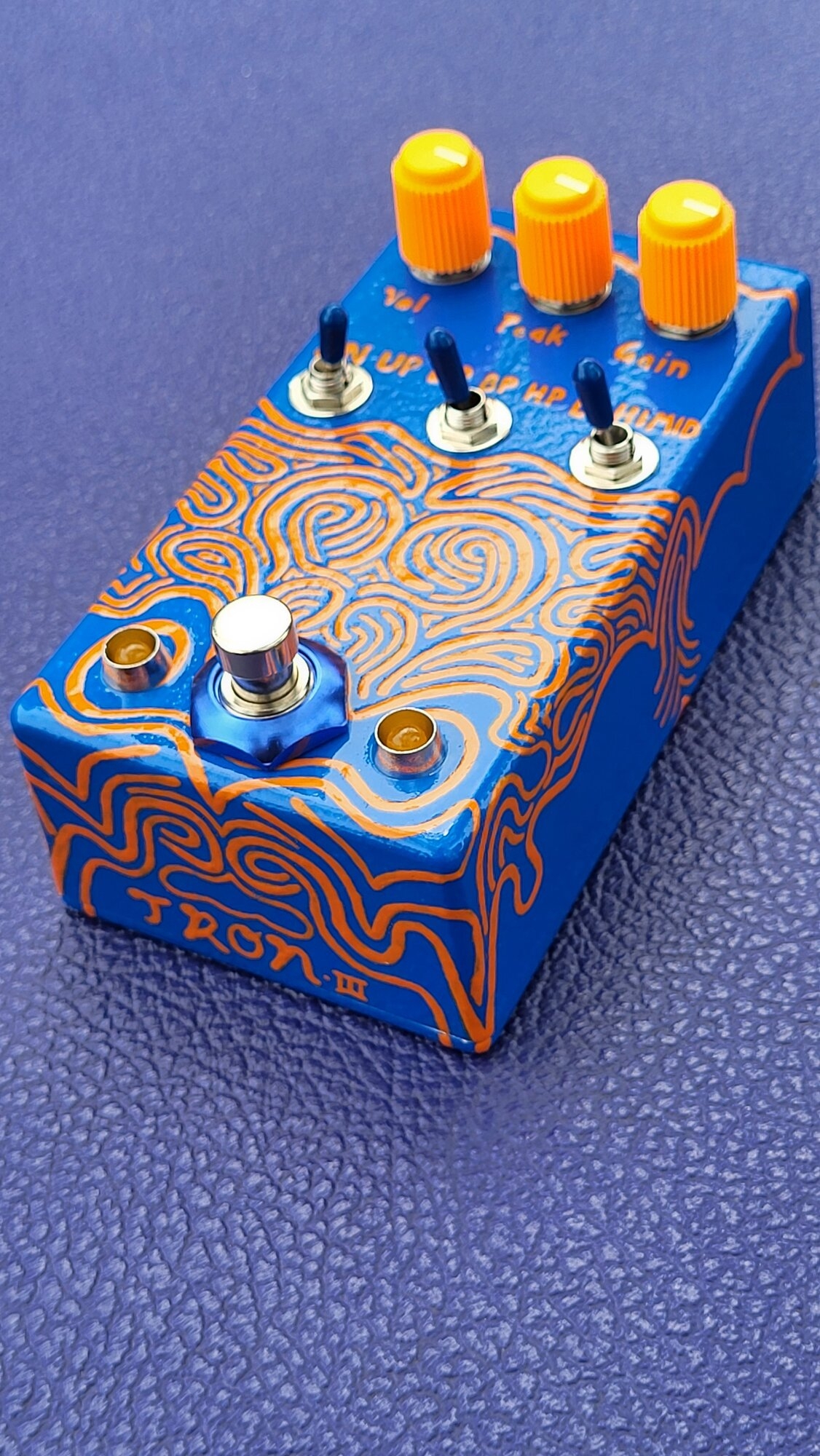
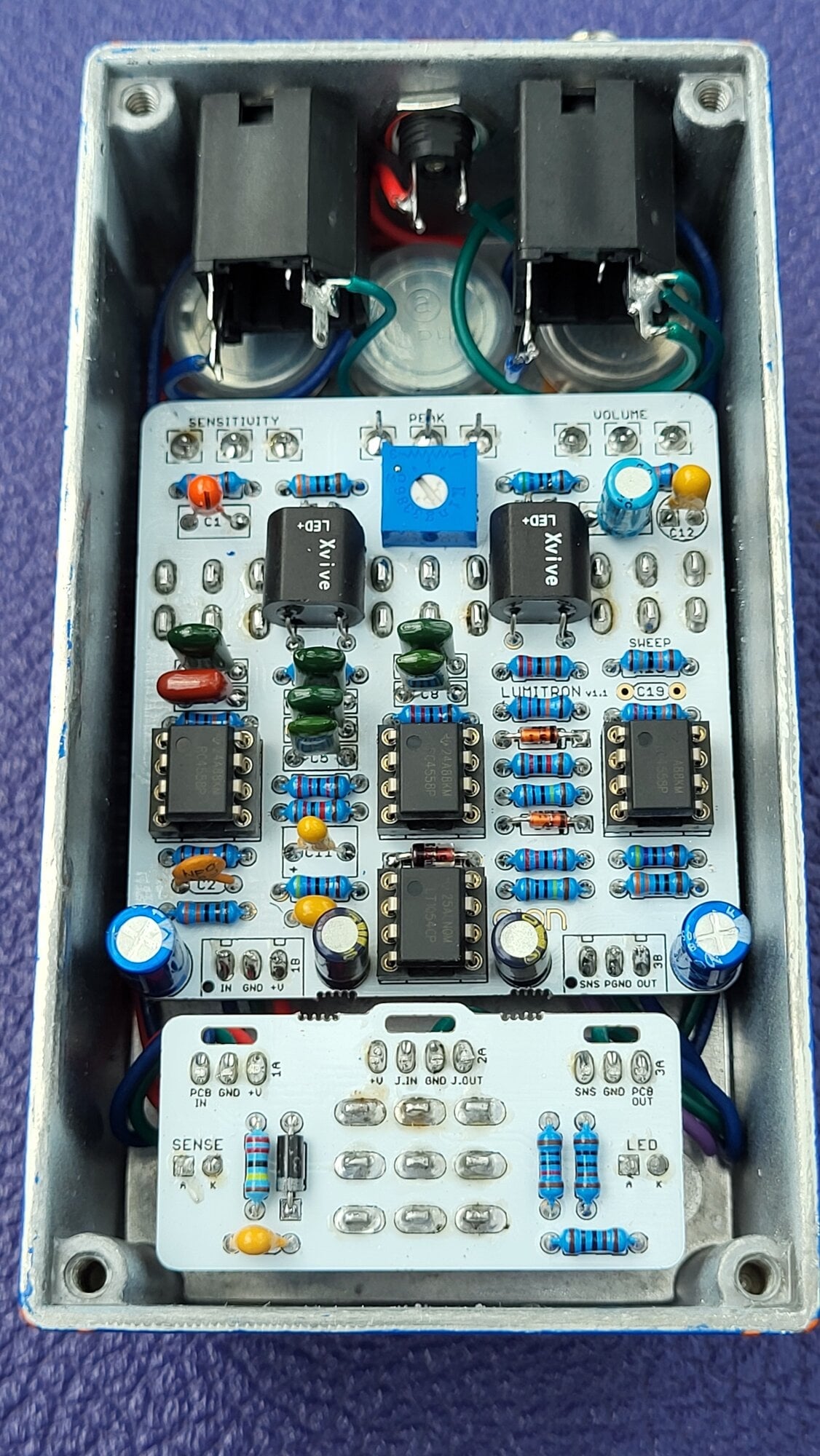
Some builds on Parasit Studio PCBs.
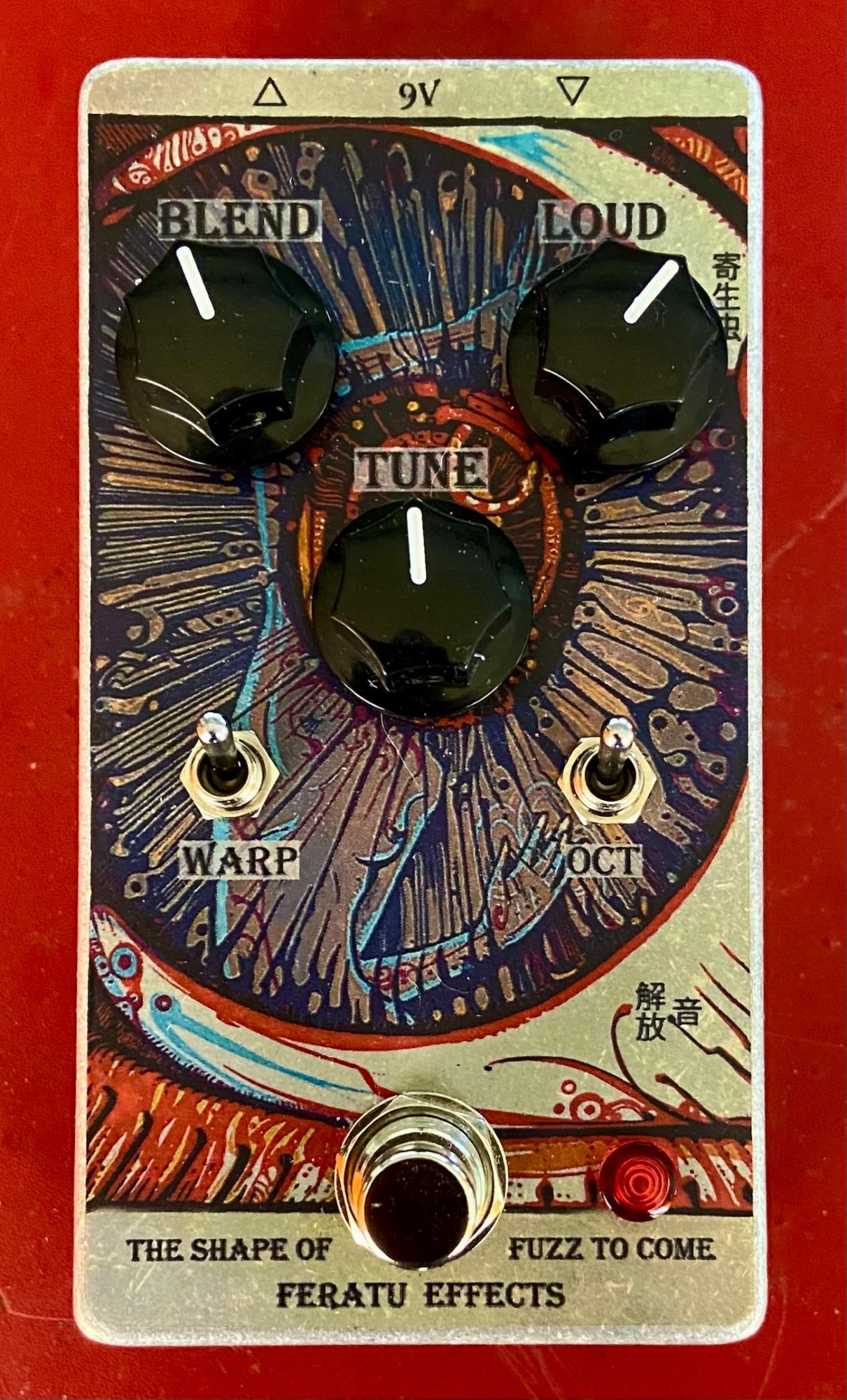
Liberation Frequency Fuzz.
The name is a nod the band REFUSED and their masterpiece the shape of punk to come. This reference alone was reason enough for me to build this fuzz as I still absolutely love that album, I even bought the anniversary edition because my first copy was so worn out.
Anyway, the pedal, what does it do? I'll just quote Parasit:
"The Liberation Frequency Fuzz is a analog square wave fuzz with a tunable and tracking monophonic oscillator that can be tuned from about one octave down to one octave up and anywhere in between. It also has a fun warp feature that uses a PLL output to create interesting sounds to the oscillator even when it's ”out of tune”.
That's right - also, the BLEND knob blends between the these two sounds: the Square wave fuzz and the oscillation madness, don't expect any clean sound.
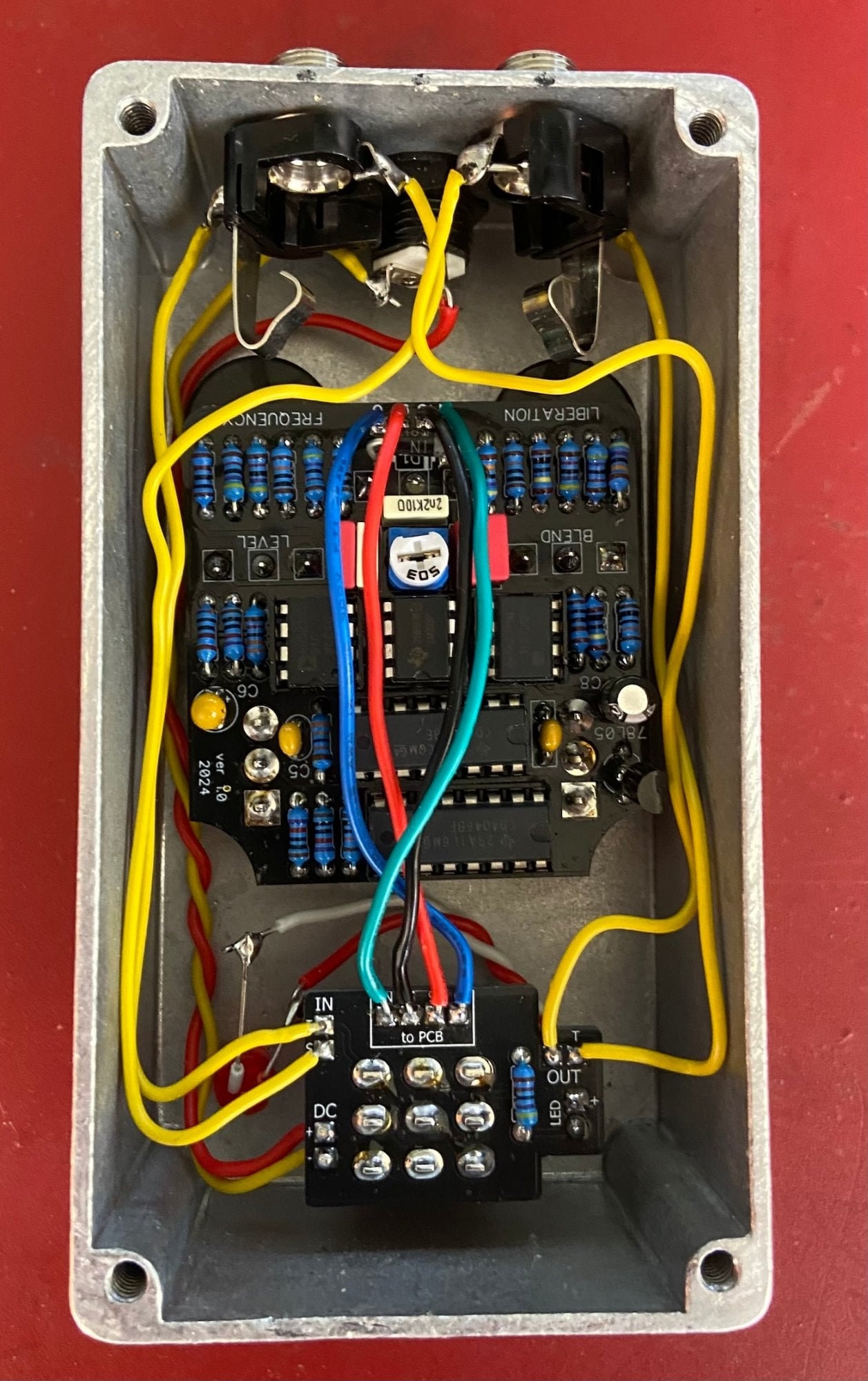
Now, the Parasit guys come up with nice circuits but their PCB layouts are not my cup of tea. I want top jacks.
Also, toggles on top and knobs further down? Nope.
So, I just flipped the PCB 180° and it was fine for me.
Subspace Transmission Fuzz.
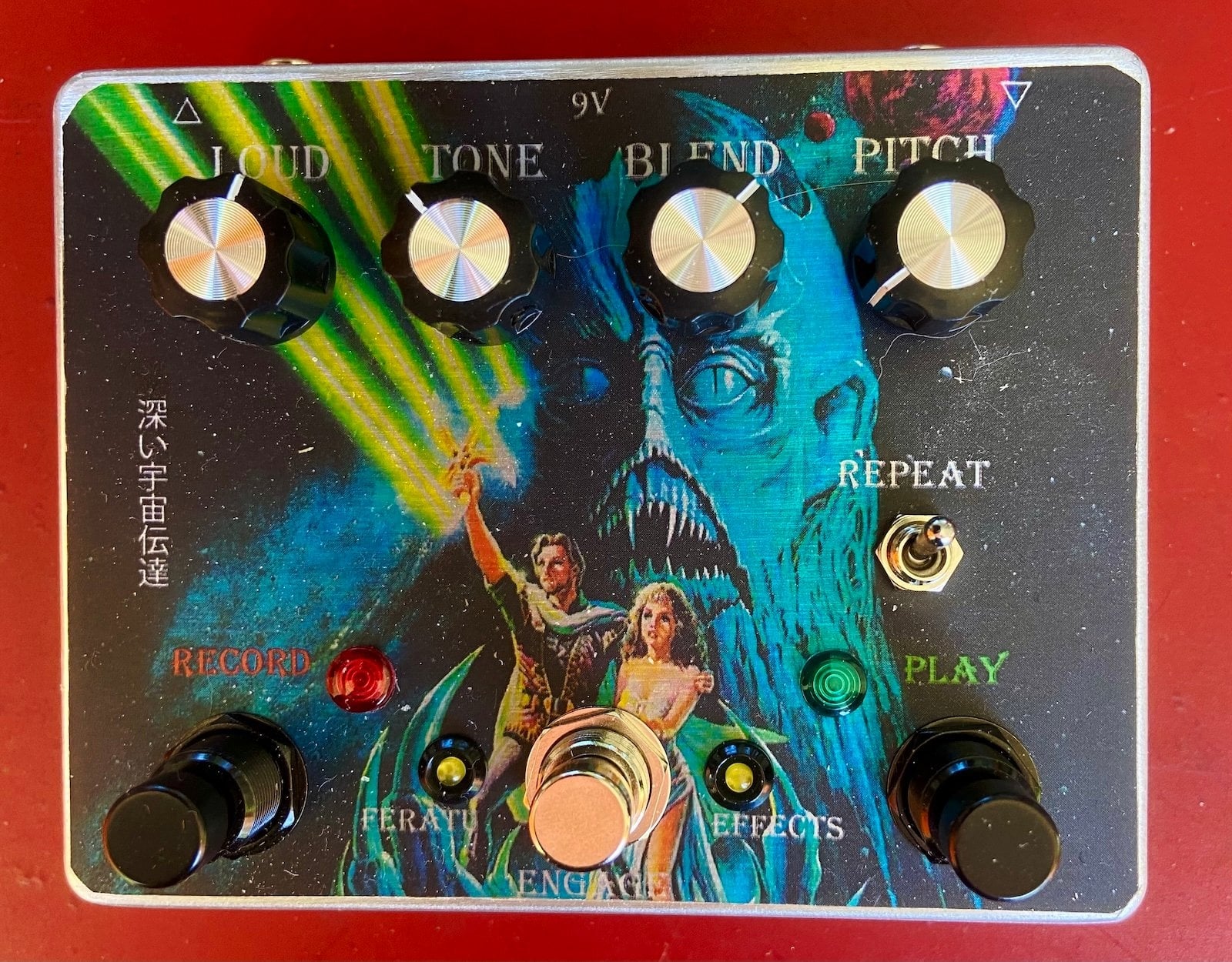
Of course, there is a fuzz in there, a pretty cool "comparator based fuzz" as they put it. The star of the circuit is a ISD1820 lo-fi record/playback chip that lets you record up to 20 seconds. The playback can be pitched up and down - and it can be repeated (toggle switch) but it's not a real looper, as the chip resets after each play.
You can also stretch/condense a recorded phrase with the Pitch knob to the "right length". Or, you can record something without input and that produces some white noise type of sound that - pitched down - becomes some evil rumbling drone.
The BLEND knob pans between the Fuzz and the playback. TONE is after that and is applied to the mix of fuzz and playback.
Fun stuff, indeed!
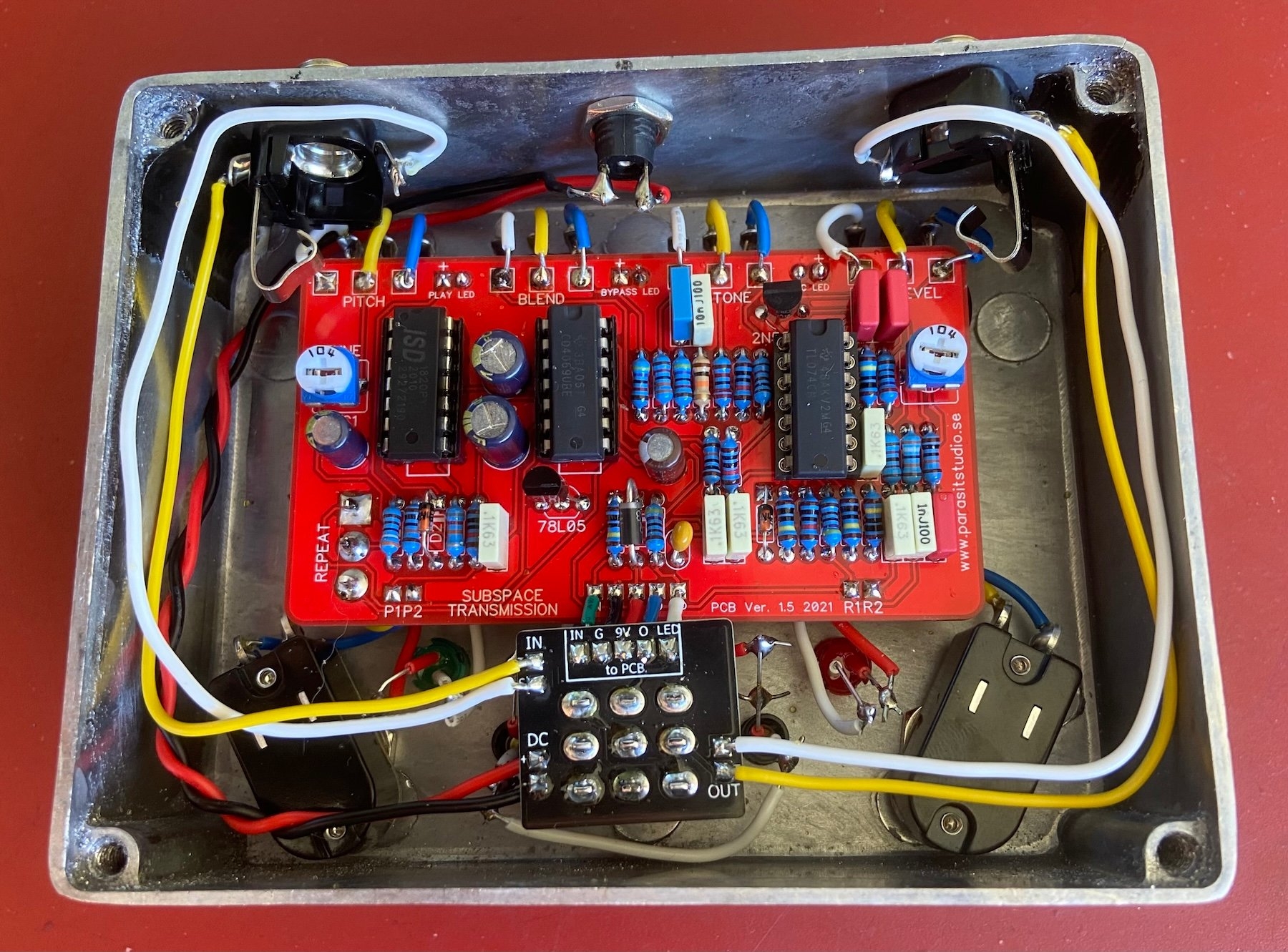
I used momentary foot switches for PLAY and RECORD, because this was meant to be a pedal, not a table top device. Sure, it's great on a table top, but also on the floor. Putting the PITCH on a expression pedal could be fun too.
And again, I changed the layout a bit, all knobs are wired, because top jacks.
Higgs Particle Phaser
I'm not a really phasor guy and don't have a lot of comparison to make, but this thing phases alright and I like the sounds it produces.
It can go slow enough and fast enough for my tastes and most importantly, it handles fuzz nicely.
Technically it is, according to Parasit, "a unique CMOS based phaser that has an ADC that turns the analog signal into a digital 1-bit stream and then uses shift registers to create the phase shifting". I'm not gonna pretend that I understand what that means actually and will just leave that statement for your consideration.
Controls are Rate, Resonance and Depth on a 2-way toggle.
I wired the pots/LEDs, changing the layout to my taste.
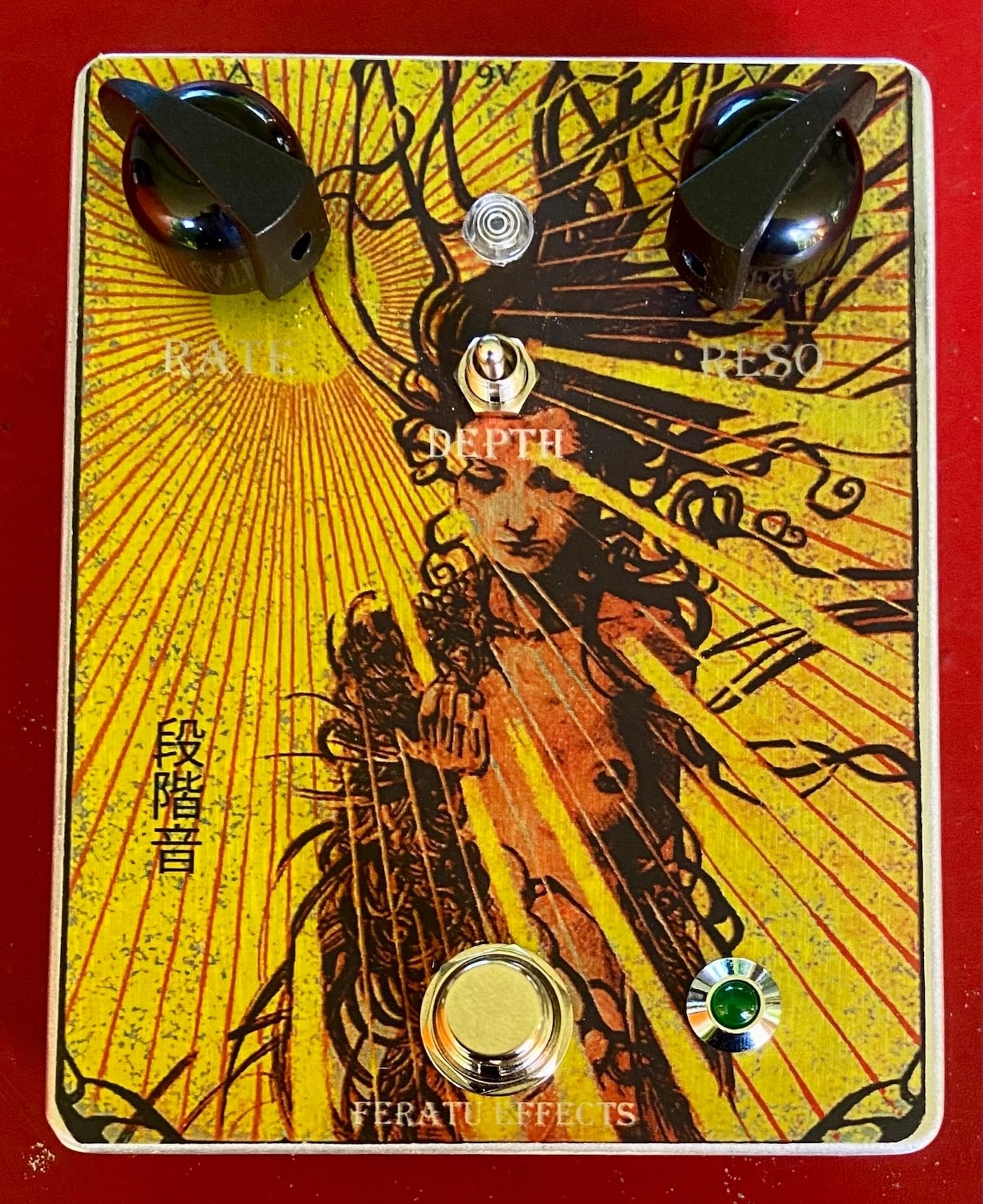
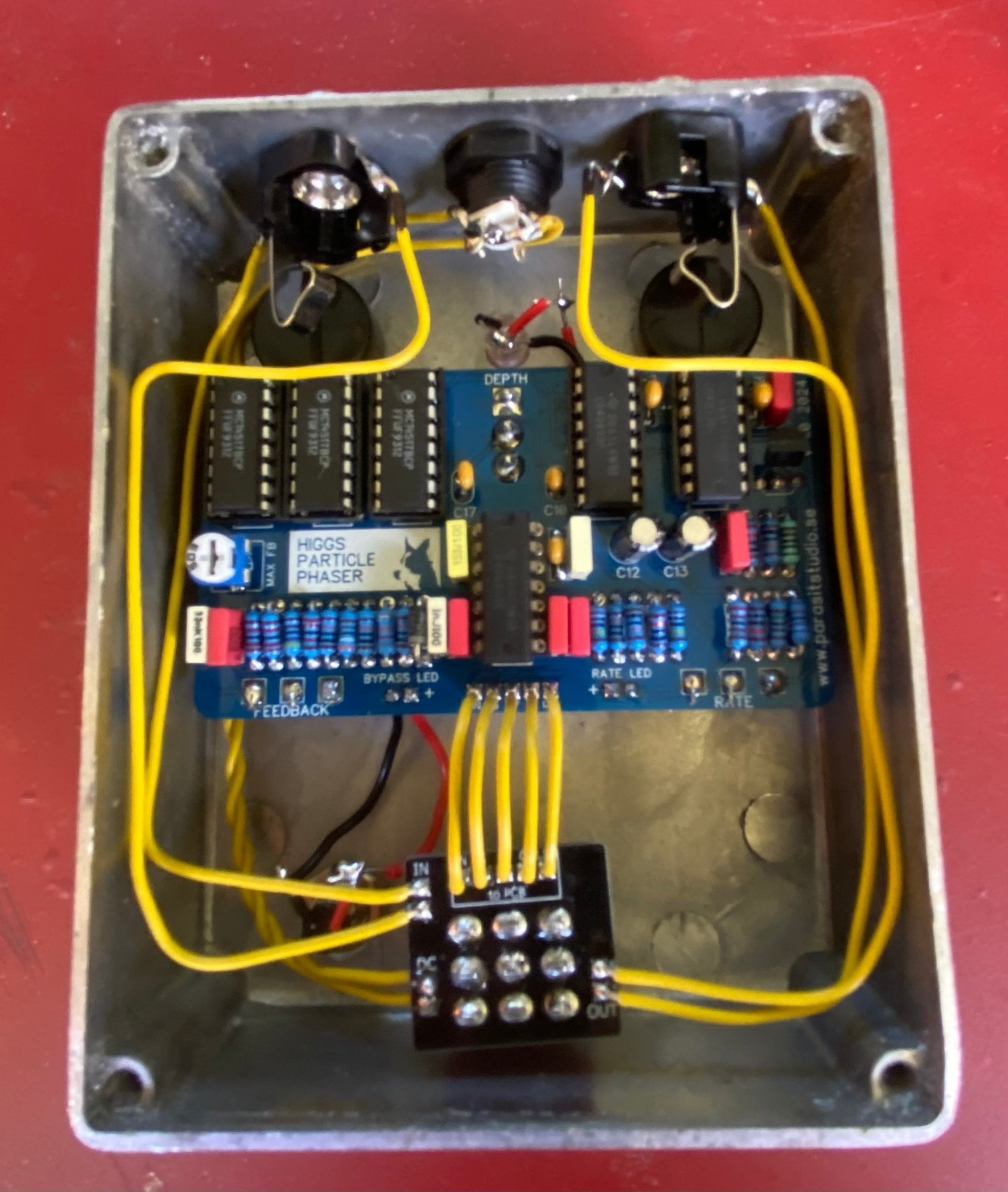
Liberation Frequency Fuzz.
The name is a nod the band REFUSED and their masterpiece the shape of punk to come. This reference alone was reason enough for me to build this fuzz as I still absolutely love that album, I even bought the anniversary edition because my first copy was so worn out.
Anyway, the pedal, what does it do? I'll just quote Parasit:
"The Liberation Frequency Fuzz is a analog square wave fuzz with a tunable and tracking monophonic oscillator that can be tuned from about one octave down to one octave up and anywhere in between. It also has a fun warp feature that uses a PLL output to create interesting sounds to the oscillator even when it's ”out of tune”.
That's right - also, the BLEND knob blends between the these two sounds: the Square wave fuzz and the oscillation madness, don't expect any clean sound.
Now, the Parasit guys come up with nice circuits but their PCB layouts are not my cup of tea. I want top jacks.
Also, toggles on top and knobs further down? Nope.
So, I just flipped the PCB 180° and it was fine for me.
Subspace Transmission Fuzz.
Of course, there is a fuzz in there, a pretty cool "comparator based fuzz" as they put it. The star of the circuit is a ISD1820 lo-fi record/playback chip that lets you record up to 20 seconds. The playback can be pitched up and down - and it can be repeated (toggle switch) but it's not a real looper, as the chip resets after each play.
You can also stretch/condense a recorded phrase with the Pitch knob to the "right length". Or, you can record something without input and that produces some white noise type of sound that - pitched down - becomes some evil rumbling drone.
The BLEND knob pans between the Fuzz and the playback. TONE is after that and is applied to the mix of fuzz and playback.
Fun stuff, indeed!
I used momentary foot switches for PLAY and RECORD, because this was meant to be a pedal, not a table top device. Sure, it's great on a table top, but also on the floor. Putting the PITCH on a expression pedal could be fun too.
And again, I changed the layout a bit, all knobs are wired, because top jacks.
Higgs Particle Phaser
I'm not a really phasor guy and don't have a lot of comparison to make, but this thing phases alright and I like the sounds it produces.
It can go slow enough and fast enough for my tastes and most importantly, it handles fuzz nicely.
Technically it is, according to Parasit, "a unique CMOS based phaser that has an ADC that turns the analog signal into a digital 1-bit stream and then uses shift registers to create the phase shifting". I'm not gonna pretend that I understand what that means actually and will just leave that statement for your consideration.
Controls are Rate, Resonance and Depth on a 2-way toggle.
I wired the pots/LEDs, changing the layout to my taste.
Love those Parasit Studio builds! Awesome graphics as usual @Fuzzonaut
Thanks. And Parasit Studio has more interesting stuff I might try ...Love those Parasit Studio builds! Awesome graphics as usual @Fuzzonaut
Two more Aion pedals are ready. Skywave preamp/overdrive and 360 preamp + fuzz. Both pedals have three common features; germanium transistors, transformers, and charge pumps that operate at 24v.
I'm really liking the 360 preamp and fuzz. The variamp feature is a very useful tool for tweaking mid-tones after taking the time to dial it in. The unusual combined volume/gain control took a little getting use to. There is a learning curve to this preamp. The fuzz is good too, it can go from raspy to roaring, but controlling the volume is inconvenient. This pedal really wants to be played loud! I would like to build a stand-alone 360 Fuzz pedal in the future so it can be used without the preamp.
Skywave is simple and effective preamp with that germanium tonal coloration. I was liking it more as a clean preamp set at 24v. It bunches up and gently compresses when digging in harder. At lower voltages it breaks up a little more becoming a mild dirty overdrive.
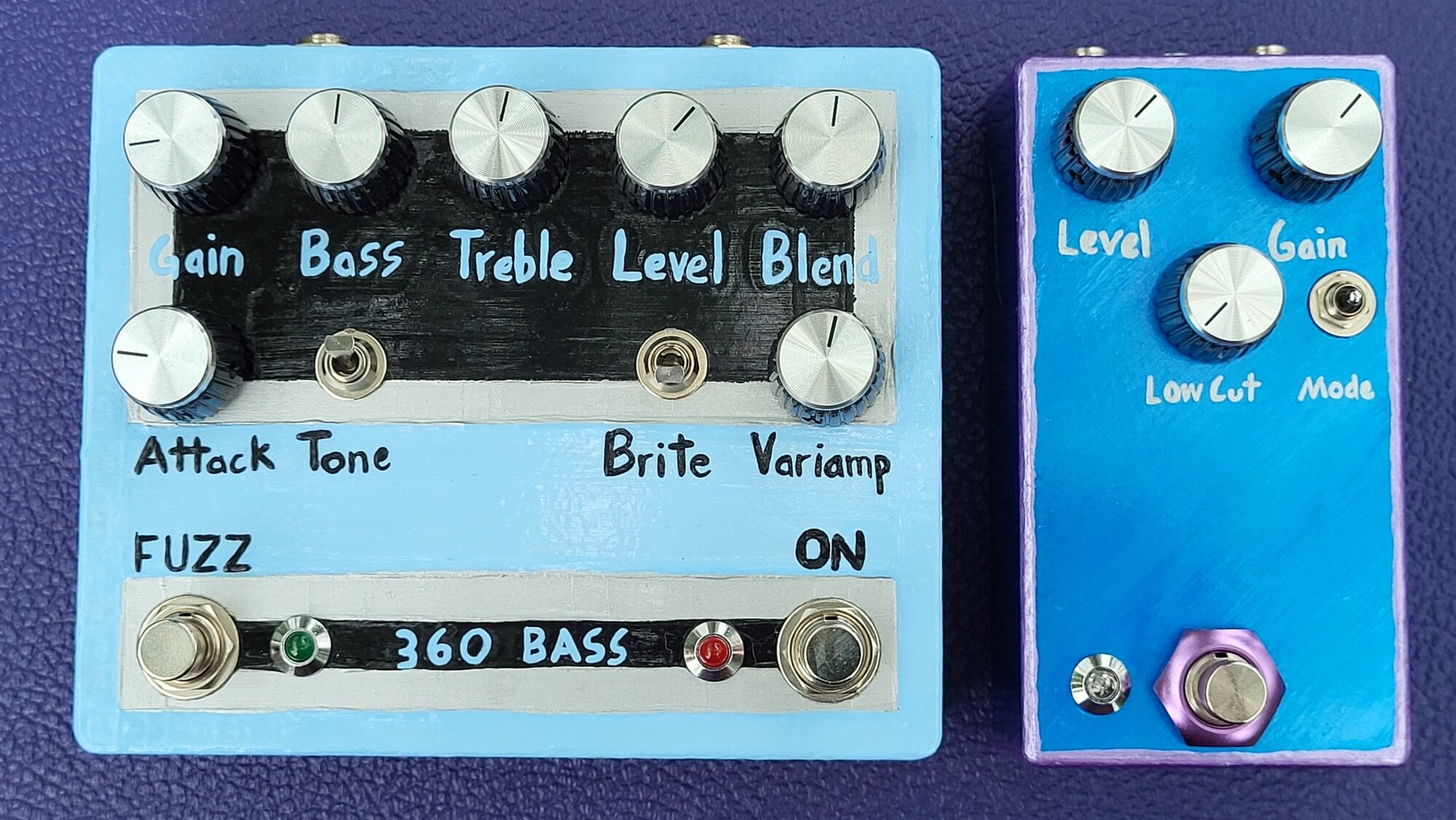
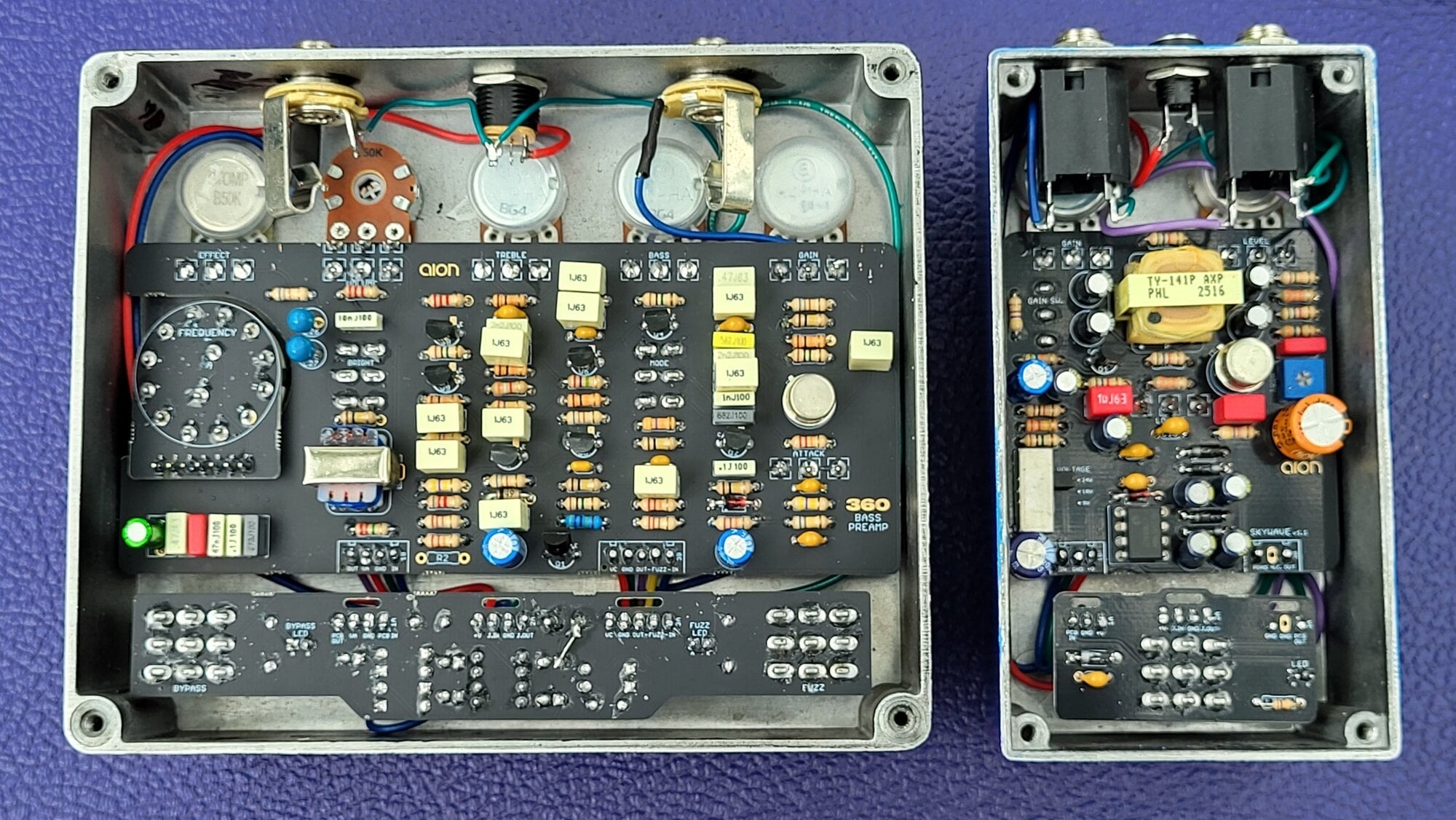
I'm really liking the 360 preamp and fuzz. The variamp feature is a very useful tool for tweaking mid-tones after taking the time to dial it in. The unusual combined volume/gain control took a little getting use to. There is a learning curve to this preamp. The fuzz is good too, it can go from raspy to roaring, but controlling the volume is inconvenient. This pedal really wants to be played loud! I would like to build a stand-alone 360 Fuzz pedal in the future so it can be used without the preamp.
Skywave is simple and effective preamp with that germanium tonal coloration. I was liking it more as a clean preamp set at 24v. It bunches up and gently compresses when digging in harder. At lower voltages it breaks up a little more becoming a mild dirty overdrive.

deepestend
Commercial User
- Feb 21, 2003
- 6,249
- 8,171
- Disclosures
- Website and Social Media at Sadowsky
Anyone have any 430pf caps? I want to convert an old Russian Muff to Civil War, but don't want to do a whole order... if anyone has any lying around, shoot me a message. I'm in NYC.
430pF is an odd value. Parallel 330pF + 100pF caps is an easier alternative.Anyone have any 430pf caps? I want to convert an old Russian Muff to Civil War, but don't want to do a whole order... if anyone has any lying around, shoot me a message. I'm in NYC.
deepestend
Commercial User
- Feb 21, 2003
- 6,249
- 8,171
- Disclosures
- Website and Social Media at Sadowsky
That I might have, actually. I know a lot but sometimes not enough!430pF is an odd value. Parallel 330pF + 100pF caps is an easier alternative.
Passinwind
I know nothing.
- Dec 3, 2003
- 23,079
- 46,048
- Disclosures
- Designer/Toaster Tech @ Passinwind Electronics
That I might have, actually. I know a lot but sometimes not enough!
I may have one or two extra 430pF Wima polypro box caps on hand, but with shipping that’d still run you more than the eBay deal. It is an oddball value and I had to buy from a Hong Kong Wima dealer who specializes in stocking the less common ones. Not a cheap way to go, and just doing the parallel thing works fine if you have the space available.
As an eBay Associate, TalkBass may earn a commission from qualifying purchases.
deepestend
Commercial User
- Feb 21, 2003
- 6,249
- 8,171
- Disclosures
- Website and Social Media at Sadowsky
deepestend
Commercial User
- Feb 21, 2003
- 6,249
- 8,171
- Disclosures
- Website and Social Media at Sadowsky
I guess it really is an oddball value... so weird since it's a standard Civil War Muff value.

I’ve done a few kits in the past (BYOC, GGG), but this is my first go at a point to point circuit. LPB-1 in a 1590B.
A learning experience for sure. I didn’t get the in and out jacks aligned perfectly when drilling, and had to do a bit of experimenting with the layout.
PTP is quite an art form, so I may build another one at some point just to see if I can do it cleaner.
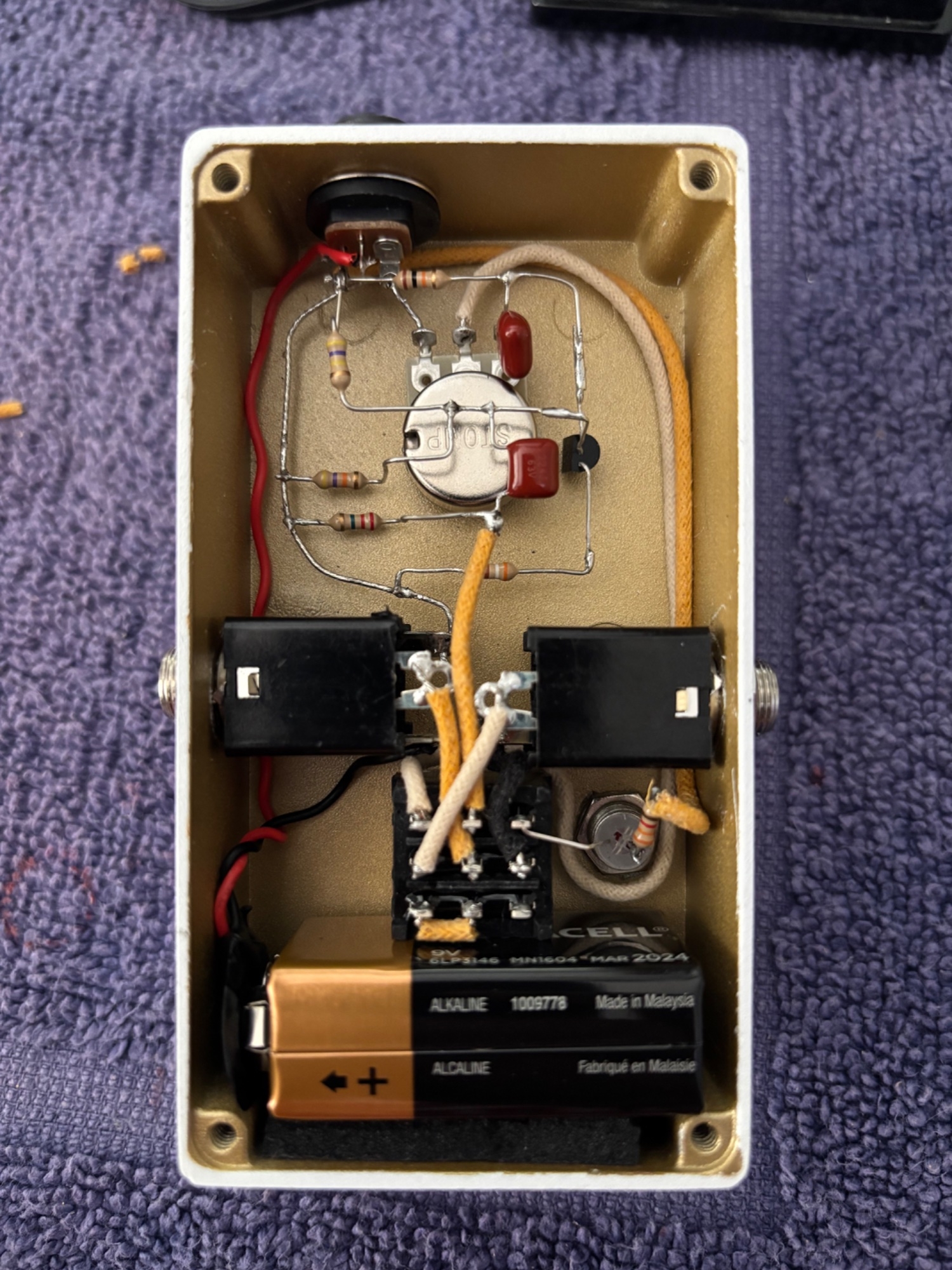
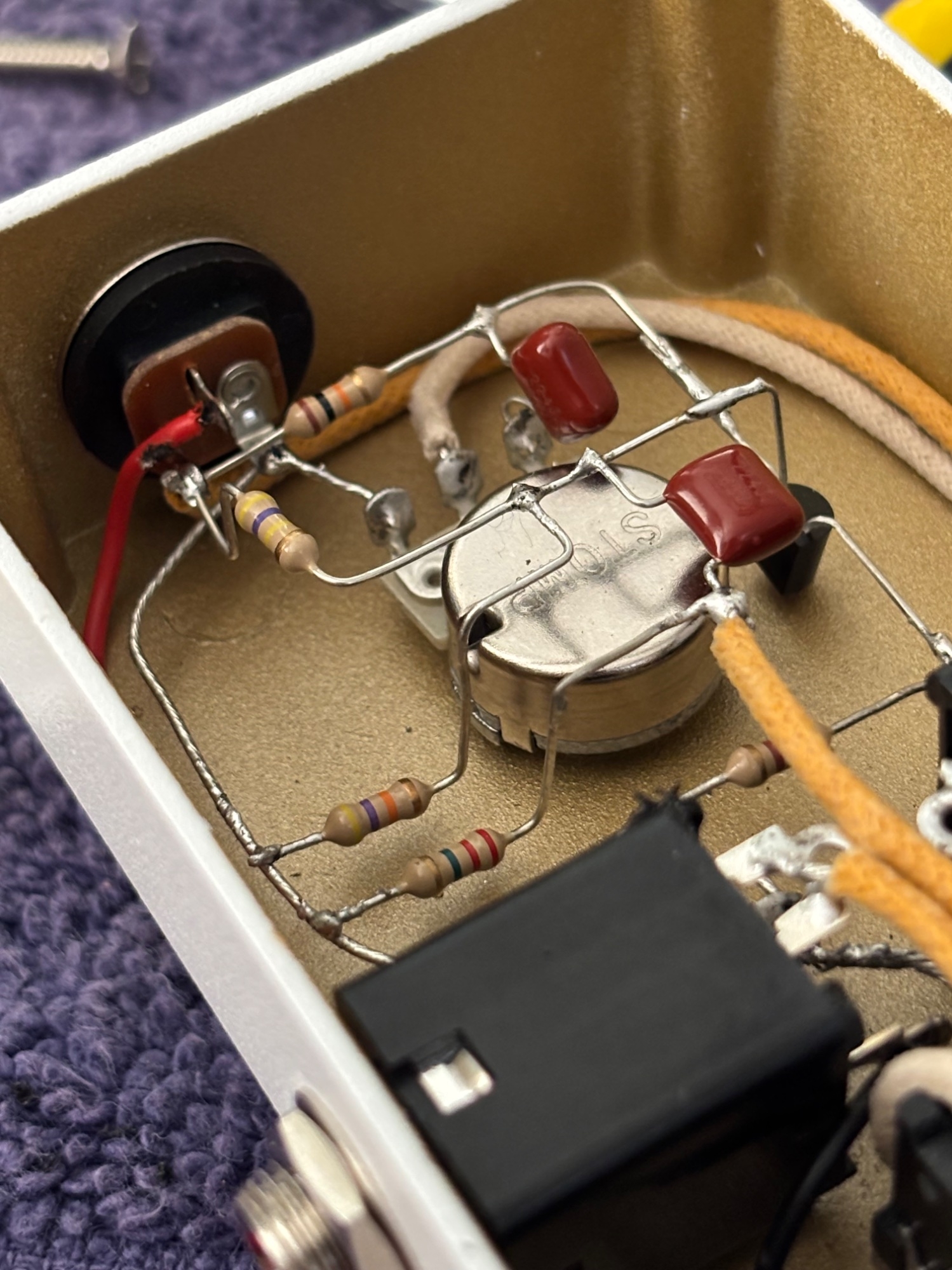
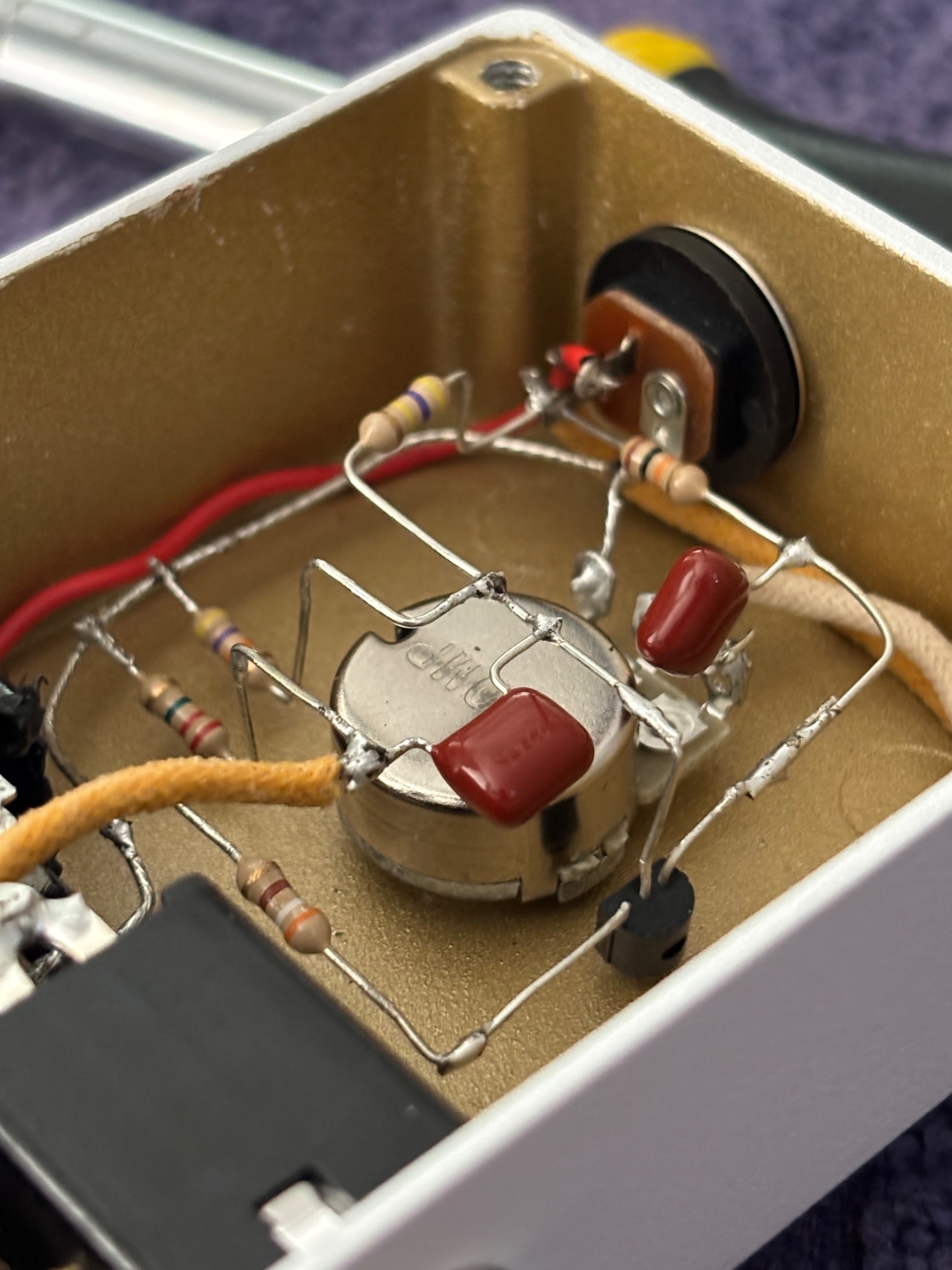
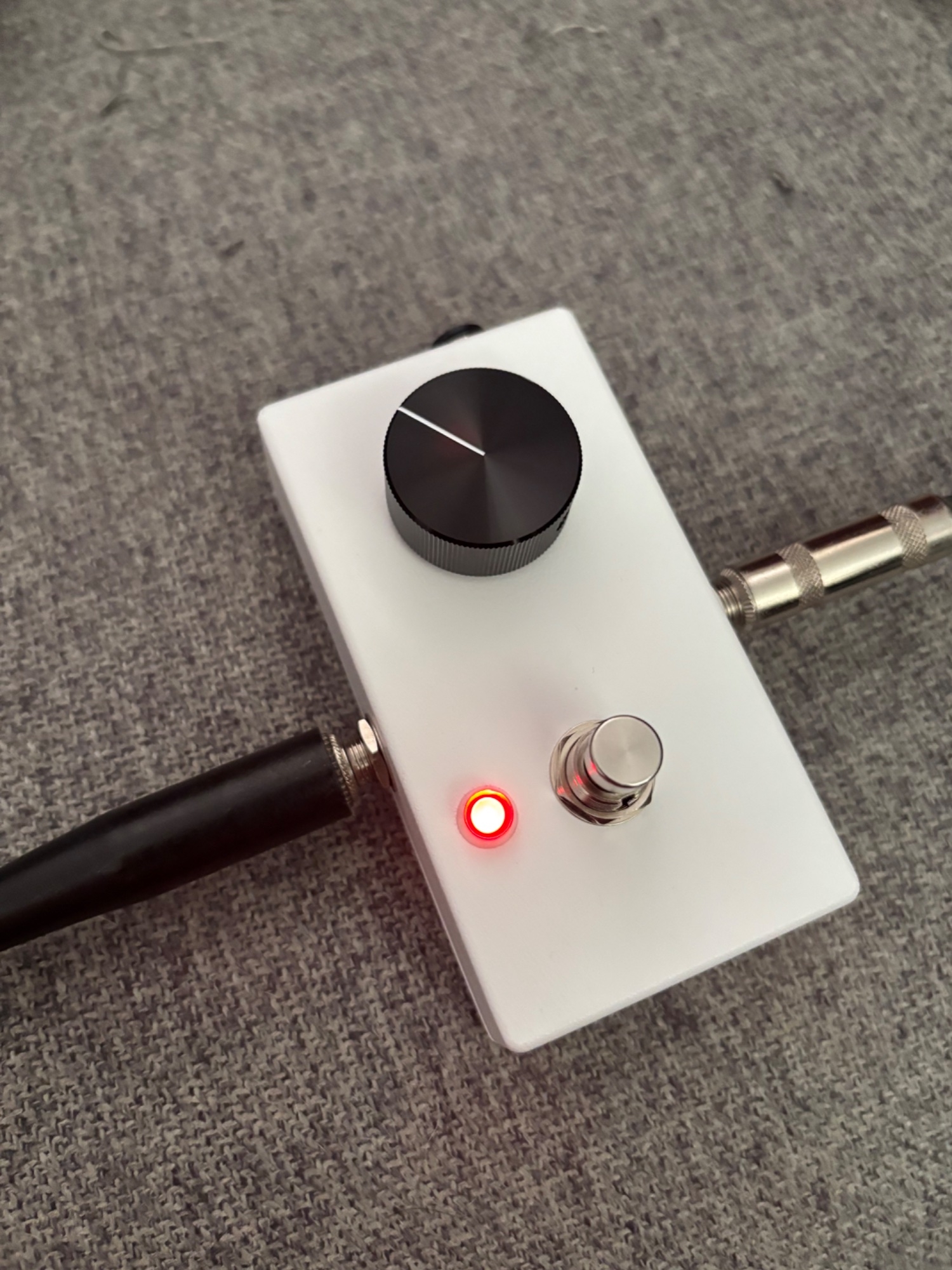
A learning experience for sure. I didn’t get the in and out jacks aligned perfectly when drilling, and had to do a bit of experimenting with the layout.
PTP is quite an art form, so I may build another one at some point just to see if I can do it cleaner.
Passinwind
I know nothing.
- Dec 3, 2003
- 23,079
- 46,048
- Disclosures
- Designer/Toaster Tech @ Passinwind Electronics
I've boxed up some stuff recently.
First up a BASS KLON. I've never cared for the promised sound of a Klon, but somehow enjoyed the silly talk about magic diodes, fairy dust and unicorn farts. So, when some electronic wizard on the PPCB forum gave the Klon a real bass treatment, I thought ok, why not.
Changes made to the PPCB Kliché mini are:
- increase bass feeding into the dirty channel and bass bleed (C2)
- increase subharmonics in bypass mode (C3)
- increase clean channel bass (C4)
- increase bass when GAIN is dimed (C7)
- darken dirty channel slightly (C8)
- increase bass feeding the clipping diodes (C9)
- increase mids when GAIN is around noon (C12)
- Reduce mid scoop when GAIN is at zero (C13)
- move tone range down to include the upper mids (C15)
- increase bass subharmonics when the pedal is engaged (C16)
- increase clean channel volume (R7)
- increase bass bleed (R14)
- improved sweep at lower volume settings (A10k for VOLUME)
I used OA1183 as Ge diodes, because they had a forward voltage of 0.35. Then Wima caps, some tantalums and a silver mica for good measure. Fancy aluminium knobs too.
It sounds great, I actually like it.
View attachment 7200997View attachment 7200998
I just did a Kliche Mini build for guitar this week, after looking at the Chuck D bass mods on the PPCB forum and a few other mod set tutorials elsewhere. I ended up doing my own model in LTspice anyway, doing the math for myself so to speak. I settled on bumping the overall bass response up a few dB, reducing overall gain a similar amount, and swapping in modern SMT opamps on adapters - OPA1642. One 1N34A and one D2J Soviet germanium diodes, both from Stompbox Parts. Wima polyester and Kemet polypro caps, frou frou Nichicon "audio grade" electros - basically just whatever leftovers I already happened to have on hand.
Now that I know it's a keeper for guitar, I'll re-house and go on to doing a bass centric tester in this enclosure. I also did a PPCB Zendrive clone this week, which is great for guitar too.
Last edited:
Well, well, well ... this is a pretty amazing box of sounds.
The original from Smallsound/Bigsound was supposed to be a homage to the Thermionic Culture Vulture, a two-rack British, tube-powered device that offers two separate channels of distortion/overdrive featuring three distortion types and a filter to spice things up.
What SS/BS said:
"Pretty Years is a high-gain subminiature tube based distortion/fuzz with an interstage resonant lowpass filter to not only filter frequencies, but also shape the texture of the distortion. Combining switchable pentode/triode mode, low-voltage biasing, switchable feedback and active bass/treble controls – most drive textures from subtle to complete destruction are available."
The PCB layout with the foot switch on the side and the jack placement (top/side) wasn't my cup of tea, so I went one bigger with the enclosure, moved the Volume and made it all top jacks. That gave me some space for a jewel light too.
Still, it's a very tight fit with all those toggle switches, especially when measuring and drilling by hand like I did.
There is that lovely "valve induced harmonic distortion" that you can shape with Lowcut (3-way), Clip (3-way) and the pentode-triode switch. Then there are the 2 GAIN pots and the BIAS pot - and BASS/TREBLE. The distortion/fuzz alone is worth the price of admission.
But there is a LOT more: the whole Filter section. Wow, that's just crazy, all the possibilities, soooooo many different sounds. From rumbling dub stuff to screeching highs and bleeps and blops and what not .... amazing stuff!
There's a small taste, just scratching the surface of what it can do, after the pics, my bass test loop going through it, while I switch and turn a few things.


The original from Smallsound/Bigsound was supposed to be a homage to the Thermionic Culture Vulture, a two-rack British, tube-powered device that offers two separate channels of distortion/overdrive featuring three distortion types and a filter to spice things up.
What SS/BS said:
"Pretty Years is a high-gain subminiature tube based distortion/fuzz with an interstage resonant lowpass filter to not only filter frequencies, but also shape the texture of the distortion. Combining switchable pentode/triode mode, low-voltage biasing, switchable feedback and active bass/treble controls – most drive textures from subtle to complete destruction are available."
The PCB layout with the foot switch on the side and the jack placement (top/side) wasn't my cup of tea, so I went one bigger with the enclosure, moved the Volume and made it all top jacks. That gave me some space for a jewel light too.
Still, it's a very tight fit with all those toggle switches, especially when measuring and drilling by hand like I did.
There is that lovely "valve induced harmonic distortion" that you can shape with Lowcut (3-way), Clip (3-way) and the pentode-triode switch. Then there are the 2 GAIN pots and the BIAS pot - and BASS/TREBLE. The distortion/fuzz alone is worth the price of admission.
But there is a LOT more: the whole Filter section. Wow, that's just crazy, all the possibilities, soooooo many different sounds. From rumbling dub stuff to screeching highs and bleeps and blops and what not .... amazing stuff!
There's a small taste, just scratching the surface of what it can do, after the pics, my bass test loop going through it, while I switch and turn a few things.


