That's just what I was thinking.
I'll answer this after my soaps and Oprah


TalkBass has been independent since 1998. Add your voice.
Create a free account to reply to discussions, view embedded media, and browse with fewer display ads.
Join free Log in
Want zero display ads or expanded classifieds tools? Compare plans.
That's just what I was thinking.
This thread is so revealing. Many have answered the question with out answering the question lol.
Passive-aggressiveness doesn't seem very manly.That's just what I was thinking.


Is our cuture (sic) changing as technology alters our daily lives? Duh. Does that mean that the roles that all people engage in are different from those of previous generations? Well, yeah, duh, again. It's hard to have a generation of cowboys when the economy demands office jobs.



I think we're becoming Eloi.

There will always be "lowest common denomenator" skills that the incoming generation will lose. I think we agree. Fixing a car would've likely been thought of as service economy work just a few generations earlier, while something more meaningful as horsemanship would've been considered fundamental. This is one of the drawbacks of a society that flourishes on skill speciailization, it does so at the expense of uniformity and fundamentals. It does so in exchange for a stronger diversity of skills, however. It's a strategy that seems to be working at the moment.Cowboys, as well as most men and women up until a few generations ago, were capable of handling situations that most of us are completely unprepared for. Fixing a car, building a house, growing and preparing food, dressing a wound, defending ourselves and our families - these were all skills that the average person needed to live. The problem isn't confusion of gender identity, it's our total dependence on technology and the service economy. We manufacture very little of the goods we are offered for consumption and what we do build is often considered substandard to offshore products.
How long can a society which produces nothing but information and ways to process and present it exist? I think we're becoming Eloi.
There will always be "lowest common denomenator" skills that the incoming generation will lose. I think we agree. Fixing a car would've likely been thought of as service economy work just a few generations earlier, while something more meaningful as horsemanship would've been considered fundamental. This is one of the drawbacks of a society that flourishes on skill speciailization, it does so at the expense of uniformity and fundamentals. It does so in exchange for a stronger diversity of skills, however. It's a strategy that seems to be working at the moment.
More fragile as an individual or more fragile as a society?It's a strategy that works but is fundamentally more fragile. Basically, we're all speculating on the availability of other specialists whom we do not know, but depend on.

Remember Y2K? The Western world was in a panic. If anything, we're more vulnerable now to a disruption in telecommunications then we were 9 1/2 years ago. What, for example, would happen to India's economy if the Internet went south?
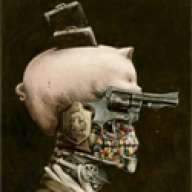
But getting back to the OP's original point - here's some food for thought:
Invalid Link Removed

Cowboys, as well as most men and women up until a few generations ago, were capable of handling situations that most of us are completely unprepared for. Fixing a car, building a house, growing and preparing food, dressing a wound, defending ourselves and our families - these were all skills that the average person needed to live.
Remember Y2K? The Western world was in a panic. If anything, we're more vulnerable now to a disruption in telecommunications then we were 9 1/2 years ago. What, for example, would happen to India's economy if the Internet went south?

Yeah, I was just telling someone the other day that it's too bad that no one knows how to fix cars anymore - not like in the pioneer days of the settlers when every family had its own shop in the garage behind the log cabin.



More fragile as an individual or more fragile as a society?
I would imagine that a diverse society would be able to handle many problems that a uniform one wouldn't. The plague for instance, would likely not ravage our modern society of scientists, doctors, and other speciailists nearly as badly as it did a much more fundamental group from the middle ages who were more adept that life's "necessities" like tending to crops, and fabricating basic tools.

Remember Y2K? The Western world was in a panic.
More fragile as an individual or more fragile as a society?
I would imagine that a diverse society would be able to handle many problems that a uniform one wouldn't. The plague for instance, would likely not ravage our modern society of scientists, doctors, and other speciailists nearly as badly as it did a much more fundamental group from the middle ages who were more adept that life's "necessities" like tending to crops, and fabricating basic tools.