

Enjoy the benefits of a premium membership!
Upgrade Account
-
TalkBass has been independent since 1998. Add your voice.
Create a free account to reply to discussions, view embedded media, and browse with fewer display ads.
Join free Log in
Want zero display ads or expanded classifieds tools? Compare plans.
You are using an out of date browser. It may not display this or other websites correctly.
You should upgrade or use an alternative browser.
You should upgrade or use an alternative browser.
are You a passivist?
- Thread starter Handz Solow
- Start date
More options
Who Replied?


I've found the way I like it the most is the G&L type of preamp (in the L series): first of all, switchable to passive if needed; then, you have passive tone controls (for bass and treble), that work in both passive and active modes. It is really more like a buffer, so it's not like your tone absolutely changes when you switch from passive to active, but you can get some more definition and snap to your notes. To me, that's perfect.
- Dec 28, 2009
- 2,053
- 1,380
- Disclosures
- Endorsed by K.B. Guitars, Nordstrand Audio Pickups, Von York Strings and Gallien-Krueger Amps.
I like both. Currently all of my basses are active right now but Zane guitars is building me 3 basses right now and all of them will be passive. I then will have at least one or two after those made that will most likely be active or at least one of the two will be but I am not sure yet on those last ones what will be what yet?


Pacifist? Absolutely not.
Passivist? Without a doubt, 100% of the time.
Passivist? Without a doubt, 100% of the time.

Actually right now I am in a passive phase. I am not against active basses. I have owned and liked several. I just happen to own only passive basses at the moment (which is subject to change any time now).

Passive for me, a Gibson TBird. My preference is to pipe everything that the pups are generating to the preamp in my amp head, with the onboard tone pot bypassing none of the HFs. All of my electronic tone shaping and EQing is done at the amp, where there is ample flexibility to dial in pretty much whatever I want. I am a believer in simplicity and in minimizing the effects of components in the signal chain that only distort the original signal. The only advantage that I could see for myself in having an onboard preamp would be in having it function as a unity gain impedance matching device; however, by using minimum-length good quality instrument cables that is not a real problem for me. I also could not see the sense in boosting a pup signal at the bass just to have to cut it with an attenuator pad at the preamp's front end.

I don't even need a volume or a tone knob. My hands are my tone knob and I like the sound of going straight to the jack. I think some view the going back to passive as being an old fart movement but I'm still under forty and I think it's just a matter of taste and maybe I'll go back to active someday (not likely but never say never). Active basses have a role just like passive basses. No matter how transparent a pre claims to be there is always a difference but that can be a good thing if your style calls for it.

I've owned active basses, but they're all passive now, 7 for 7. Passive basses seem capable of a more organic (I guess) sound.
i like the quiet humlessness of active but like it simple like passive set up. my two main basses are a weird active j set up but theres no boost only cut like a passive set up...would prefer to not have batteries to deal with either.
i think its cool that active can offer so many eq options but it's overkill for me tho, i like a simple situation gearwise
i think its cool that active can offer so many eq options but it's overkill for me tho, i like a simple situation gearwise

Six active, two passive, one acoustic.
The active basses (all strung with rounds) get used mainly for metal & rock, while the passive ones (one strung with flats, the other with rounds) get used mainly for jazz, blues & motown.
The acoustic (strung with phosphor/bronze rounds) is my official messing around on weekends/camping/power outage bass.
The active basses (all strung with rounds) get used mainly for metal & rock, while the passive ones (one strung with flats, the other with rounds) get used mainly for jazz, blues & motown.
The acoustic (strung with phosphor/bronze rounds) is my official messing around on weekends/camping/power outage bass.

Well, if you are playing amplified, then everyone has to hit a gain stage at some point in your chain. Some people like having their gain stages on board the bass, either because of having controls at hand, or maybe they just like the tone of it. Others want their gain stages in the amp, probably because they like the tone of the existing options there. There are even those who prefer having gain stages in pedals. In all three situations, your signal gets run through a gain stage.
I have an active bass that I use about half the time, and a passive bass that gets the other half. When I'm using the passive, I kick in another gain stage via a boost pedal, and that evens things out. I can get pretty much whatever sort of tone I want out of either instrument.
I have an active bass that I use about half the time, and a passive bass that gets the other half. When I'm using the passive, I kick in another gain stage via a boost pedal, and that evens things out. I can get pretty much whatever sort of tone I want out of either instrument.
Can't help it...I have a serious dislike of active basses (and guitars, and active pups/elecs in general.)
I sure like what a lot of other players can do with them, and they can sound great in the hands of some people, but I've tried them off and on since the early 80s, and owned a few active basses and I just do not care for them at all.
To my ears, when I am playing them, no matter what I do or what I run them through, they just sound sterile and characterless. Fake, somehow. It's hard to put into words.
The only analogy I can think of is (for all you old guys out there) back in the 80s, cassette technology started coming with Dolby. I did a lot of tape recording and dubbing and buying in that period and had a lot of nice cassette stereo components, etc.
While it was true that Dolby "reduced noise" (which was its claim to fame: "Dolby Noise Reduction") as far as cutting back on tape hiss, it also had the unfortunate quality of completely cutting off high ends...cymbals, for instance, could vanish completely. To my ears (and the ears of many others) Dolby also made things sound like it was recorded in a padded closet, or down a well. It sacrificed the naturalness and openness of recordings.
I'm not saying that active gear does THAT exactly, but it's the best comparison I can think of, or illustration of why I will never play anything other than passives.
Another way to maybe put it is passives sound "analog" to me while actives sound "digital." To me, at least.
I sure like what a lot of other players can do with them, and they can sound great in the hands of some people, but I've tried them off and on since the early 80s, and owned a few active basses and I just do not care for them at all.
To my ears, when I am playing them, no matter what I do or what I run them through, they just sound sterile and characterless. Fake, somehow. It's hard to put into words.
The only analogy I can think of is (for all you old guys out there) back in the 80s, cassette technology started coming with Dolby. I did a lot of tape recording and dubbing and buying in that period and had a lot of nice cassette stereo components, etc.
While it was true that Dolby "reduced noise" (which was its claim to fame: "Dolby Noise Reduction") as far as cutting back on tape hiss, it also had the unfortunate quality of completely cutting off high ends...cymbals, for instance, could vanish completely. To my ears (and the ears of many others) Dolby also made things sound like it was recorded in a padded closet, or down a well. It sacrificed the naturalness and openness of recordings.
I'm not saying that active gear does THAT exactly, but it's the best comparison I can think of, or illustration of why I will never play anything other than passives.
Another way to maybe put it is passives sound "analog" to me while actives sound "digital." To me, at least.

Ric5
Inactive
- Jan 29, 2008
- 29,772
- 30,452
- Disclosures
- I like 5, 8, 10, and 12 string basses

I like having both as sometimes on stage when I know I'm not getting through the way I'd like, I always have the ability to make quick adjustments on the go. With that being said, I roll passive 90+% of the time.

Doug Parent
Supporting Member
I think it also depends on the gig. If you don't need 15db of sculpting to get your rad slap tone and then revert back to old school finger funk, or using a pick, then passive may give you the starting point you need. Then let the tone controls on the amp help you dial it in from there. An out board EQ pedal makes a LOT of sense. Cheers.
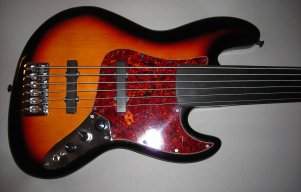
Both in one with the G&L L2500. I will say that passive seems to work better with effects.
In the old days I used to be an activist. With basses like Modulus, Ken Smith, Alembic, etc. why not? I sort of regarded all the passive love as pretty much misguided. After all the whole front end of your amp is active! But I must say, that my G&L L2500 brought me around. Yes in deedee there IS something about a passive bass! While I'm no convert, I do use passive on the L2500 about 50% of the time. And also I expanded the bass herd to include quite a few passive Fender clones (mostly SX or Squier) although my Fender Jazz V is the deluxe active. (SX 6 string in avatar is passive and positively KILLER!)


