
Well, they could use the form that is there and waiting for them on the ASCAP web site...Invalid Link Removed .I don't know if there's a way that an originals band can let them know they're playing their own music somewhere,

TalkBass has been independent since 1998. Add your voice.
Create a free account to reply to discussions, view embedded media, and browse with fewer display ads.
Join free Log in
Want zero display ads or expanded classifieds tools? Compare plans.
Well, they could use the form that is there and waiting for them on the ASCAP web site...Invalid Link Removed .I don't know if there's a way that an originals band can let them know they're playing their own music somewhere,


i'm always amused at the folks who have strong opinions on these issues --- without having a dog in the fight! the performance rights organizations are for creators (songwriters) of music. they don't care about protecting hobbyists posing as 'artists' or 'musicians' on the weekend.

Spotify and YouTube pay almost zero to artists.
Another thing for bands to consider, especially tribute bands, is the use of the original band's artwork. Tribute bands typically take the original band's logo or other artwork and put their own name on it. My brother is an intellectual property attorney and has told me that the fine for using the original band's artwork is up to $75,000 per use. So if a band creates 6 posters, their total fine could be as high as $450,000.
- re: your version of dog-in-the-fight: you'll have to find another hobby, right?A dog in the fight would be when venues stop doing live music. I look forward to your world tour.

You can't pay a "royalty" to use another band's artwork.
It doesn't matter if the tribute band is making $2,000; $2 or $2 million. It's illegal to use another band's intellectual property.
Why should a band be allowed to profit from another band's work?
- re: your version of dog-in-the-fight: you'll have to find another hobby, right?
- re: "world tour": a songwriter doesn't need to leave home to do that! anyway = apples and oranges.
However, why doesn’t ASCAP and BMI go after Spotify, Youtube, Netflix and all the other streaming and online services that HAVE money and make them pay a reasonable fee.

I was just thinking, rather than have a separate "union" for collection of royalties and multiple smaller unions repping musicians directly, why not have a national union and every member is responsible for policing the misuse of copyrighted material. Musicians are busy but I don't know a single successful independent contractor or self employed individual who isn't, especially if the amount of work is in direct proportion to your earnings.
Or maybe require anyone who wants to play in public become a union member and part of that responsibility is to self report the songs you cover and pay a flat rate per song based on a percentage of what you earned to play that song, say one percent. You play a typical bar night and make a hundred off a 40 song setlist, you pay forty bucks for the use of those songs. To keep everyone honest, kick them out of the union if they refuse to pay. They can still play, but only original compositions and they have no authority to collect on the use of that material because they are not a member of the union. In short, give everyone making the music a stake in the game and quit relying on someone else to collect your money for you except for someone in the same situation. If music venues didn't have to pay all the enforcers, they can afford to pay bands a little more so paying to use someone else's music won't hurt the bottom line as bad for everyone involved. In an era where you can reach the world from anywhere you have a connection to the internet, you could even take it one step further and put all member music in a single location and anyone who wants it has to go there to get it and any money earned goes directly into the song owners account less a small admin fee to keep the service up and running.
It seems if musicians took advantage of the technology currently available and worked together, all those billionaires paying you a couple cents a song would need to find someone else to exploit.
Yes, they do. It's the duty of the venue to file for every single song played live, own or cover.
thanks!ok, then I look forward to listening to your songs.
 it's entirely possible that you've already heard some it --- depending on your age and/or interests (i've written pop, jazz, and rock/blues for labels, film and video, and advertising, e.g., commercials, themes, etc. --- and i hope to have an album of 'contemporary jazz' completed before long...i'll let you know!)
the performance rights organizations are for creators (songwriters) of music.
thanks!
OK so a little bit of the money makes it back to the composers. But I think most of it goes to pay the staff at ascap.
I make about $10 a month from a song that get streamed about 3000 times per month. The president of Spotify is a billionaire, and everyone who works there makes over $100,000 a year. Maybe I’m wrong; maybe that’s fair and equitable. If it wasn’t for them I wouldn’t make anything. Idk
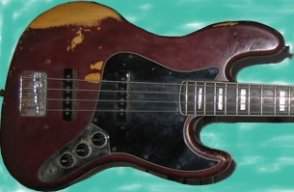
Agreed it would be pennies at most, but it is also the principle of it. And while ASCAP / BMI probably pays Jack White and Mark Robson, are they still paying Herman’s Hermits, The Strawberry Alarm clock, Familyman Barret (he just had to sue them for royalties), etc their royalties? Or even Jerry Garcia’s estate given the big increase in the popularity of Grateful Dead cover bands? Or is it all going to Lady Gaga/Ariana Grande etc. chart-topping pop stars?You bring up a point, but the counter point is whether that would amount to any actual money in terms of royalties. One band playing their own material in clubs how many times a year is probably very tiny change compared to the number of times Seven Nation Army or Uptown Funk get played by countless bands in countless venues. I don't know what the royalties per play would be, but yes it's an imperfect system that does require the music to at least be on someone's radar in order to get royalties paid.
I don't know if there's a way that an originals band can let them know they're playing their own music somewhere, but it you're getting paid for that performance by the venue it certainly eclipses what you might theoretically be owed by ASCAP, who would have no knowledge that the music is even being played unless someone tells them.
i agree that not enough of the pie goes to the hungriest --- but if you're a member of one of the organizations = you get to politic/fight for what you want. otherwise, you're an observer = no dog in the fight!The reality is that the performance rights organizations are for performance rights organizations.
I'm sure my band has covered it numerous time.
 what does your band cover?
Looks like you have the same problem with music streaming down under as we do here. IMHO, it is not "fair" because as a business strategy streaming services seriously devalue the musical material they provide as their product by offering this product excessively cheaply to their clients. Thus, the profitability of the big streaming companies depends almost entirely upon them not having to pay very much (almost nothing) in artist royalties. In the US, judicial tribunals acting on the basis of consent decrees are the final arbiters of streaming practices as far as the royalties they are required to pay are concerned. Recent hearings set the royalty rates at almost nothing.
i agree that not enough of the pie goes to the hungriest --- but if you're a member of one of the organizations = you get to politic/fight for what you want. otherwise, you're an observer = no dog in the fight!
I think your dog may be a little smaller than you’re barking.
i'm not barking here --- i'm defending the right of a songwriter to join an organization which might look out for his/her interests in the pursuit of compensation for creativity. i'll assume that you don't have the experience to which i'm referring. and if you do: better luck on your next project! 


