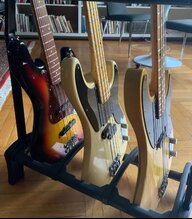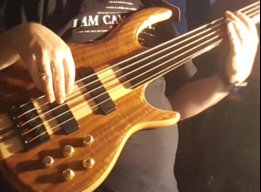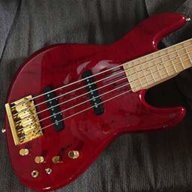
Sadly, it may not be as simple as alder v. ash. This seems particularly true of ash, as I've seen/heard/felt different tonal characteristics based on the density of the ash, which can vary widely. And for any given piece of wood, there will be sonic consequences based on how - or how long - the wood was cured prior to bass manufacture. And that's only the body. Effects of the neck wood and fingerboard (don't forget that the fingerboard is your interface with the instrument, even if there are strings - and probably frets - intermediating that interface) are also considerable.
I increasingly conclude that the primary point of a boutique bass is the likelihood that the wood will have been well-selected and well-treated - body, neck and fingerboard. Particularly with respect to combinations of these factors. I'm particularly impressed by Yamaha's efforts to promote wood cure practices at the mass-market level.
And this is not to say that pickups/electronics/strings/hardware are not important! Everything counts. But if the wood is not good, then even the finest pickups and electronics may be no more than lipstick on a pig.
I increasingly conclude that the primary point of a boutique bass is the likelihood that the wood will have been well-selected and well-treated - body, neck and fingerboard. Particularly with respect to combinations of these factors. I'm particularly impressed by Yamaha's efforts to promote wood cure practices at the mass-market level.
And this is not to say that pickups/electronics/strings/hardware are not important! Everything counts. But if the wood is not good, then even the finest pickups and electronics may be no more than lipstick on a pig.