My ply bass is fitted with a Full Circle pickup. I've tried both the tried-and-tested GK MB150 combo and a Fishman preamp into an Aguilar TH500 with a Schroeder 1x12 cab. The Aguilar is more transparent to my ear, and has a lot more headroom.

TalkBass has been independent since 1998. Add your voice.
Create a free account to reply to discussions, view embedded media, and browse with fewer display ads.
Join free Log in
Want zero display ads or expanded classifieds tools? Compare plans.

No one has ever accused a Gallien-Krueger amp of being uncoloured.I've tried both the...GK MB150 combo and an Aguilar TH500...The Aguilar is more transparent to my ear.

No one has ever accused a Gallien-Krueger amp of being uncoloured.


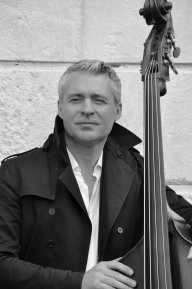
That's a funny looking bass in your profile photo.Most jazz players are so unconsciously influenced by pop and rock, with regard to volume level alone, that even straight ahead players often play really loud. Most combo situations call for some kind of bass amp. For upright, I really like the acoustic image.
I saw Dennis use an amp and pickup on many gigs and many others unamped, so he did what was called for. Neal uses a mic in larger places as well. I prefer to play unamped but find that at times I need to use one.That's a funny looking bass in your profile photo.
That may be true in Rhode Island, it's not true everywhere. The vast majority of audio and video files I have posted here have been of trio, quartet and quintet gigs done with no amplifier. There are a couple of videos where I used a mic on the bass, but even those (the Club Bonafide stuff) it's not a hot mix into the house. Check out online vids and recordings of players like Dennis Irwin, Neal Miner, Jamale Deshon. John Webber etc. and you can hear what folks who play without an amp all the time sound like.
Like Scott alludes, it's garbage in/garbage out. Work on using those things at the beginning of the sound chain, your arms and hands (and ears). As Dennis Irwin said, playing in tune is the best amplifier.
And we all do, but the default of using an amp for any and all situations (like the "smaller clubs and quieter settings") is better (in my opinion) addressed by trying to develop a bigger and better acoustic sound than searching for different amplification.I saw Dennis use an amp and pickup on many gigs and many others unamped, so he did what was called for. Neal uses a mic in larger places as well. I prefer to play unamped but find that at times I need to use one.


The best amp for jazz is no amp.
Hey, thanks for the kind words Ed! And yes, I agree completely about developing an acoustic sound first of course.And we all do, but the default of using an amp for any and all situations (like the "smaller clubs and quieter settings") is better (in my opinion) addressed by trying to develop a bigger and better acoustic sound than searching for different amplification.
If anyone doesn't know Earl Sauls, he's a wonderful player and you can check out a lot of his music on youtube.
I'd have to go with Acoustic Image, everywhere I've played one it's always been the best sound with the least effort
Which model do you use?
- Steve

Hi. I see that you just joined today. Welcome!
Long story short, I've found that approaching MBOL is a combination of:
1) Good technique. The quality of your amplified sound will only begin to approach what you can put out of your bass acoustically. Tone issues related to technique can be, well.... amplified when you're plugged in.
Ok, but I won't be able to hear you.
Big thanks Jmlee !Good point here. To get a really good "acoustic" sound out of any pickup/amplification system, you need to have the gain of the amp down far enough that you really get a good pull on the strings to get the volume level you want. My sound goes to crap when I have too much gain and I end up sort of tickling the strings instead of leaning in and getting lots of string motion. Then I smarten up, lower the gain, and get my sound back with string motion.