Enjoy the benefits of a premium membership!
Upgrade Account
-
TalkBass has been independent since 1998. Add your voice.
Create a free account to reply to discussions, view embedded media, and browse with fewer display ads.
Join free Log in
Want zero display ads or expanded classifieds tools? Compare plans.
You are using an out of date browser. It may not display this or other websites correctly.
You should upgrade or use an alternative browser.
You should upgrade or use an alternative browser.
More options
Who Replied?
Best approach? Don't overthink it, just pick it up and play it.


Best approach? Don't overthink it, just pick it up and play it.
^This. A thousand times this.


I took the plunge 40+ years ago and had my only bass unfretted. I guess a Jaco thing but don't remember. So I suggest total immersion. I will confess since my bass was a conversion, I had fret lines. I played for a year fretless only.
If memory serves, for the first month it was pretty rough.
The bass was a Travis Bean, so if anybody has a defretted Travis Bean with a brass nut. I have the history on it.
If memory serves, for the first month it was pretty rough.
The bass was a Travis Bean, so if anybody has a defretted Travis Bean with a brass nut. I have the history on it.

I’d make sure that the bass is set up well, intonation and string height. ... Make sure your left hand position is correct and consistent. ... This is something you can practice on a fretted bass then move to the fretless neck. Play the major scale over 3 strings (2,4,124,134) making sure your fingers land just before the fret, not just in between the fret, go slow and be exact. ... After that it’s training your ear. Playing off open strings helps. Play your low E and check it against your octaves, your thirds and fifths. ... Being honest with your progress will serve you well when it comes to playing a fretless finger board.
"Always practice with some kind of reference pitch to judge your notes with, or if you're really good at placement, for example, position your first finger exactly where it should go, and then work on octaves and fifths. The other really valuable thing is to be able to "pivot" with your finger or be able to roll it one way or another to "find" the pitch. This is similar to a vibrato, except you're slowly trying to find the intonation. This works well because any sustained fretless note should have a little vibrato or a little movement. It just sounds more alive. In the course of producing that sound, you can correct the pitch while you are at it, and that means being able to pivot on all four fingers. The main thing is control. If it's an involuntary "shake", then it's REALLY annoying! Less is always better. Less and slow."
Cliff Engel | Interviews - Gary Willis
That was a useful tip for me, slight adjustments in intonation by rolling slightly sharp/flat. Another interesting point is where do you want to intonate? If you play a lined fretless, would you rather split the finger by locating it directly above the line or play a little behind as on a fretted bass? I know that Willis now takes the split finger route, I would prefer the same position as I fret on a fretted.
Cliff Engel | Interviews - Gary Willis
That was a useful tip for me, slight adjustments in intonation by rolling slightly sharp/flat. Another interesting point is where do you want to intonate? If you play a lined fretless, would you rather split the finger by locating it directly above the line or play a little behind as on a fretted bass? I know that Willis now takes the split finger route, I would prefer the same position as I fret on a fretted.

All the "approach" I can think of is to get a fretless bass and play it.
Technique on fretless is another topic altogether. Work on your intonation and plucking touch, as they differ somewhat from fretted bass. You may be required to get used to a softer touch on your plucking fingers to achieve even "mwah".
Technique on fretless is another topic altogether. Work on your intonation and plucking touch, as they differ somewhat from fretted bass. You may be required to get used to a softer touch on your plucking fingers to achieve even "mwah".
If it's good enough for Tony Levin... then it's good enough for me.
I think this is my new mantra.


Would like some advice to switching to a Fretless. Thanks in advance.
THIS
It’s all about good consistent left land technique. The same that we should all employ playing fretted too. We just get away with bad technique on fretted.

Someone mentioned getting a fretless similar to your fretted. That’s good advice. Also if you choose to go unlined, look for a neck that has the dots on the binding facing up at you.,That’s a big help.Would like some advice to switching to a Fretless. Thanks in advance.

Like these?If possible, go for a fretless that's the same as your fretted - it's not quite so alien that way.
Play anything & everything that you would on a fretted bass, it's not a genre-specific instrument.
Pete.


For me it was close my eyes and listen. MHO.Would like some advice to switching to a Fretless. Thanks in advance.
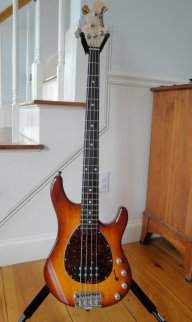
I didn't read all the above, but playing fretless makes you a better fretted player. Improves your ear, too! In other words, there is no downside to doing this.
Except that you're out the cost of a new bass. And you have (yet) another bass. Some of us view even that as a win!
Except that you're out the cost of a new bass. And you have (yet) another bass. Some of us view even that as a win!