

Enjoy the benefits of a premium membership!
Upgrade Account
-
TalkBass has been independent since 1998. Add your voice.
Create a free account to reply to discussions, view embedded media, and browse with fewer display ads.
Join free Log in
Want zero display ads or expanded classifieds tools? Compare plans.
You are using an out of date browser. It may not display this or other websites correctly.
You should upgrade or use an alternative browser.
You should upgrade or use an alternative browser.
More options
Who Replied?
Well, you gotta put your finger on just the right spot to play the notes cuz there's no frets.
I prefer a lined fingerboard to help play in tune. Others will tell you you don’t need lines and that an unlined board looks cooler.
Also, I like to use open strings where possible. Don’t have to worry about intonation!
Also, I like to use open strings where possible. Don’t have to worry about intonation!
Lines might help but not as much as developing a good ear for it. Plenty of people who think they got it down with lines would be very surprised if they listened to a recording of themselves.
If possible, go for a fretless that's the same as your fretted - it's not quite so alien that way.
Play anything & everything that you would on a fretted bass, it's not a genre-specific instrument.
Pete.
Play anything & everything that you would on a fretted bass, it's not a genre-specific instrument.
Pete.
Use open strings to check intonation.
I have both lined and unlined, but I don't think there is anything wrong with a lined fingerboard. People who tell you that you don't need the lines and it looks better without lines can do what they want. You do what you want. You don't need approval either way.
I agree with Deathblade Eric's post above about playing anything and everything that you would on a fretted bass. The more you play the fretless, the more you'll like it and the more you can use it for all kinds of applications, but it takes some time to get comfortable with it. Play with the bass signal going through a good tuner to measure how well you are doing at staying in tune. As you know, though, even fretted basses are not perfectly in tune all the way up and down the fretboard.
On a fretless with fingerboard lines, I still intonate it like I would a fretted bass. That is, I intonate at the 12th fretline, placing my finger at the twelfth fretline, but just behind the line (exactly where the finger ideally goes with the fret there). Some people play fretless by fretting on the line. Mine is intonated at the bridge so that I fret just behind the line. That way, my fretted and fretless basses all feel the same to me. Others may disagree with this advice or have other takes, but I have been successful with it. It is important to understand, however, that the lines are just a guide and you still have to use your ear on stage to make sure you are in tune.
I have found that the fretless feels "silky" to me, so I can get away with incredibly low action and play faster. When I go, for example, from my Fender Am. Std. Fretless Jazz to my Fender Am. Std. 5-String Fretted Jazz, it feels like I'm going from driving a Corvette to driving a city bus. Both are great and they can do different things, but sometimes the frets (and wider neck) get in the way.
An old teacher of mine once jokingly told me to play fast on the fretless and people won't have enough time to ascertain if any single note is out of tune! He was kidding, of course.
I agree with Deathblade Eric's post above about playing anything and everything that you would on a fretted bass. The more you play the fretless, the more you'll like it and the more you can use it for all kinds of applications, but it takes some time to get comfortable with it. Play with the bass signal going through a good tuner to measure how well you are doing at staying in tune. As you know, though, even fretted basses are not perfectly in tune all the way up and down the fretboard.
On a fretless with fingerboard lines, I still intonate it like I would a fretted bass. That is, I intonate at the 12th fretline, placing my finger at the twelfth fretline, but just behind the line (exactly where the finger ideally goes with the fret there). Some people play fretless by fretting on the line. Mine is intonated at the bridge so that I fret just behind the line. That way, my fretted and fretless basses all feel the same to me. Others may disagree with this advice or have other takes, but I have been successful with it. It is important to understand, however, that the lines are just a guide and you still have to use your ear on stage to make sure you are in tune.
I have found that the fretless feels "silky" to me, so I can get away with incredibly low action and play faster. When I go, for example, from my Fender Am. Std. Fretless Jazz to my Fender Am. Std. 5-String Fretted Jazz, it feels like I'm going from driving a Corvette to driving a city bus. Both are great and they can do different things, but sometimes the frets (and wider neck) get in the way.
An old teacher of mine once jokingly told me to play fast on the fretless and people won't have enough time to ascertain if any single note is out of tune! He was kidding, of course.
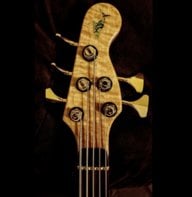
Use. Your. Ears. That's the only way to improve your intonation on a fretless and not be stuck staring at the finger board for the rest of time.
Five random suggestions, in no particular order:
- Find a good teacher.
- Record yourself playing your favorite songs on your fretted bass, and then play along on your fretless, trying to make it match exactly.
- Listen to recordings of great fretless players, and play along with them by ear.
- Use your eyes and the lines on the neck, to help you play in tune.
- Practice with a digital tuner, to help you play in tune.
Last edited:
Use. Your. Ears. That's the only way to improve your intonation on a fretless and not be stuck staring at the finger board for the rest of time.
Im finding in my first foray into fretless that a combo of lines, tuner, and ears is helping. Play slowly, listen. Then perhaps try a faster line and finish on a sustained note, listen and look at the tuner to see where youre at.
Im finding in my first foray into fretless that a combo of lines, tuner, and ears is helping. Play slowly, listen. Then perhaps try a faster line and finish on a sustained note, listen and look at the tuner to see where youre at.
Train your ears and you won't need the tuner. The best way to do that is to play along with other people, or recordings.
Don't look at the neck when you play. Let your ears guide you. Be precise with your left hand technique.
Thank you guys for some great advice. Some like playing with a tuner and playing to tunes I had played on fretted were ideas I have not thought of. I am strongly pondering getting a Tony Franklin. Love the new
"Lake Placid" blue version.
"Lake Placid" blue version.

Use. Your. Ears. That's the only way to improve your intonation on a fretless and not be stuck staring at the finger board for the rest of time.
1000% this. I play 6 string fretless and I don't look since I go by sound. It is not easy at first, but practice perfects muscle memory!

Best Approach to Fretless
that's it! if you practice a fretless EB enough = you'll play it way better than if you just "play around with a fretless." the only thing i'd add is "don't bother being intimidated by the prospect of playing a fretless" --- it will slow down the process of mastery and it will make the learning curve unnecessarily steep. jump into it straight ahead and have fun with it!
- lines: training wheels for some, 'confusing' for others
- unlined: looks cool for some, 'traditional' for others
- string choice: whatever you like --- fear of fingerboard wear is for kids
- setups/intonating: crucial to have a competent, reliable starting point
- playing in tune: practice!
there is no 'best' fretless bass except the one that feels the best in your hands. without any experience whatsoever: you might have to guess a bit, so go for feel. good luck with your "switch" to fretless!
it's not a big deal to play a fretless bass fingerboard. players have been doing it for centuries. it is a big deal to play any instrument well, however, and so you already know the drill: practice, practice, practice!Would like some advice to switching to a Fretless.
that's it! if you practice a fretless EB enough = you'll play it way better than if you just "play around with a fretless." the only thing i'd add is "don't bother being intimidated by the prospect of playing a fretless" --- it will slow down the process of mastery and it will make the learning curve unnecessarily steep. jump into it straight ahead and have fun with it!
- lines: training wheels for some, 'confusing' for others
- unlined: looks cool for some, 'traditional' for others
- string choice: whatever you like --- fear of fingerboard wear is for kids
- setups/intonating: crucial to have a competent, reliable starting point
- playing in tune: practice!
there is no 'best' fretless bass except the one that feels the best in your hands. without any experience whatsoever: you might have to guess a bit, so go for feel. good luck with your "switch" to fretless!


I'm no virtuoso on fretless, but I'm comfortable. My first (recent, it's a long story...) bass was a Ibanez TR500, an active Jazz-style. By chance, a few months later, I found a TR500FL, EXACTLY the same bass, but lined fretless. I took to it like a fish to water, mainly because I would play the fretted or fretless interchangably. That was probably my biggest advantage. My hands KNEW where to go, i just had to adjust the intonation some.
Later on, I got a Korean Spector. The Ibanez was not getting much play-time, and my fretless suffered somewhat (I said, I'm not a virtuoso. I'm almost pedestrian!). Just the way the instrument hung on a strap, made it feel different. I'm sure most of this is psychological... I seriously GASED for a fretless Spector, but those were mostly out of reach. Until I found the SpectorCore! It is a different instrument (no concave carve, different weight distribution as a hollowbody, slightly thicker neck), but it felt like A FRETLESS SPECTOR! Whatever I play on one, I can play on the other!
See if you can find a fretless that matches your fretted. It made a big difference for me.
YMMV
Happy fretlessing!!!
Diego
Later on, I got a Korean Spector. The Ibanez was not getting much play-time, and my fretless suffered somewhat (I said, I'm not a virtuoso. I'm almost pedestrian!). Just the way the instrument hung on a strap, made it feel different. I'm sure most of this is psychological... I seriously GASED for a fretless Spector, but those were mostly out of reach. Until I found the SpectorCore! It is a different instrument (no concave carve, different weight distribution as a hollowbody, slightly thicker neck), but it felt like A FRETLESS SPECTOR! Whatever I play on one, I can play on the other!
See if you can find a fretless that matches your fretted. It made a big difference for me.
YMMV
Happy fretlessing!!!
Diego
I'm just a fretless newb but I'd say 2 things:
1. Use 1-4 fingering (index-pinky)
2. Play with recordings.
1. Use 1-4 fingering (index-pinky)
2. Play with recordings.
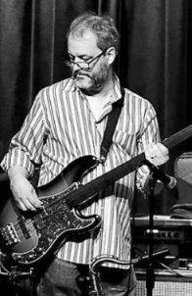
You're going to have fun! Fretless is the reason I'm still playing bass guitar.
It's great fun on gigs and I think it's more expressive than fretted.
My advice is record yourself and listen back to your playing and let
that guide you as you start to train your ears. Try recording your fretted playing on some
tunes you already know, or scales, and then play along with it, and then compare your
fretless playing to the fretted. It'll help you start to hear what you need to do next.
Good luck! Hang in there! Groove on!
It's great fun on gigs and I think it's more expressive than fretted.
My advice is record yourself and listen back to your playing and let
that guide you as you start to train your ears. Try recording your fretted playing on some
tunes you already know, or scales, and then play along with it, and then compare your
fretless playing to the fretted. It'll help you start to hear what you need to do next.
Good luck! Hang in there! Groove on!

It’s a “simple” matter of making the commitment to do it and putting in the time required. No different than what you went through learning to play a fretted bass. So if you can do it once, you can do it again as far as I’m concerned.
There’s a lot of mystic mumbo jumbo surrounding fretless playing. Don’t buy into it. It’s just another bass instrument that requires a certain skill set that’s similar but different than some of the skills needed for fretted bass. Since you’re already playing bass you have the advantage of not coming into it completely cold.
A live instructor is highly recommended if you can find and afford one. If not, master fretless bassist Tony Franklin has a course titled Fretless Bass Foundations over on TrueFire that costs $29 last I looked and is one of the better online lessons for starting fretless players. Highly recommended.
Here’s what’s in it:
There’s a lot of mystic mumbo jumbo surrounding fretless playing. Don’t buy into it. It’s just another bass instrument that requires a certain skill set that’s similar but different than some of the skills needed for fretted bass. Since you’re already playing bass you have the advantage of not coming into it completely cold.
A live instructor is highly recommended if you can find and afford one. If not, master fretless bassist Tony Franklin has a course titled Fretless Bass Foundations over on TrueFire that costs $29 last I looked and is one of the better online lessons for starting fretless players. Highly recommended.
Here’s what’s in it:
Tony organized the course into 3 sections. The first section is a primer designed to get you up and running on fretless bass quickly. Lesson segments include: Working with Tuning Tracks, Working with Exercises, Subtleties of the Fretless Bass, Intonation: Lined vs Unlined, Fretless Vibrato Variations, Getting to Know Your Fretless, Tone & Gear Considerations, and Fretless & Tablature.
In the second section, Tony guides you through 22 exercises designed to develop and optimize your fretless technique. ”You've had the foundation, the overview, the subtleties of what makes the fretless bass special - now it's on to the exercises. In Section 2, we'll build up your fretless bass foundations so you'll be able to play any style comfortably and confidently.”
Section 2 exercise lessons include: Playing on the Dots 1, 2, 3, and 4, Playing Between the Dots 1, 2, 3, and 4, Finger Shifting and Positioning, Four Fingers Workout, Moving About the Fingerboard, Slides & Note Entry 1, 2, 3, and 4, Slides and Subtleties, Landing Big Jumps, Playing 4ths Across Strings, High Notes Tuning, Playing Fifths, Sliding Harmonics, and Basic Chords on Fretless.
Improvisational performances are featured in the third and final section.
”In this section, I’ll show you how I incorporate the techniques and exercises that we've studied in this course. These will be very freeform, improvisational performances that stretch out.”Performances include Raga Groove, Groovy Boogie, Rock Jam, and Fretless Funk.
All 22 of the exercises are tabbed and notated and you'll also have the rhythm tracks to work with on your own. You can loop and slow down the videos to work with the lessons at your own pace.
I own and play a vintage Modulus Bassstar (and yes the model name has 3 s's) with a line-less board.
I also have a great - dirt cheap (I paid $60 for it) Squire Lined Fretless.
I enjoy playing these when my band does ballads, atmospheric tunes and songs that permit me to solo.
The one thing I'd suggest to anyone starting into Fretless playing (besides all the good advice above) is:
Intonate and place your fingers on the board exactly as you would a fretted bass. Avoid the opportunity that a fretless bass permits the player - to slur, slide & add expression - until your have mastered a basic sense of intonation. From there I'd suggest that all you need to add a "sense of expression," is the tiniest suggestion of vibrato in your fretting hand.
I can and do play my fretless basses no differently than my fretted ones.
I also have a great - dirt cheap (I paid $60 for it) Squire Lined Fretless.
I enjoy playing these when my band does ballads, atmospheric tunes and songs that permit me to solo.
The one thing I'd suggest to anyone starting into Fretless playing (besides all the good advice above) is:
Intonate and place your fingers on the board exactly as you would a fretted bass. Avoid the opportunity that a fretless bass permits the player - to slur, slide & add expression - until your have mastered a basic sense of intonation. From there I'd suggest that all you need to add a "sense of expression," is the tiniest suggestion of vibrato in your fretting hand.
I can and do play my fretless basses no differently than my fretted ones.


