Enjoy the benefits of a premium membership!
Upgrade Account
-
TalkBass has been independent since 1998. Add your voice.
Create a free account to reply to discussions, view embedded media, and browse with fewer display ads.
Join free Log in
Want zero display ads or expanded classifieds tools? Compare plans.
You are using an out of date browser. It may not display this or other websites correctly.
You should upgrade or use an alternative browser.
You should upgrade or use an alternative browser.
Best easy to use compressor?
- Thread starter Chris F
- Start date
More options
Who Replied?

If you want to just go all in, grab an Effectrode LA-1A. Great optical circuit + toooooobz 

I'm surprised that there has been no mention of the Xotic SP Compressor, which gets rave reviews elsewhere. I wanted to get a simple compressor to see/learn how it works, and I got the SP. (It was between that and the TC Electronics SpectraComp.)
It certainly is simple, and the resultant compression is partially dependent on how much gain you hit it with. This is similar to the compressor that resides in my Aphex Project Channel—input gain plus a ratio dial (3-way switch on the SP). I'm still trying to figure out how to use compression, even with simple solutions such as these.
Any thoughts on the SP?
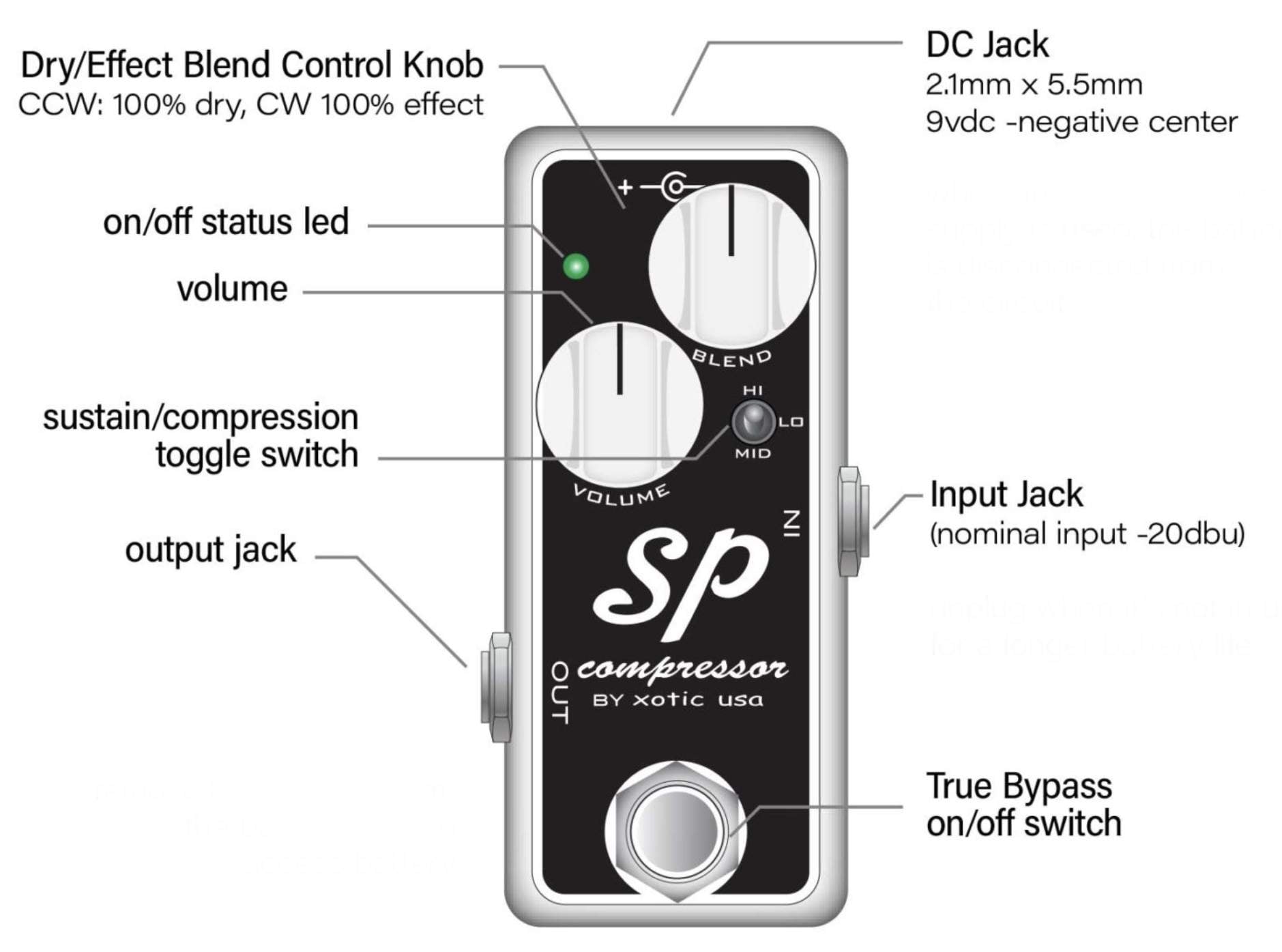
It certainly is simple, and the resultant compression is partially dependent on how much gain you hit it with. This is similar to the compressor that resides in my Aphex Project Channel—input gain plus a ratio dial (3-way switch on the SP). I'm still trying to figure out how to use compression, even with simple solutions such as these.
Any thoughts on the SP?
Last edited:

I play in a worship band and currently use a JHS Pulp N Peel as my compressor. I like it, but it adds a little grittiness that I would rather not be added from the compressor. I have found that if any pedals have too many knobs/switches I have trouble picking a setting, get frustrated, and look for something else.
I wish I could go somewhere and try several side by side, but it's hard to find somewhere that keeps a ton of bass pedals in stock.
What would you guys/gals suggest for me?
For what purpose are you looking for a compressor?
You mention you are planing in a worship band so might there be FOH that is running compression on your signal already?
Answers to these questions will help me make a recommendation.
I play in a worship band and currently use a JHS Pulp N Peel as my compressor. I like it, but it adds a little grittiness that I would rather not be added from the compressor. I have found that if any pedals have too many knobs/switches I have trouble picking a setting, get frustrated, and look for something else.
I wish I could go somewhere and try several side by side, but it's hard to find somewhere that keeps a ton of bass pedals in stock.
What would you guys/gals suggest for me?
Best and easiest to use? Boss BC-1X, hands down. Don't even bother with anything else for bass guitar.
TC Electronic SpectraComp
1 Knob, for easy, use as is.
If you want to get more complicated, you can load different profiles from TC into it.
If you want to get way more complicated, you can edit the profile yourself.
That way you can do REALLY easy, but if you don't like the original sound, your not stuck.
The tc electronic SpectraComp is only easy to use if you plan on never getting the best out of it. All of the factory toneprints are awful. The pedal only sounds good if you program it yourself, and if you don't know how to program a digital multiband compressor without training wheels, and you aren't going to take the time to learn, I can't recommend buying it. It's literally the hardest to use compressor on the market, but ultimately the most flexible and best-sounding.
I used to use an SP compressor by Xotic. It worked well. It has 2 knobs and a 3 way switch for high, med and low. I always turned the knobs a 1/4 turn to about 9 O'clock. It gets noisy on high but worked well on the low and med settings. I paired it up with an EP booster, also made by Xotic, and then straight into an older Subway DI. They worked great together and the boost helped my passive bass. I play at few different churches and an outdoor street ministry. Lately I have been using a Cali 76 compact bass compressor into the Subway. The Cali is a little quieter. (Not as much hiss.) I know you have to setup quickly at church and the nice folks there are always talking to you while trying to setup. That can make it difficult to concentrate for someone like me. The Cali has 6 knobs. If I am in a hurry, I will set all the knobs at 11 O'clock and play with the upper right knob for input - volume. I have a very small pedalboard for most churches except the biker church, where I use a bigger pedalboard with more options. Once I get things setup, I take a pic with my phone to help me remember. I save the pic in my favorites.
Hey Scoobs, I greatly appreciate all your reviews of compressors. That is why I finally decided on the Cali CB. A lot of us Worship bass players use compression and other pedals at church because a lot of times there is a volunteer in the tech booth that may not have the training required to run sound. Also some of the smaller churches may not have a good options for compression on their board.

I would be very interested in getting to try a side-by-side comparison of the Keeley bassist and my Keeley compressor mini. The Keeley bassist gets a lot of love for being transparent. I wouldn't call the mini transparent though. It shaves off a little bit of the low end and it has a certain "sauce" to the sound. Sounds fantastic with a jazz bass or stingray. Not so great with a P bass in my opinion.
Eight years ago I had MXR bass compressor and I never gelled with it. Attack and release where just a bit "vague" if you will and kept me fiddling. So I sold it.
Then, last year I bought a Bass fly rig v2, which has 2 knob compressor (compression and level), which I started using and I liked. However the BFR is a little noisy so I'm building a pedal board to replace it for which I have bought a Darkglass Hyper Luminal which I really, really like. It's intuitive, but still gives me options if want them. For instance I thought I would like the Super Symmetry setting the most but after 10 minutes toying around with it I found I like the BUS setting more. So it gives you options, good options, but I still know what all the knobs do.
So it might be a good one for you to consider.
Then, last year I bought a Bass fly rig v2, which has 2 knob compressor (compression and level), which I started using and I liked. However the BFR is a little noisy so I'm building a pedal board to replace it for which I have bought a Darkglass Hyper Luminal which I really, really like. It's intuitive, but still gives me options if want them. For instance I thought I would like the Super Symmetry setting the most but after 10 minutes toying around with it I found I like the BUS setting more. So it gives you options, good options, but I still know what all the knobs do.
So it might be a good one for you to consider.

Cave Puppy
"Humph Bo, he's wond!" - John Lennon
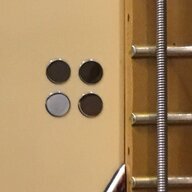
Let's don't forget the four dip switches INSIDE that pedal. Probably not the best compressor on which to learn about compression. The Xotic SP Comp does a lot of stuff "under the hood" which makes learning about compression more difficult.I'm surprised that there has been no mention of the Xotic SP Compressor, which gets rave reviews elsewhere. I wanted to get a simple compressor to see/learn how it works, and I got the SP. (It was between that and the TC Electronics SpectraComp.)
It certainly is simple, and the resultant compression is partially dependent on how much gain you hit it with. This is similar to the compressor that resides in my Aphex Project Channel—input gain plus a ratio dial (3-way switch on the SP). I'm still trying to figure out how to use compression, even with simple solutions such as these.
Any thoughts on the SP?
View attachment 4805773
Thanks. I've left the DIPs in their default positions.Let's don't forget the four dip switches INSIDE that pedal. Probably not the best compressor on which to learn about compression. The Xotic SP Comp does a lot of stuff "under the hood" which makes learning about compression more difficult.
Cave Puppy
"Humph Bo, he's wond!" - John Lennon
If you really want to know how compression works there are some great audio mixing tutorials on YouTube that specifically address how compression works. It works the same way in a plug-in as it does in a pedal. Pedals usually simplify what needs to happen in a compressor. The source audio Atlas is a compressor plug-in in a pedal. It's taking me years and years to understand compression.I'm surprised that there has been no mention of the Xotic SP Compressor, which gets rave reviews elsewhere. I wanted to get a simple compressor to see/learn how it works, and I got the SP. (It was between that and the TC Electronics SpectraComp.)
It certainly is simple, and the resultant compression is partially dependent on how much gain you hit it with. This is similar to the compressor that resides in my Aphex Project Channel—input gain plus a ratio dial (3-way switch on the SP). I'm still trying to figure out how to use compression, even with simple solutions such as these.
Any thoughts on the SP?
View attachment 4805773