It depends on the song, but for most cases I'll always give the vocalist the prerogative since it's the most limited instrument.
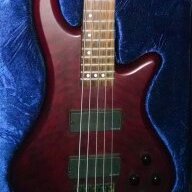
If I don't like the way my bass plays or sounds, I can get another one or I can have several around for the sounds I want to create. If I want more lower range from my bass, I can get a 5 string. If I want more higher range, I can get a 6 string or piccolo bass. If I'm still not getting the range I want, I can get an octave pedal. If I want a gritter tone, I can add an overdrive pedal. If I want it cleaner, I can change pickups or preamp. If I want a different timbre, I can use EQ, different gauges of strings, pickups, preamp, amplifier, etc.
The issue is that for vocalists, the above options aren't available like they are for bassists. Sure, I can take lessons and practice to increase my range, but I will hit a peak. I can never sing like Michael Jackson or Ann Wilson without a falsetto and sounding ridiculous in the process. Sure I could use effects like an octave or auto-tune, but I would sound ridiculous singing Don't Stop Believing like T-Pain. If I have a voice like Rick Astley, it would be ridiculous for me to sing a Led Zeppelin tune. Vocalists have a limited range and timbre, so that's why they get the prerogative. The reality is that a good band will play to the strengths and limitations of the players. If the singer can really nail the song doing it a whole step down, but do it mediocre in the original key, why wouldn't you transpose? There's also the issue of endurance. If a song will tire out a voice in one key, but it's easy in another key, you should choose the easier key, especially if the singer has to sing 40 songs that night. Look at it this way: Say you are playing a G on the third fret of the E and want to go to the major 3rd (B) on the 7th fret. You could make the stretch with your pinky, or you could play the next string down at the 2nd fret. There's going to be smaller differences in timbre between those 2 fret positions, but if you're doing G major stuff all night, then your hand will get much more tired doing an all-nighter making the stretch instead of just playing the same note on the A string.
The important thing is that the band sounds good, and that means you have to include the vocalist as well. Maybe it sounds better tuned a 1/2 step down or in drop D, but if the vocals can't hit it, then you need to either transpose or drop the tune. I can play Don't Stop Believing in the original key, but I don't have even close to Steve Perry's range, so I'll have to do it in C. The difference is one key will make a crowd favorite FUBAR, and the other won't destroy the small amount of dignity still in that song. The other thing is transitions from one song to another. If you have to switch instruments, retune, etc. between songs you can disrupt the flow of the show and potentially kill momentum. If you have the crowd rocking, one of the worst things you can do causing dead air by retuning.
My only exception to giving the vocalist prerogative on key is if a signature instrumental part of a song can't be played in the transposed key. For example, take SRV's Pride and Joy. The intro is done in E or Eb depending on your tuning. It relies on the open E string for the intro. You can play it in F by capoing it, but you can't do it in D with a capo without it sounding way too high. Detuning that much may mess with a guitar setup, or take too long between songs, so your choice is the either pick a key that the both the vocalist and guitarist can sing and play the intro or drop the tune from the repertoire.