

Enjoy the benefits of a premium membership!
Upgrade Account
-
TalkBass has been independent since 1998. Add your voice.
Create a free account to reply to discussions, view embedded media, and browse with fewer display ads.
Join free Log in
Want zero display ads or expanded classifieds tools? Compare plans.
You are using an out of date browser. It may not display this or other websites correctly.
You should upgrade or use an alternative browser.
You should upgrade or use an alternative browser.
Best practice routine for learning fretless, for fretted player
- Thread starter BassicJazzy
- Start date
More options
Who Replied?
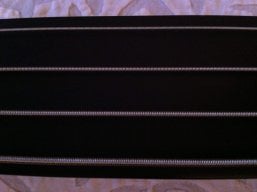
Must be how it's intonated, but my fretless plays in tune with my finger pad JUST behind the lines, not ON the lines, which is really where your fingers should be on fretted too. I think we get sloppy with a fretted bass... because we can. No such luxury on a fretless.
I did neither of these things for the most part (I don't trust my ears enough, to let them be solely responsible). I've always played behind the lines.Play on the lines, not behind them. Use your ears.
Jaco looked at his fingers and his ears were superb, is good enough for me.
Last edited:
As flippant as this might sound....play the damn thing. The more you play, the better it gets. I've never played fretted bass. I just picked up a fretless and started playing. Been at it for 13 years now, never had a complaint.
However, if you want something more specific, one thing that may be helpful, is to use a tuner and check where your notes are on each fret, even each string.
However, if you want something more specific, one thing that may be helpful, is to use a tuner and check where your notes are on each fret, even each string.
I like to practice intervals…3ds, 5ths, minor 3ds, and octaves. that really helps my intonation and my ear. also practicing playing slowly with the best possible tone and intonation..
if you want to see a master of fretless playing with no dots or lines, watch any video of Yo Yo Ma. his speed and intonation are almost incomprehensible…or of course NHOP!
if you want to see a master of fretless playing with no dots or lines, watch any video of Yo Yo Ma. his speed and intonation are almost incomprehensible…or of course NHOP!

I kinda agree with this. This is how I picked up fretless. I mean, I literally picked up a fretless bass in a shop and after a few minutes of understanding how it was played, I found adapting to it to be really natural. Despite having never played a fretless instrument before. After about a week of playing that fretless exclusively, going back to frets felt weird.As flippant as this might sound....play the damn thing. The more you play, the better it gets. I've never played fretted bass. I just picked up a fretless and started playing. Been at it for 13 years now, never had a complaint.
However, if you want something more specific, one thing that may be helpful, is to use a tuner and check where your notes are on each fret, even each string.
With regard to the tuner. This is the part where intonation on a fretless "matters". Can you correct intonation by ear? Yes. But when you're learning, having a reliable visual aid is helpful in building your muscle memory. Being able to say "this is where the notes are supposed to be" just takes an element of guesswork out when you haven't built up the skill of correcting for it.
Thank you all for your input and ideas. I probably should have clarified up front that I bought the fretless with objective that it would be a secondary instrument, not my primary bass. I want to use it to make be a better player on the fretted instrument, plus as an additional tool in my toolkit. I chose the SR370EF because it has a neck identical to my SR1350B, at least in terms of physical dimensions and general intonation. I alternate between 3 fretted basses, playing one per day, then moving on. I find this keeps me fresh and challenged. For now, I'm going to put the SR370EF into that rotation, so it will get played exclusively for one out of every 4 days. I'll see how that goes. Rich Brown has a drill outlined on his Brown'sTone YouTube channel that I will follow, which includes ideas some of you proposed, and I will use a C drone. I've used a lot of Rich's videos and they are always excellent and efficient. Fyi, I learned originally by ear, and my fingers know where to go on the fretboard (eh, maybe not so much in upper register), so it will be about adjusting intonation, and position. I may have to change finger technique on fretting hand for the upper register, since I'm more a pads player than fingertip player. I will record my playing and painfully listen to whatever crap I'm producing to try to improve technique and intonation. If all of these do not work, I will consider putting my fretted basses away for a period and focus exclusivley on the fretless, until I get it to at least a decent level. Again, though, I am always going to be a fretted player first, fretless second. By point of comparison, I leave my Ovation Elite Acoustic in its case, one of my oldest and most expensive instruments, even though I love it and tend to play it exclusively when I get into it, because if I play it for more than a matter of several days in a row exclusively, I come away ham-fisted. It wrecks my touch!
Committing to playing fretless, at least temporarily, is crucial for improving your ear and hand positioning. Reading music is an excellent way to enhance both skills. It encourages you to minimize the time spent looking at your fingerboard and to think about the most efficient left-hand positions. You might only glance at the fingerboard only when changing positions. Using open strings can effectively transition from one position to the next. It's important to have a reference to ensure accurate intonation, such as drones, recordings, or other instruments.
Try to avoid excessive slides and the "mwah" sound; sometimes, less is more. Notation software can provide playback of your compositions as a reference. Consider exercises like playing scales with harmonized double-stop 10ths. Recording yourself is beneficial; I record every rehearsal and performance. Listening to these recordings helps identify intonation issues, which can sometimes be resolved with different fingerings.
Try to avoid excessive slides and the "mwah" sound; sometimes, less is more. Notation software can provide playback of your compositions as a reference. Consider exercises like playing scales with harmonized double-stop 10ths. Recording yourself is beneficial; I record every rehearsal and performance. Listening to these recordings helps identify intonation issues, which can sometimes be resolved with different fingerings.
I think that is an excellent idea, thank you! I will test the board thoroughly, before and after I get it set up. The EF370 comes with non-brand rounds and I'm switching it to D'addario light XL flat chromes, but I'll play it with the rounds for awhile first.As flippant as this might sound....play the damn thing. The more you play, the better it gets. I've never played fretted bass. I just picked up a fretless and started playing. Been at it for 13 years now, never had a complaint.
However, if you want something more specific, one thing that may be helpful, is to use a tuner and check where your notes are on each fret, even each string.
I know it's dogma here that the damage from rounds on fretless boards is overplayed, except this time I'd really advocate for getting flats on ASAP. You don't have technique down yet so you're more likely to scar up the fingerboard, and the boards on Ibanez fretlesses are notoriously soft wood. The boards are hard-coated, but once that coating wears through, whoosh.The EF370 comes with non-brand rounds and I'm switching it to D'addario light XL flat chromes, but I'll play it with the rounds for awhile first.
Also -- I don't recall whether you'd previously mentioned you'd bought it new or used, but new those basses ship with Chrome flats. If yours came with rounds, somebody messed with it.
That's a good point, thanks! Yes, I'll put the flats on it next week. Probably best to break the flats in a bit before taking it for set up anyway?I know it's dogma here that the damage from rounds on fretless boards is overplayed, except this time I'd really advocate for getting flats on ASAP. You don't have technique down yet so you're more likely to scar up the fingerboard, and the boards on Ibanez fretlesses are notoriously soft wood. The boards are hard-coated, but once that coating wears through, whoosh.
Also -- I don't recall whether you'd previously mentioned you'd bought it new or used, but new those basses ship with Chrome flats. If yours came with rounds, somebody messed with it.
The bass came new from GC. According to the Ibanez site, it ships with D'addario EXL165 nickel rounds, med/light gauge (.45 - .105). I stand corrected that it shipped with no-brand rounds. With exception of the LaBell LTFs on my Sire P5R, all my basses have D'addario strings. It's my fav brand. The XL Chromes will be slightly lighter but should be almost as bright. Tension should be comparable.
Indeed. I don't remember the last time I played a fretted bass...start playing fretless. never quit. good luck!

Wow... you're right. seems weird to me that Ibanez would use something around the hardness of rosewood for their lower end fretless when they use panga-panga, a relatively soft wood, on their higher end fretless basses.According to the Ibanez site, it ships with D'addario EXL165 nickel rounds, med/light gauge (.45 - .105). I stand corrected that it shipped with no-brand rounds.
Well, hang on to the EXLs, they're decent strings and you might want to put them back on later.

JazznFunk
Supporting Member
Stick to fretless for a while. Record yourself -- your intonation might not be as good as you think. If you're finding it hard to shake the habit of looking at the board, practice with the lights off. Not joking about that, I found it helped me a lot.
Odds are pretty good you'll always find yourself flubbing a little when switching between them. After steady practice on fretless for a while you might find it easier to switch between them than it is now.
Looking at the board is fine. There are no super easy, obvious PHYSICAL landmarks with fretless (lined or unlined) like there are with double bass, and the frets can make bad shifts more forgiving on fretted. For large shifts, you have to look at the neck. No, you shouldn't STARE at it, but this dogma of 'don't look at the fretless fingerboard' is not really helpful or valid. As long as your fretted and fretless basses are the same scale length, the muscle memory regarding finger placement will transfer to a large degree.
What I would suggest in terms of your FRETTED bass technique which will help you on fretless, is to practice fretting a note ON the fret in question, rather than in between the frets. Jaco mentioned this in his instructional video from the 80s as well. Right on the fret will translate to right on the 'line' on the fretless bass and help reinforce that muscle memory about spacing, etc. It also results in better, clearer tone on fretted too.
JazznFunk
Supporting Member
Yes. All of this. Thank you for also tossing another dart out there to pop the dogma balloon about 'not looking'. I've been playing upright nearly as long as electric (fretted and fretless) and no one will ever get crap from me about looking at a fretless board when necessary.Don't worry about looking and don't have an inferiority that upright players may consciously or unconsciously throw at you because
The fretboard of a fretless is further away, and and your sightlines is not as perpendicular as an upright
Less reference points
Smaller scale so you have to be more precise
Resist the temptation of mwah and slides and vibrato for now. Try to master playing it like a fretted would sound.
Work on ear training for intervals starting with octaves, fifths and thirds. Use open strings as reference as much as possible
You do not necessarily have to lock the fretted but use it as a tone and intonation reference but commit to the fretless. Do not give up easily.
Do not play in the dark unless you can play in the light in tune consistently, any key. Jaco, Gary Willis and Pino looked and still look at the fretboard. Playing in the dark may be a good thing later on when you are gigging but it's putting the cart before the horse, It's more a bragging rights thing. If you are singer I can understand, but looking at the fretboard is not a ding on your skills,. If you are a singer you need to simplify your lines.
I would rather have the ability to play more keys in tune and still be looking rather than play in the dark for only 2 to 3 keys.
Lines do not make you feel any more unskilled on the fretless
Practice single string scales all the way tp the end of the board.
Enjoy and good luck,
That's my feeling on the subject too. Looking over or fixating on the board is no good, but a side glance to check positioning isn't a sin. I can play without looking, staring straight ahead, as long as I remain below the 9th fret. It actually opens me up creatively not to look. If I'm going above and into upper register I need to check my positioning, I'm just not as comfortable, especially as distance between frets shrinks in upper register.Looking at the board is fine. There are no super easy, obvious PHYSICAL landmarks with fretless (lined or unlined) like there are with double bass, and the frets can make bad shifts more forgiving on fretted. For large shifts, you have to look at the neck. No, you shouldn't STARE at it, but this dogma of 'don't look at the fretless fingerboard' is not really helpful or valid. As long as your fretted and fretless basses are the same scale length, the muscle memory regarding finger placement will transfer to a large degree.
What I would suggest in terms of your FRETTED bass technique which will help you on fretless, is to practice fretting a note ON the fret in question, rather than in between the frets. Jaco mentioned this in his instructional video from the 80s as well. Right on the fret will translate to right on the 'line' on the fretless bass and help reinforce that muscle memory about spacing, etc. It also results in better, clearer tone on fretted too.
Your idea, Jaco's idea, of fretting on the fret itself might be challenging for me because I am a pads player. I keep my fingers fairly flat. Since you've been right about other things, involving the fretting technique and left hand positioning, in past discussions with me on TB I am willing to give it a try. Could be a good way to learn to recurve my fingers for the upper register, and achieve greater precision on either fretted or fretless.
JazznFunk
Supporting Member
Always worth a try for sure. I used to be a 'pads' player early on and then when I got serious about fretless a year or 2 in I started switching to more of the tips for accuracy in intonation. It helped when I started upright as well. Good luck!That's my feeling on the subject too. Looking over or fixating on the board is no good, but a side glance to check positioning isn't a sin. I can play without looking, staring straight ahead, as long as I remain below the 9th fret. It actually opens me up creatively not to look. If I'm going above and into upper register I need to check my positioning, I'm just not as comfortable, especially as distance between frets shrinks in upper register.
Your idea, Jaco's idea, of fretting on the fret itself might be challenging for me because I am a pads player. I keep my fingers fairly flat. Since you've been right about other things, involving the fretting technique and left hand positioning, in past discussions with me on TB I am willing to give it a try. Could be a good way to learn to recurve my fingers for the upper register, and achieve greater precision on either fretted or fretless.
Oh, I can do that. As long as I don't listen to what comes from my playing, it's great!Play your fretted bass without looking ...... ever. Once you can do that, you've completed the pre-requisite training for a fretless.
I get the point. I've gotten better on fretted than I ever thought I would be, and sucked for a long time in my early days, so I don't mind sucking a little on fretless while I learn the basics of it. Fortunately no audience other than my wife has to be tortured by the process of it. Since she hasn't contributed to the tip jar in quite awhile, what do I have to lose by trying? What, she's packing her suitcase? Wait honey, don't leave....
My objective is to become a better and more versatile overall hobby-level player, not a master on the fretless. I'm almost 71, got to play my remaining chips wisely.

devnulljp
Supporting Member
Put a tuner inline for at least a year.
I put my old TU-12 inline when I started playing upright and watched that needle all the time until on day I noticed I didn't need it.
I put my old TU-12 inline when I started playing upright and watched that needle all the time until on day I noticed I didn't need it.


