I will refresh your collective memories because it was a science based argument, but only to the extent that Bill was willing to argue the most basic of the science but not allow for all of the adjunct science that were used to modify the basic science. The basic science is only correct in the most simple of implementations. Bill was unwilling, or unable to accept that there were design factors that could be adjusted to improve the off axis response. There are many examples, there are scientific measurements, there are engineering papers, there are collective practical experiences backed up by solid data. None of this was accepted as valid and he kept going back to his fundamentalist preaching in spite of the REAL data.
Some important factors that modify the polar response versus frequency are cone shape (conical versus curvilinear, shallow versus deep, stiff versus flexible), dust cap size, material, spherical radius and position relative to the cone apex.
One of the important factors is the position of the dustcap relative to the cone apex and bobbin, and the shape of the dustcap because the dustcap acts as a secondary radiator. If it is more spherical, and directly attached to the bobbin edge, the coupling is better (the cone acts as a LPF to mid-high freq. signal traveling across it) and the dome radiates in a more spherical pattern. This energy adds to the basic polar rolloff to extend the response off axis. As a very early example, the JBL 2220A and D/K/E-130 used such secondary radiator since the dustcap was very tightly coupled to the bobbin (on the aluminum dustcap versions it was directly attached to the bobbin) and used a relatively shallow, lightweight and soft curvilinear cone. While there are disadvantages (or tradeoffs) associated with this approach, the tradeoffs worked in the designer's favor for many applications.
Another more current manufacturer that has quite a few stock driver models that do not obey the most basic concept of polar response versus size are manufactured by Faital. The reason is that the model that the basic science depends on was modified by specific cone shapes and dust cap geometries. I recall that some models have >1 octave better polar patters than the basic science would suggest because the principles have been modified beyond the basic part of the science.
I've been doing this professionally for a long time, I have both the engineering and the math background to understand both the basic science as well as all of the modifier factors that we as designers can use to modify this behavior by including new scientific differences that Bill was flat out unwilling to accept, and he was not very nice in the way he responded to anybody that questioned him.
There's a lot of gray between black and white. Being an engineer, you are given 2 choices... fixate on black and white, unwilling to consider that there might be some gray possible, or go into a problem understanding how black, white and gray all interact and coexist together.

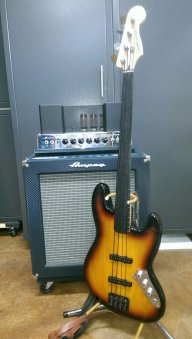

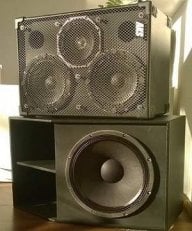










 But I do have ears, and while Bill is mostly factually correct in all the stuff he told us, the two things he has blind spots about are accepting that woofers could ever have acceptable off-axis response compared to mid drivers, or accepting that direct radiating cabs could ever be considered as good as horns for anything but guitar. And here I was, trying out different stuff and listening for things he told me to listen for, and finding out that he was 100% right about the performance aspects of the gear I was trying, yet I was enjoying the sound out of my direct radiator cabs with no mid drivers more than any of them. And even though I could hear that they weren't as bright off axis as on, or performed as efficiently as a horn loaded line array, it didn't matter to me because it still sounds exactly how I like it to sound, and I try to set the PA to sound like that. Still learned a lot from the guy, no doubt about it. Not many shades of gray in his world, though.


