• TalkBass has been independent since 1998. Add your voice.
    Create a free account to reply to discussions, view embedded media, and browse with fewer display ads.
    Join freeLog in
    Want zero display ads or expanded classifieds tools? Compare plans.

BOSS GM-800 Synthesizer

Thanks- to be fair I haven't yet seen a review video that shows all the available onboard editing parameters (it sounds like you are referring to the computer editor?), but the way they are set up in the GR-55 drives me crazy. I was hoping the GM-800 would offer the same kind of tweakability of filters and note envelope of each sound as the GR, but hopefully with an onboard editing menu more like the SY-1000 (which I find much easier to navigate). So far I tend to build most of my sounds on the fly during jams without easy access to a computer so onboard editing capability is important to me (the reason I can't jive with a pedal like the Future Impact, though I love the sounds)

The GM-800 on-board editing is quite easy, it is very similar layout to the SY-1000, same parameters as you would find in the Tone Studio computer editor.
The GM-800 on-board and Tone Studio editing does lack some of the synth type settings as found in the GR-55, and it requires a subscription to the paid Roland ZENOLOGY editor for very detailed synth block construction and editing, and then transferring the new tone into the GM-800.
The effects included are quite out of this world, and does make up for the lack of on-board synth filters, but these effects can accomplish much the same.

Not many videos out there show casing the internal editing pages
 
The GM-800 on-board editing is quite easy, it is very similar layout to the SY-1000, same parameters as you would find in the Tone Studio computer editor.
The GM-800 on-board and Tone Studio editing does lack some of the synth type settings as found in the GR-55, and it requires a subscription to the paid Roland ZENOLOGY editor for very detailed synth block construction and editing, and then transferring the new tone into the GM-800.
The effects included are quite out of this world, and does make up for the lack of on-board synth filters, but these effects can accomplish much the same.

Not many videos out there show casing the internal editing pages

Well you may end up costing me several hundred $$$...
By the way, how does your Bass VI with the GK-3 track? I think I had read an account on VGuitar or somewhere of someone doing this, but I think they had used the pickup from a GK-3 paired with an interface from a GK-3B since apparently there is some filtering built in (or something like that, I can't recall exactly). I've considered trying this too at some point
 
  • Like
Reactions: Krisfield
Well you may end up costing me several hundred $$$...
By the way, how does your Bass VI with the GK-3 track? I think I had read an account on VGuitar or somewhere of someone doing this, but I think they had used the pickup from a GK-3 paired with an interface from a GK-3B since apparently there is some filtering built in (or something like that, I can't recall exactly). I've considered trying this too at some point

Have not tried the Bass VI + GK-3 with the GM-800 yet, maybe soon.
The post at VGuitarForums was probably mine, as it turns out, the GK-3/GK-3B active body part is not filtering, but more so gain at different frequencies.
The GK-3 active body part (the wart) will work just fine with the GK-3 pickup on a Fender/Squire Bass VI, the main thing in the GM-800 is to select "GK-3B" as the pickup so the unit knows it is connected to a Bass.
That didn't matter in other Boss/Roland units that have a dedicated guitar/bass mode, but the GM-800 has just the one mode and the pickup selection will determine the operating mode.
 
Only relative the GK pickup, the GK/GM-800 doesn't care how your bass is setup, so long as the intonation is correct.
The pickup needs to be mounted as close as possible to the bridge (without contact against it), and as close as possible to the strings without contact on the strings while plucked at the last fret.

This video shows how to install the GK-5B

Thank you, good to know. I have it set up exactly like the video on an identical jazz bass. The main problem I’m experiencing is that I play quite expressively with lots of ghost notes and legato and it doesn’t cope with that very well, I find if I use a pick it stops me from playing too busy for it.
 
  • Like
Reactions: Krisfield
Thank you, good to know. I have it set up exactly like the video on an identical jazz bass. The main problem I’m experiencing is that I play quite expressively with lots of ghost notes and legato and it doesn’t cope with that very well, I find if I use a pick it stops me from playing too busy for it.
I find ghost notes don't really track in a meaningful way with most pitch tracking algorithms in general, and legato can work with some sounds but not others (sounds like pianos and others with a strong initial attack generally sound off when playing legato across a single string, at least with the GR-55- not sure how this part of the tracking experience may have improved in the GM-800). Keep in mind on a bass that the amount of time required for the machine to understand the correct pitch when playing in lower registers is a physical limitation that can make this very obvious
 
Really liking the GM-800 still.
I find that with the GM-800, I spend less time talking about it, and more time actually using it instead.

Still amazed at the technology inside this thing,
if you want FM synth, it has actual FM synth tone operators.
I you want analog subtractive synths, it has waveform generators and filters.
You want more PCM waveforms, download and install expansion packs.

I recommend the
EXZ-006 World Instruments
and
EXZ-005 Studio
ZenCore expansion packs,

and
"SDZ-062 Communication Bass"
plus
"SDZ-072 Gothic Choirs"
sound packs.

Good stuff !!!
 
Here is a latency test I did, using Cakewalk DAW, UA101 USB interface, inputs are

1: normal pickup

2: GM-800 L/Mono output

3: external midi Roland Fantom Xr module L/Mono output A

Guitar with a GK-2A pickup

Not taking into account any USB/processing latency, these values are referenced to the normal pickup initial transient start.

A single one time test, no averaging, finger picked notes.

Maybe I could have tied a few times, used a pick, juggled the results,

but no,

this is straight off the bat tests.


Results:

LOW open E

1: npu = 0.068ms (start offset time)

2: GM-800 = 0.126ms

3: external midi = 0.126ms

difference (latency) = 58ms for both


High open E

1: npu = 0.565ms (start offset time)

2: GM-800 = 0.590ms

3: external midi = 0.590ms

difference (latency) = 35ms for both


High E 12th fret

1: npu = 0.725ms (start offset time)

2: GM-800 = 0.746ms

3: external midi = 0.748ms

difference (latency) = 21ms for GM-800, and 23ms for the externa midi


guitar-high-e-1-npu-2-gm80-3-extmidi-png.19073


guitar-high-e-1-npu-2-gm80-3-extmidi-png.19074


guitar-low-e_1-npu-2-gm800-3-extmidi-png.19075
 
58 ms on the low E latency for synth and pitch to MIDI tracking ?

That's still unplayable but a lot better than older units !!
It's getting there , maybe in 10 years , we'll have something playable :)

Stuff I posted back at V-Gtr forum :
Low E Latency for SY1000 pitch to midi : 120ms
Low E Latency for VB-99 pitch to midi : 80ms

Gumtown : Am I crazy to see the GM-800 as the new GR-55 ?
 
Last edited:
58 ms on the low E latency for synth and pitch to MIDI tracking ?

That's still unplayable but a lot better than older units !!
It's getting there , maybe in 10 years , we'll have something playable :)

Stuff I posted back at V-Gtr forum :
Low E Latency for SY1000 pitch to midi : 120ms
Low E Latency for VB-99 pitch to midi : 80ms

Gumtown : Am I crazy to see the GM-800 as the new GR-55 ?

If I’m not mistaken, @gumtown was measuring latency with a guitar (GK-2A pickup) and not bass, so probably not the improvement you imagine. Based on VGuitar posts, he suggested this was a quick test and maybe not the best representation of the potential latency though. In any case, I don’t think their bass pitch-detection algorithms will have made much huge improvement and most of any improvements are probably processor related.

I think the GM-800 is essentially the refined version of the “internal sound” section of the GR-55 (ie- flutes, pianos, violins, and of course pitch-tracking synths) but lacks all the instrument modeling stuff (ie- using your input signal to mold other sounds) and guitar FX and amp modeling that the GR-55 and SY-1000 have. They still don’t want to give us a comprehensive “all in one” package!
 
Last edited:
GM-800 firmware update to match a few new GK-Serial products, and tracking stability improvements.

Tone Studio for GM-800 updated,
GM-800 Firmware updated,
GM-800 USB driver updated.

Boss are releasing a new range of internal fitted pickups for guitar and bass, including a new 7 string guitar pickup,
so the GM-800 can do 7 strings now,
and the normal pickup signal can now be routed through the GM-800 as well.

But the main thing is the tracking and stability of the pitch to midi conversion is improved.

download link:
https://www.boss.info/global/products/gm-800/downloads/
 
Had the GM-800 +GKC-AD for a week now, paired with my SY-1000, and OMG this smokes any previous Roland PCM rompler synth.
The tracking is rock solid, and you can load in new wavetable type expansion packs.
The GM-800 does everything the GR-55 should have been, I also run a DIY midi note foot controller into the GM-800 midi input, so I can also play with my feet.
Paired up with the modeling features of the SY-1000, on both units I can set specific fret positions where I want a particular sound to trigger at.
Very impressed I am.
Lots of great information in this thread, thanks!

I have a pre-owned GR-55 and GK-3B incoming and no prior experience beyond my Source Audio C4. Does the GR-55 + GK-3B still make sense or is this superseded by newer/better options?
 
  • Like
Reactions: Krisfield
Lots of great information in this thread, thanks!

I have a pre-owned GR-55 and GK-3B incoming and no prior experience beyond my Source Audio C4. Does the GR-55 + GK-3B still make sense or is this superseded by newer/better options?
There are aspects of the GR-55 that are still cool with a bass and can’t be replicated with anything else short of the new GM-800 or a MIDI converter triggering some sort of external sampler or software. The latency from the GR-55 is significant with bass when using any of the sample sounds (pianos, strings, etc), but not an issue with the Dynamic Synth or the modeled instruments which manipulate the incoming signal rather than triggering samples. Even some of the sample sounds can still work fine for bass as long as you accommodate the latency (I love making cool ambient flute sounds underneath a fretless bass for example). Definitely recommend playing anything an octave or two up and pitching it back down in the pedal to minimize latency.

IMO for subtractive synth sounds the Future Impact v4 totally destroys the GR-55 on bass, but it is monophonic. The C4 definitely has faster tracking than the GR, though still has noticeable latency in the low registers of the bass that the Future Impact v4 seems to have really surpassed
 
I think the GK3 based systems are still relevant for bass players. I have an SY-1000, not GR-55, which is a different rig, but the latency from the analog pickup through the processor to the amp can be imperceptible when using the Dynamic Synth and modeled instruments.

In the case of the GK5 + GM800, the signal is digital and goes through a pitch detection process before arraiving at the PCM synth, which will add perceptible latency. Not good.

In the case of the GR-55, playing PCM sounds also results in perceptible latency - perhaps more than with a GM-800. I don't have experience with that particular processor
 
Appreciate the above comments. Would you start with the GR-55 and GK-3B, or is there another pickup and box that does what they do and more/better?
IMO it depends on what you are after sound-wise. If you are looking for a way to play a bunch of different sampled instrument sounds polyphonically with a bass without need to permanently mod the bass or string it in strange ways then the GR-55 or Boss GM-800 are probably still some of the easiest solutions around. Just be aware that the latency of both is not on the cutting edge of the technology (it doesn’t seem like Roland has really updated their pitch detection algorithms for the GM-800, just benefitting from a faster modern processor which can only help so much) so the lower you play the more lag there will be til the notes are triggered. For me it makes many instruments in the GR-55 unuseable with a bass (anything dependent on a fast attack like pianos or percussion, etc).

If you are looking for mostly subtractive synth sounds like a monophonic Moog bass sounds and polyphonic tracking isn’t important (so no playing chords), then other options are better IMO including the C4 and particularly the latest Future Impact release (I own both of these and the newest Future Impact really kills the competition).

There isn’t currently any direct competition to everything the GR-55 or GM-800 does for a bass. The Roland SY-1000 as mentioned above is killer for a different approach to polyphonic sound creation with minimal latency- the “Dynamic Synth” and modeled instrument engines manipulate incoming sound into new sound rather than triggering samples and so there is no perceptible latency (you get a limited version of this Dynamic Synth in the GR-55 as well, a single voice per patch vs the 3 per patch of the SY and with much less tweakability). You can trigger many of the sounds without the Roland GK pickup and even get polyphonic tracking (though it works MUCH better with the Roland pickup since it doesn’t need to pull apart lines into multiple notes). The SY-1000 lacks all of the plethora of sample instrument sounds of the GR-55 though, and most of the synth sounds that aren’t in the Dynamic Synth engine have similar latency issues as most of the GR-55 samples. I love the SY-1000 and use it all the time with bass and guitar. My GR-55 I pretty much only use with guitar these days as the latency is much more acceptable with a guitar (even with guitar though I avoid pianos and some other sounds unless I’m mangling them or only playing very high notes). For fat monophonic synth stuff I would choose the Future Impact v4 over the SY-1000 FWIW.

There are discontinued pitch to MIDI options that can take the Roland GK pickup signal and output polyphonic MIDI info into some external MIDI sound processor and do it somewhat faster than the Roland stuff (Axon or Yamaha units)- probably still too slow for bass to really be worth tracking down IMO (worth it for guitar though). Then there are monophonic options that don’t require any special pickup (Panda MIDI Future Impact v4, SA C4, Second Sound Unisyn, Jam Origin MIDI Bass software- the first two offering their own internal sounds the third offering a few basic internals and a MIDI out and the 4th intended to control other software instruments). Arguably the best pitch to MIDI options are ones that use wired frets to send out pitch info rather than a pitch recognition algorithm, but those require extensive modification to an existing instrument (literally drilling out the neck for wires and the need for a processor in the body or externally somewhere that can turn voltage from the fret system into MIDI pitch info), tracking down one of the rare discontinued “budget” options built with this tech (like the Peavey MIDIBass) or having an expensive custom instrument built by one of the few companies still doing this (which all have waitlists at this point).
 
Last edited:
IMO it depends on what you are after sound-wise. If you are looking for a way to play a bunch of different sampled instrument sounds polyphonically with a bass without need to permanently mod the bass or string it in strange ways then the GR-55 or Boss GM-800 are probably still some of the easiest solutions around. Just be aware that the latency of both is not on the cutting edge of the technology (it doesn’t seem like Roland has really updated their pitch detection algorithms for the GM-800, just benefitting from a faster modern processor which can only help so much) so the lower you play the more lag there will be til the notes are triggered. For me it makes many instruments in the GR-55 unuseable with a bass (anything dependent on a fast attack like pianos or percussion, etc).

If you are looking for mostly subtractive synth sounds like a monophonic Moog bass sounds and polyphonic tracking isn’t important (so no playing chords), then other options are better IMO including the C4 and particularly the latest Future Impact release (I own both of these and the newest Future Impact really kills the competition).

There isn’t currently any direct competition to everything the GR-55 or GM-800 does for a bass. The Roland SY-1000 as mentioned above is killer for a different approach to polyphonic sound creation with minimal latency- the “Dynamic Synth” and modeled instrument engines manipulate incoming sound into new sound rather than triggering samples and so there is no perceptible latency (you get a limited version of this Dynamic Synth in the GR-55 as well, a single voice per patch vs the 3 per patch of the SY and with much less tweakability). You can trigger many of the sounds without the Roland GK pickup and even get polyphonic tracking (though it works MUCH better with the Roland pickup since it doesn’t need to pull apart lines into multiple notes). The SY-1000 lacks all of the plethora of sample instrument sounds of the GR-55 though, and most of the synth sounds that aren’t in the Dynamic Synth engine have similar latency issues as most of the GR-55 samples. I love the SY-1000 and use it all the time with bass and guitar. My GR-55 I pretty much only use with guitar these days as the latency is much more acceptable with a guitar (even with guitar though I avoid pianos and some other sounds unless I’m mangling them or only playing very high notes). For fat monophonic synth stuff I would choose the Future Impact v4 over the SY-1000 FWIW.

There are discontinued pitch to MIDI options that can take the Roland GK pickup signal and output polyphonic MIDI info into some external MIDI sound processor and do it somewhat faster than the Roland stuff (Axon or Yamaha units)- probably still too slow for bass to really be worth tracking down IMO (worth it for guitar though). Then there are monophonic options that don’t require any special pickup (Panda MIDI Future Impact v4, SA C4, Second Sound Unisyn, Jam Origin MIDI Bass software- the first two offering their own internal sounds the third offering a few basic internals and a MIDI out and the 4th intended to control other software instruments). Arguably the best pitch to MIDI options are ones that use wired frets to send out pitch info rather than a pitch recognition algorithm, but those require extensive modification to an existing instrument (literally drilling out the neck for wires and the need for a processor in the body or externally somewhere that can turn voltage from the fret system into MIDI pitch info), tracking down one of the rare discontinued “budget” options built with this tech (like the Peavey MIDIBass) or having an expensive custom instrument built by one of the few companies still doing this (which all have waitlists at this point).

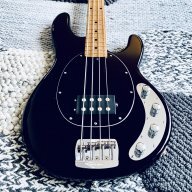
It looks like I might not be able to mount the GK-3B on this bass due to the volume knob and lack of clearance from the strings to pickup.

Has anyone been able to work around this type of issue?

1726167718175.png
 
It looks like I might not be able to mount the GK-3B on this bass due to the volume knob and lack of clearance from the strings to pickup.

Has anyone been able to work around this type of issue?

View attachment 7028458
It isn’t important for the pickup to be centered over the 4 strings nor for it to be oriented in that direction. You can flip it around so the wire comes out towards your bridge pickup (and so you can move the pickup up against the bridge) and move the pickup upwards so that the strings align with the bottom 4 coils instead of the center 4. There are options in the GR-55 to choose the orientation and position to accommodate for that. The most important thing is making sure you get the string spacing adjustment and the alignment with the strings set as close as possible (will probably take some adjustment while plugged in to find the best alignment and of course pickup gain settings).
 
  • Like
Reactions: Trvbass

Latest posts