• TalkBass has been independent since 1998. Add your voice.
    Create a free account to reply to discussions, view embedded media, and browse with fewer display ads.
    Join freeLog in
    Want zero display ads or expanded classifieds tools? Compare plans.

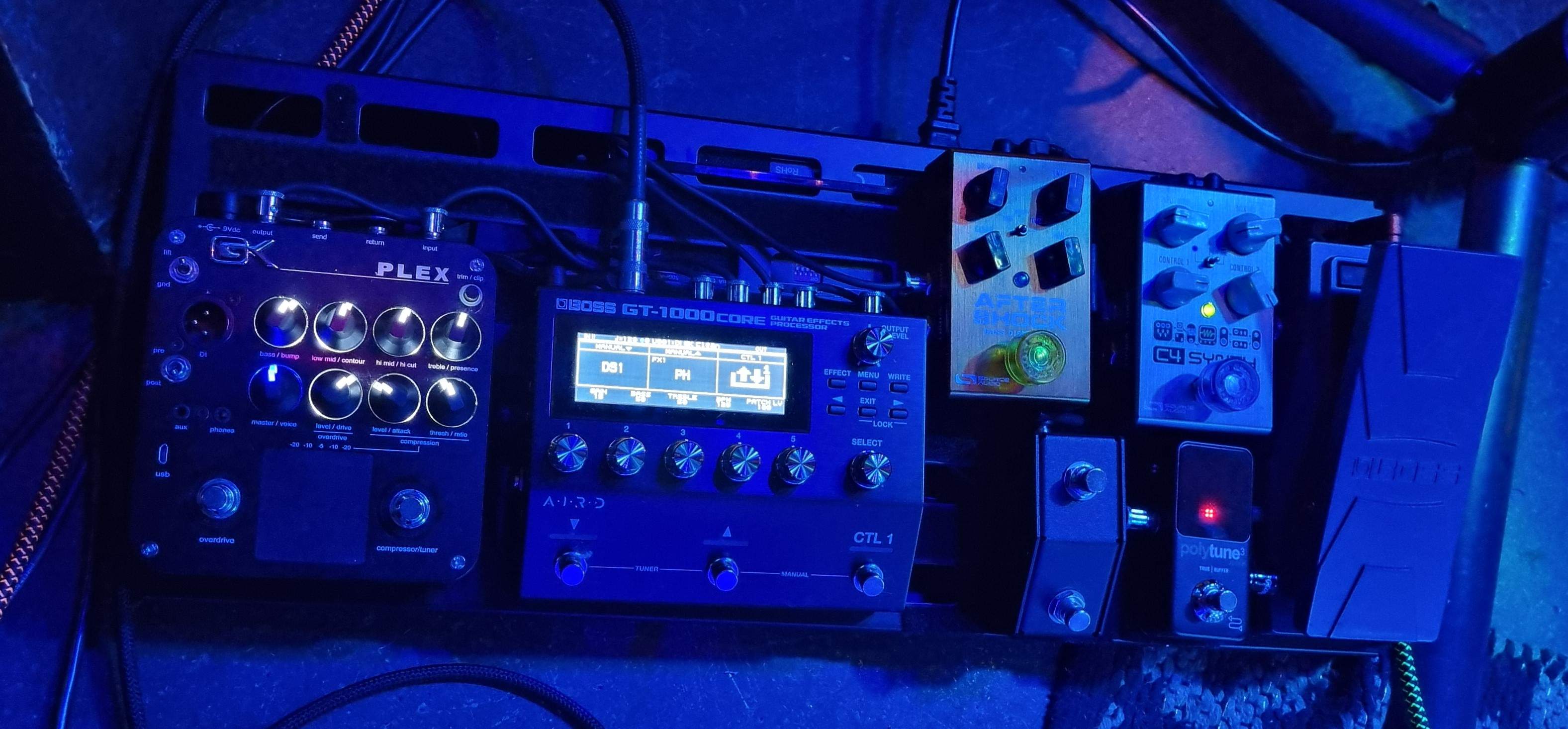
So I had two gigs over the weekend, both with PA support. Ampless stages, going direct to the board from the Core. I rune 4 basic tones:
  • Clean tone: GK Plex preamp in loop 2, and I used the Natural bass in a parallel chain with no volume to have access to the speaker sims. Mostly happy with this one, I think I just need to tame the high end (I have a global HPF at 50Hz and a LPF at 5kHz). I have a Phaser and use the OC2 sound from my SA C4, they are both on footswitches in the manual mode.
  • Tubey "old school" sound: using the Concert preamp and the Clean boost to get the tubey sound. Happy with this one as it is now
  • DIstortion: Using the SA Aftershock on a parallel chain, still needs a bit of work, but 75% there.
  • Fuzz: I am also using the SA aftershock for this one, parallel chain as well. This is the sound that needs the most work, it sounds good through headphones and through the Mackie Thump, but once the whole band kicks in I feel it loses its guts.
With the distortion and fuzz sounds, I have both chains at 50% each so I don't lose the bottom end. Is this how most of you do it? I haven't tried using the internal distortion and fuzz yet, but I might give this a crack this week.

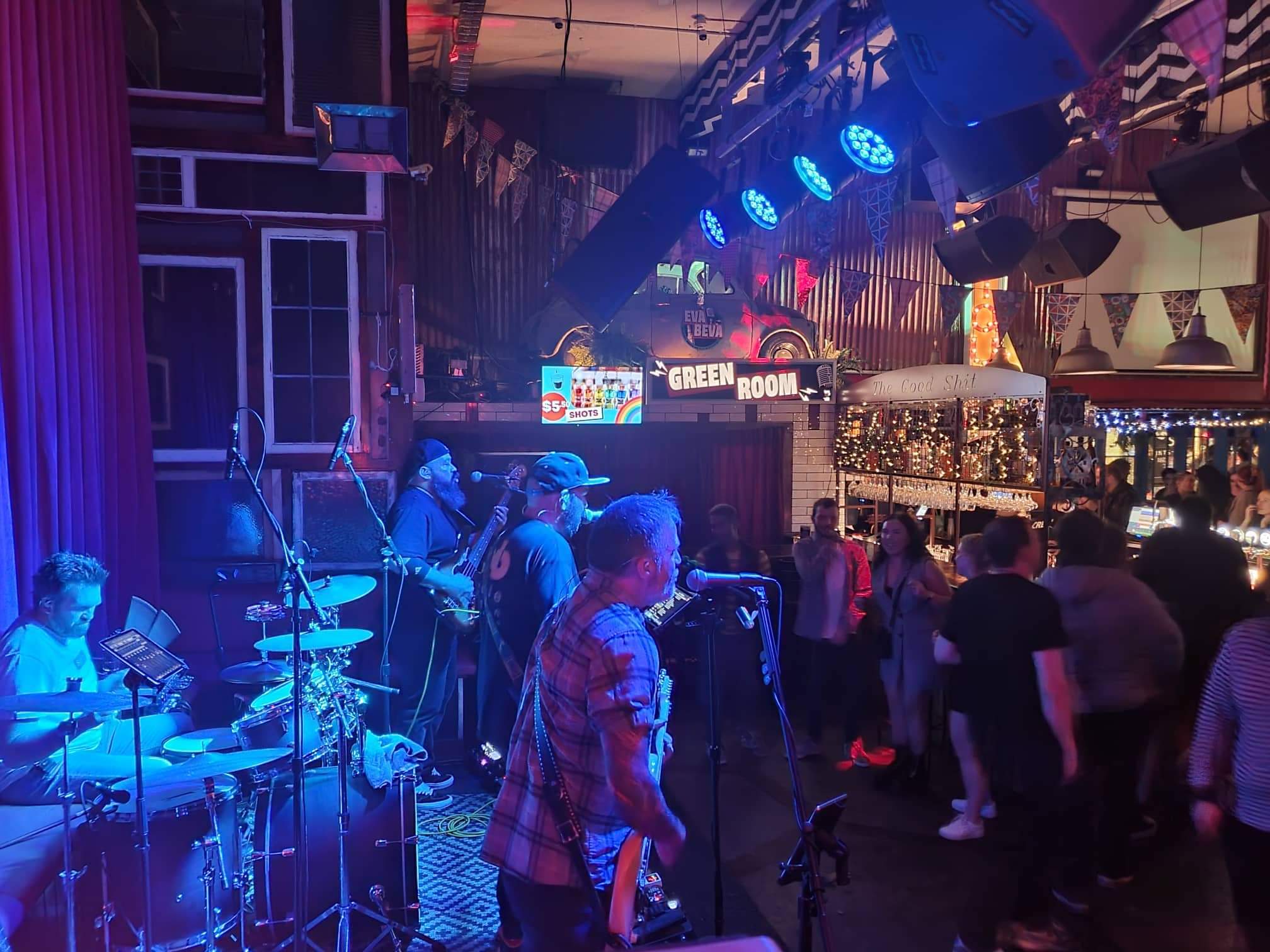
Couple of pics:

20220729_220145.jpg


Eva 1.jpeg
 
I like the look of those Source Audio pedals. Might have to check them out.


So I had two gigs over the weekend, both with PA support. Ampless stages, going direct to the board from the Core. I rune 4 basic tones:
  • Clean tone: GK Plex preamp in loop 2, and I used the Natural bass in a parallel chain with no volume to have access to the speaker sims. Mostly happy with this one, I think I just need to tame the high end (I have a global HPF at 50Hz and a LPF at 5kHz). I have a Phaser and use the OC2 sound from my SA C4, they are both on footswitches in the manual mode.
  • Tubey "old school" sound: using the Concert preamp and the Clean boost to get the tubey sound. Happy with this one as it is now
  • DIstortion: Using the SA Aftershock on a parallel chain, still needs a bit of work, but 75% there.
  • Fuzz: I am also using the SA aftershock for this one, parallel chain as well. This is the sound that needs the most work, it sounds good through headphones and through the Mackie Thump, but once the whole band kicks in I feel it loses its guts.
With the distortion and fuzz sounds, I have both chains at 50% each so I don't lose the bottom end. Is this how most of you do it? I haven't tried using the internal distortion and fuzz yet, but I might give this a crack this week.

Couple of pics:

View attachment 4769290

View attachment 4769291
 
  • Like
Reactions: El Spearo
I quite like the bass amps in the CORE. Bear in mind the only “model” in there is Concert which is an SVT model. The rest are generic amps, but they have a depth and feel to them that the Stomp and older Zoom models lack. I have no experience with the B6 so I can’t speak to it.
I like that the CORE amps aren’t modeled after some particular bass amps, and have no pre conceived tone to try and achieve.
The FX are Boss good!

How are the bass (and guitar) amp soundwise compared to the HX Stomp? I have seen a lot of guitar videos comparing the two but not much bassvideos.
And what about the Fx? I have seen some comparison videos of the (guitar) Fx and found that I liked the HX Stomp effects better. Sounded more analog whereas the GT-1000 core sounded quite digital.

And one more question: Can the Boss two input with a separate fx path? I have a bass with dual pickup output and want to run each one in a different fx chain. Is that possible?
 
26678925[/URL], member: 153492"]
And one more question: Can the Boss two input with a separate fx path? I have a bass with dual pickup output and want to run each one in a different fx chain. Is that possible?

This is very easy on the GT1000 or Core. You can just use the two L/R inputs for your 2 outputs on your bass. Then you can easily set up separate signal paths. You could either mix them back to mono at the end or have two separate outputs to different amps etc.
 
  • Like
Reactions: Les Fret
As for the comparison between the GT and Helix I think it just depends what you’re after. The video comparisons should be taken with a pinch of salt as they’re rarely A/B comparisons. All of the options out there are so good now there’s very little in it.

For me the thing which sold me on the Core was the flexibility. 2 fx loops, 3 parallel signal dividers and amp control to integrate channel switching on my amp.

The GT doesn’t have many bass preamp options but it packs a lot of power and flexibility to create some cool stuff. That being said my main criticism is that the lack of bass amp options does sometimes mean more tinkering to get the sound you want.
 
  • Like
Reactions: Les Fret
I haven't tried using the internal distortion and fuzz yet, but I might give this a crack this week.

I bought the GT Core specifically for the parallel external fx (drive) options and for a long time I did not pay any attention to the internal drives. Now I am using the X-Bass distortion. It is different than what I was looking for but it appeared to mix really well with the sound of my band, pleasant surprise!

Maybe obvious, but do you cut the high frequencies from your clean blend ?
 
This is very easy on the GT1000 or Core. You can just use the two L/R inputs for your 2 outputs on your bass. Then you can easily set up separate signal paths. You could either mix them back to mono at the end or have two separate outputs to different amps etc.

Ok great info! Thanks a lot. Think that sells me on the GT1000 Core. Being able to input two pick-ups or instruments in it and having a different chain for each instrument is really cool.

As I said I liked the fx of the HX Stomp more but the GT has more flexibility.

How is the tracking of the pitch shifter of the GT?
 
Ok great info! Thanks a lot. Think that sells me on the GT1000 Core. Being able to input two pick-ups or instruments in it and having a different chain for each instrument is really cool.

As I said I liked the fx of the HX Stomp more but the GT has more flexibility.

How is the tracking of the pitch shifter of the GT?
I get very slight latency, but it tracks down to low E easily. I run mine after my comp block, and I have a HPF set right before the Octaver.
 
  • Like
Reactions: Les Fret
Ok great info! Thanks a lot. Think that sells me on the GT1000 Core. Being able to input two pick-ups or instruments in it and having a different chain for each instrument is really cool.

As I said I liked the fx of the HX Stomp more but the GT has more flexibility.

How is the tracking of the pitch shifter of the GT?

To be honest I haven’t used any of the pitch shifting that much but haven’t had any tracking issues.

I’m pretty sure I’d have been happy with the Helix or Headrush units too, they’re all great kit and it’s so advanced now it’s so hard to tell them apart from analog stuff.

If you want super flexible signal routing in a tiny package and you don’t mind having a small (but versatile) selection of amps then the Core is a good shout.

If you really want specific amp models, especially Ampeg and don’t care as much about routing or having many simultaneous effects etc the Helix seems like a pretty strong contender.
 
  • Like
Reactions: Les Fret
To be honest I haven’t used any of the pitch shifting that much but haven’t had any tracking issues.

I’m pretty sure I’d have been happy with the Helix or Headrush units too, they’re all great kit and it’s so advanced now it’s so hard to tell them apart from analog stuff.

If you want super flexible signal routing in a tiny package and you don’t mind having a small (but versatile) selection of amps then the Core is a good shout.

If you really want specific amp models, especially Ampeg and don’t care as much about routing or having many simultaneous effects etc the Helix seems like a pretty strong contender.

I don’t need tons of amps. A few good guitar and bass amps will do. More important is the feel of the amp models. And fx are more important to me, especially a good pitch shifter, envelope filter and delay/reverb.

I might even go for the GT1000 (not the core but the big one). The expression pedal is nice to have and also more onboard/on the fly control (I think?) But not totally sure yet.

Edit: I see now that the big GT only has one input whereas the Core has two (L and R). So I guess this means I can not run two instruments or pickups in the big GT? In that case I won’t go for the big one.
 
Last edited:
I don’t need tons of amps. A few good guitar and bass amps will do. More important is the feel of the amp models. And fx are more important to me, especially a good pitch shifter, envelope filter and delay/reverb.

I might even go for the GT1000 (not the core but the big one). The expression pedal is nice to have and also more onboard/on the fly control (I think?) But not totally sure yet.

Edit: I see now that the big GT only has one input whereas the Core has two (L and R). So I guess this means I can not run two instruments or pickups in the big GT? In that case I won’t go for the big one.
The AIRD pre's feel amazing. I had a Stomp, and was unimpressed with it. I much prefer the CORE, and the FX are very usable.
No, I only have the HPF set in the global output at 5k Hz. What do you recommend?
5k is what I use.
 
No, I only have the HPF set in the global output at 5k Hz. What do you recommend?

If you blend full frequency clean signal to your distortion you can get what many people experience as hearing two signals instead of a really blended signal. The clean high frequencies seem to conflict with the distorted sound (the harmonics). To cut the high frequencies from the clean path you can use a LPF in front of it (I set it at 400 Hz but you need to experiment with it, see what works for your application).

Also you could use a HPF in front of your distortion path, this will 'clean-up' your signal and help with retaining note definition. I set it at 120 Hz.

In the global EQ a HPF at around 40 Hz can be used to prevent rumble being sent to your amp.

In the global EQ a LPF at around 5 kHz can be used to kind of emulate the inability of a (bass)speaker to produce higher frequencies and/or filter hiss from a distortion. You could also put a LPF directly after your distortion instead of last in chain. This way you filter hiss from the distortion but you keep the highs from for example a reverb.

Remember these are my preferences, your distortions/amp/taste is different from mine! I hope others chime in with their experiences because this is the key to good distortion sound imo/ime!
 
If you blend full frequency clean signal to your distortion you can get what many people experience as hearing two signals instead of a really blended signal. The clean high frequencies seem to conflict with the distorted sound (the harmonics). To cut the high frequencies from the clean path you can use a LPF in front of it (I set it at 400 Hz but you need to experiment with it, see what works for your application).

Also you could use a HPF in front of your distortion path, this will 'clean-up' your signal and help with retaining note definition. I set it at 120 Hz.

In the global EQ a HPF at around 40 Hz can be used to prevent rumble being sent to your amp.

In the global EQ a LPF at around 5 kHz can be used to kind of emulate the inability of a (bass)speaker to produce higher frequencies and/or filter hiss from a distortion. You could also put a LPF directly after your distortion instead of last in chain. This way you filter hiss from the distortion but you keep the highs from for example a reverb.

Remember these are my preferences, your distortions/amp/taste is different from mine! I hope others chime in with their experiences because this is the key to good distortion sound imo/ime!

When I’ve been splitting my highs for distortion and lows for clean I’ve been doing it with both hpf and lpf set to around 200hz. Never thought to have them set at different frequencies but that makes a lot of sense to experiment with.
 
When I’ve been splitting my highs for distortion and lows for clean I’ve been doing it with both hpf and lpf set to around 200hz. Never thought to have them set at different frequencies but that makes a lot of sense to experiment with.

Maybe 'technical' it makes sense to have them both set at 200 Hz but I just used my ears to get the best result. To my ears it sounded fuller with LPF at 400 Hz and HPF at 120 Hz (also a more consistent 'sound-behaviour' throughout positions on the neck). Of course this way a 'hump' is created, this might be a problem, ...or not :). It is difficult to predict what exactly happens, it will also depend on the harmonics created by the drive I guess ?

@Correlli , it would be interesting to see pink noise test results with the HPF/LPF + drive ;).
I don't think the filter slope of the HPF/LPF is known ?
 
  • Like
Reactions: MrDinsdale
Maybe 'technical' it makes sense to have them both set at 200 Hz but I just used my ears to get the best result. To my ears it sounded fuller with LPF at 400 Hz and HPF at 120 Hz (also a more consistent 'sound-behaviour' throughout positions on the neck). Of course this way a 'hump' is created, this might be a problem, ...or not :). It is difficult to predict what exactly happens, it will also depend on the harmonics created by the drive I guess ?

@Correlli , it would be interesting to see pink noise test results with the HPF/LPF + drive ;).
I don't think the filter slope of the HPF/LPF is known ?
Well I had a little play with this. Natural bass with HPF of 400hz, JC120 with a LPF of 160hz on a parallel split. Some light eq to take off a little between 200-400hz and the Bass Drive distortion with some subtle settings up front. Managed to get a tone very close to my GK 800rb style preamp pedal.
It’s not perfect but I suspect you could switch patch in the middle of a song live and no one would notice.