

Enjoy the benefits of a premium membership!
Upgrade Account
-
TalkBass has been independent since 1998. Add your voice.
Create a free account to reply to discussions, view embedded media, and browse with fewer display ads.
Join free Log in
Want zero display ads or expanded classifieds tools? Compare plans.
You are using an out of date browser. It may not display this or other websites correctly.
You should upgrade or use an alternative browser.
You should upgrade or use an alternative browser.
Brian Wilson/Carol Kaye
- Thread starter matty1039
- Start date
-
- Tags
- carol kaye harmony kay kaye
More options
Who Replied?
BTW, was it Good Vibrations? That has both, I think.
Yup
here's a good explanation of the Walk on the Wild Side bass line(s).
Tons of YouTube vids about Carol Kaye...
For some reason, I have always been under the impression that Klaus Voorman played Upright on WOTWS.
Thx for the choob link.
SMART smart SMART smart would be my only next plausible guess.If I'm playing DUM dum DUM dum and so on what would the other bassist be playing?
Definitely NOT in harmony, or 2 different keys. EB, DB and tic-tac bass all playing the same part. Or, as @danosix mentioned, EB is embellishing.
Check out a band called the Fendertones. They reproduce a lot of this stuff live. Cool videos too.
Check out a movie - The Wrecking Crew. Good explanations of what they did in the studio
I watched it a few months back. I may have to go back and watch it again. May be better now with a little more context.
Here is a clip (interview with Chuck Rainey about his first session with Tommy Tedesco in the studio that involves the old practice of having an upright bassist or more also playing the same line as an electric bassist.
Cool that Carol was actually playing harmonized lines...
Cool that Carol was actually playing harmonized lines...
Last edited:
No this was not common back in the day, to have a bass line doubled was something that was not uncommon but to have the 2 bass lines in different keys was very much thinking outside of the box and way ahead of the timeOver the weekend I watched the movie Love and Mercy. In one scene Brian Wilson and Carol Kaye are talking about the bass track on a song. She asks him about a part where she is going to play one bass line on the electric and another person is going to play a different bass line on the upright.
The way she phrased the question made me think the two parts were going to be a harmony of some sort. Is this correct? Can someone explain this? Was this common practice back in the day?
When we were watching the movie I tried to tell me wife about Carol Kaye. I don't think she was as excited as I was. A woman very much holding her own in a man's world. A Carol Kaye movie would be great.
I was on youtube one day and came across a video that had "Victor Wooten and some old lady at NAMM." Half the comments were along the lines of "he is so nice talking to that grandma" but at least someone chimed and said "That is Carol Kaye, she is probably teaching Victor Wooten something."
There's one out there of her basically telling Gene Simmons what's what. Pretty awesome.
No this was not common back in the day, to have a bass line doubled was something that was not uncommon but to have the 2 bass lines in different keys was very much thinking outside of the box and way ahead of the time
Having been born after Pet Sounds and Sgt. Pepper it is sometimes hard to appreciate them for how groundbreaking they were, especially when they went on to influence so much other music. But discussions like this help.
Here is the Kay/Wilson conversation from "Love and Mercy":
Here is a fantastic video showing the creative process of "I'm Waiting for the Day." I don't hear "two basslines in two different keys" but it is cool to hear the different layers of overdubbed bass:
- Brian?
- Yeah?
- I think you might've screwed up here.
Really? Let me see.
Well, you've got
Lyle playing in D
- and the rest of us are in A major.
- Yeah, that's right.
How does that work? Two baselines
in two different keys?
Well, it works in my head.
It's all playing in my head.
The orchestration
and the five vocal parts.
I think it's gonna work.
Let's try it.
Here is a fantastic video showing the creative process of "I'm Waiting for the Day." I don't hear "two basslines in two different keys" but it is cool to hear the different layers of overdubbed bass:
Last edited:

There was a band in the 90s that used two bass players. Ned's Atomic Dustbin
They had a minor hit or two, here's one of them.
They had a minor hit or two, here's one of them.

Well, fancy stuff, obviously. Octaves, passing tones, a silly little fill, the melody, anything I can think of to get a glare from the old-timers.
Try playing more with old-timer prog rockers You'll only get a glare if you play a standard no-frills bass line.

There's one out there of her basically telling Gene Simmons what's what. Pretty awesome.
Ha ha. "You almost got it."
Dumpstaphunk
It's not exactly a new concept, two bass players goes way back, wayyyyy back...
It's not exactly a new concept, two bass players goes way back, wayyyyy back...

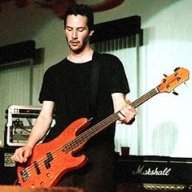
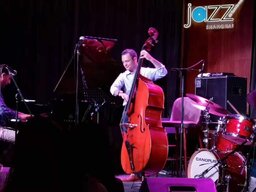
For another example Lou Reed's "Walk on the Wild Side" has two bass parts. Herbie Flowers played both electric and double bass on that track. Not at the same time though, I'm ASSuming.
Don't forget Daniel Lanois's _The Maker_ with several overdubbed bass tracks, and all the Dumpstaphunk material.
And speaking of Dumpstaphunk...
For another example Lou Reed's "Walk on the Wild Side" has two bass parts. Herbie Flowers played both electric and double bass on that track. Not at the same time though, I'm ASSuming.
*Facepalm.* Thanks for this. I've been attempting to practice that bassline using double stops...now I understand why it's so HARD. I'll likely keep at it though as it's good practice on the upright. Guess I should have listened more closely to the original recording.

Reminds me of attempting to learn the guitar harmonies on the intro & outro of "And Your Bird Can Sing," before I figured out that it was two guitars (or perhaps two tracks?).
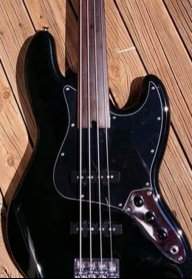
here's a good explanation of the Walk on the Wild Side bass line(s).
Tons of YouTube vids about Carol Kaye...
*Facepalm.* Thanks for this. I've been attempting to practice that bassline using double stops...now I understand why it's so HARD.
I too have wondered why I could never quite get the right sound. Now I know.

I can't imagine what she had to go through in the beginning. I'm always disappointed when they talk about women pioneers her name is seldom or never mentioned.
Every time I have seen it mentioned to her or heard her discuss it, she bristles at the notion that it was a struggle and insists that then, as now, all that mattered was your playing. I get the idea that (to her) acknowledging her as a special 'female' bassist/pioneer is more insulting/demeaning/representative of the bigotry of lowered expectations, than anything she heard in a studio or on stage.
SirMjac28
Patiently Waiting For The Next British Invasion
Makes senseEvery time I have seen it mentioned to her or heard her discuss it, she bristles at the notion that it was a struggle and insists that then, as now, all that mattered was your playing. I get the idea that (to her) acknowledging her as a special 'female' bassist/pioneer is more insulting/demeaning/representative of the bigotry of lowered expectations, than anything she heard in a studio or on stage.


