
Kind of a bummer it's got that rolloff at 110 hz. I wouldn't mind changing some cap values to make it more bass friendly. I don't believe Bugera has given out the schematic to it yet? I emailed them but I doubt that I'll get a schematic from them... I already have a Twister Gainesville to do the hot rod Marshall thing so this will be my bass modding amp. I've also got a quad of Aggie 6550's coming for tube rolling and comparison. Can't wait for this next week!

Enjoy the benefits of a premium membership!
Upgrade Account
-
TalkBass has been independent since 1998. Add your voice.
Create a free account to reply to discussions, view embedded media, and browse with fewer display ads.
Join free Log in
Want zero display ads or expanded classifieds tools? Compare plans.
You are using an out of date browser. It may not display this or other websites correctly.
You should upgrade or use an alternative browser.
You should upgrade or use an alternative browser.
Bugera 1960 for bass
- Thread starter Koffelito
- Start date
More options
Who Replied?
not that I am sure..but isn't a Marshall bass amp the same thing but with the afore mentioned lowering of the tone controls? And is there a schematic for the older, non infinium head?
and while we have the good people who can give us plots on response here ..Were the Reeves era HiWatts, say a 103 and a 201 (my fav bass amp) done the same way, iow, the low end at around 100? or were they wider range? they only made one amp for guitar and bass...at least the older ones.
and while we have the good people who can give us plots on response here
..Were the Reeves era HiWatts, say a 103 and a 201 (my fav bass amp) done the same way, iow, the low end at around 100? or were they wider range? they only made one amp for guitar and bass...at least the older ones.They aren't too far a departure from the guitar amps. I know my Sound City 120 Mk IV had plenty of actual low end to it. Can't comment on much more.
I can't seem to find any schematics for either version of the 1960. All I find are guitarists chatting about looking up Marshall schematics because they're better than nothing. Perhaps I can get one from an authorized repair center?
I can't seem to find any schematics for either version of the 1960. All I find are guitarists chatting about looking up Marshall schematics because they're better than nothing. Perhaps I can get one from an authorized repair center?

Behringer doesn't give out schematics of their stuff  . Once someone traces out what values are in the stock tone stack it should be fairly easy to parallel a couple caps to the present ones without having to remove the old ones
  . The idea would be to move the lowend "peak" down and possibly lower the mid frequency also.
BTW the plots I posted above assume a "typical" Marshall tone stack and were generated by this program:
http://www.duncanamps.com/tsc/
. Once someone traces out what values are in the stock tone stack it should be fairly easy to parallel a couple caps to the present ones without having to remove the old ones . The idea would be to move the lowend "peak" down and possibly lower the mid frequency also.BTW the plots I posted above assume a "typical" Marshall tone stack and were generated by this program:
http://www.duncanamps.com/tsc/
Behringer doesn't give out schematics of their stuff
Behringer might not but their repair center just did. If anyone wants the schematic for a 1960 (non-Infinium) to work out better cap values for bass, PM me. Otherwise, I'm off to look up some Marshall bass specs.

Behringer might not but their repair center just did. If anyone wants the schematic for a 1960 (non-Infinium) to work out better cap values for bass, PM me. Otherwise, I'm off to look up some Marshall bass specs.
Cool! PM sent!

In my PM I mentioned that I seem to recall that Super Lead and Super Bass only differ by the values of a couple caps. I doubt that the Super Bass was intended to make huge low end...power was limited and the speakers of the time wouldn't have been able to deal with it anyway.
Replied! Hope you guys come up with some cool mods! 
As far as changes, I'm just looking to keep it flat down to around 80hz or maybe ~60hz. If I can keep the first fundamental in there, I'll be happy. The 1960 I tried (through an 810E) was a little spanky in the mids, sort of like some old Peaveys I've used. Then again, it was my Highway 1 P with Roto 66 which has massive midrange presence.
As far as changes, I'm just looking to keep it flat down to around 80hz or maybe ~60hz. If I can keep the first fundamental in there, I'll be happy. The 1960 I tried (through an 810E) was a little spanky in the mids, sort of like some old Peaveys I've used. Then again, it was my Highway 1 P with Roto 66 which has massive midrange presence.
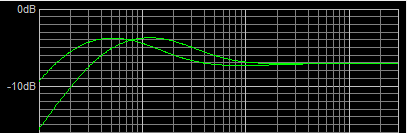
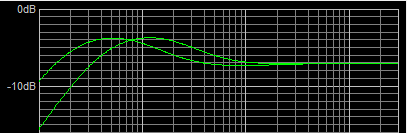
With the standard Marshall tone stack and the bass on "5" (AKA noon) the "peak" (+3db) is at about 120 Hz.
Thanks! I confirmed the values in the tone stack agree with what I have in the simulator. Here are two traces superimposed, the one with the lower peak has C10 and C11 increased from 22n to 50nBehringer might not but their repair center just did. If anyone wants the schematic for a 1960 (non-Infinium) to work out better cap values for bass, PM me. Otherwise, I'm off to look up some Marshall bass specs.
. T=0, M=10, B=5
Thanks! I confirmed the values in the tone stack agree with what I have in the simulator. Here are two traces superimposed, the one with the lower peak has C10 and C11 increased from 22n to 50n
Awesome, thanks for doing the sim for me, should be easy enough to chuck some 33n caps in parallel with the existing 22n.
As there are probably other drop-offs in the circuit putting the tone stack peak a bit lower than you'd think should end up with the actual peak higher .
.
Thanks! I confirmed the values in the tone stack agree with what I have in the simulator. Here are two traces superimposed, the one with the lower peak has C10 and C11 increased from 22n to 50n
I was comparing the schematics for Marshall 1959 and 1992 heads (Super Lead and Super Bass) from 1970 and the tone stacks are the same (and the same as the 1960). Relating to the 1960's schematic, in the Super Bass, C37 is omitted, C26 and C29 (between the phase inverter and the power tubes) would be 0.1 uf rather than 22 nF and R17, R18, R22 and R24 (in the power amp) are 5.6 Kohms rather than 1.5 Kohms.
Noted! I can't wait to get the thing to start toying with it.
Remember, there are lethal voltage/current levels lurking in there!!! Please be careful and follow all amp servicing precautions...
Of course! I'm good at being safe with tube amps. It's my engineering that could use some work...
Seriously though, I've had my nose inside of these amps for the last... 6 or 7 years? Started out with a little 6SN7 6V6 5Y3 amp. Done plenty of residential wiring work too. I'm not saying I'm immune from making mistakes, just that I'm careful with what I do.
As far as those capacitors and resistors, without me trying to read my book on tube amp design again, could anyone give me a quick synopsis of the significance of those different values?
Seriously though, I've had my nose inside of these amps for the last... 6 or 7 years? Started out with a little 6SN7 6V6 5Y3 amp. Done plenty of residential wiring work too. I'm not saying I'm immune from making mistakes, just that I'm careful with what I do.
As far as those capacitors and resistors, without me trying to read my book on tube amp design again, could anyone give me a quick synopsis of the significance of those different values?
I'd not worry about R17,18,22,24. Clippng C37 out will remove a treble boost you probably don't want for bass so a good idea. C26 and C29 presently set a HPF at maybe 35 Hz (-3db) - as I said above setting the tone stack a bit lower can compensate for thatI was comparing the schematics for Marshall 1959 and 1992 heads (Super Lead and Super Bass) from 1970 and the tone stacks are the same (and the same as the 1960). Relating to the 1960's schematic, in the Super Bass, C37 is omitted, C26 and C29 (between the phase inverter and the power tubes) would be 0.1 uf rather than 22 nF and R17, R18, R22 and R24 (in the power amp) are 5.6 Kohms rather than 1.5 Kohms.
. The Infinium has the master right at that point so may already have bigger caps.Note that the Marshall tone stack is very similar to the Fender one and was chosen for it's low component count and cheapness - not for it's effectiveness. Mid is cut-only, bass and treble are boost-only and they interact quite a bit. Ampeg came out with true hifi style boost-cut tone controls that don't interact like the ones on Fenders and Marshalls.


