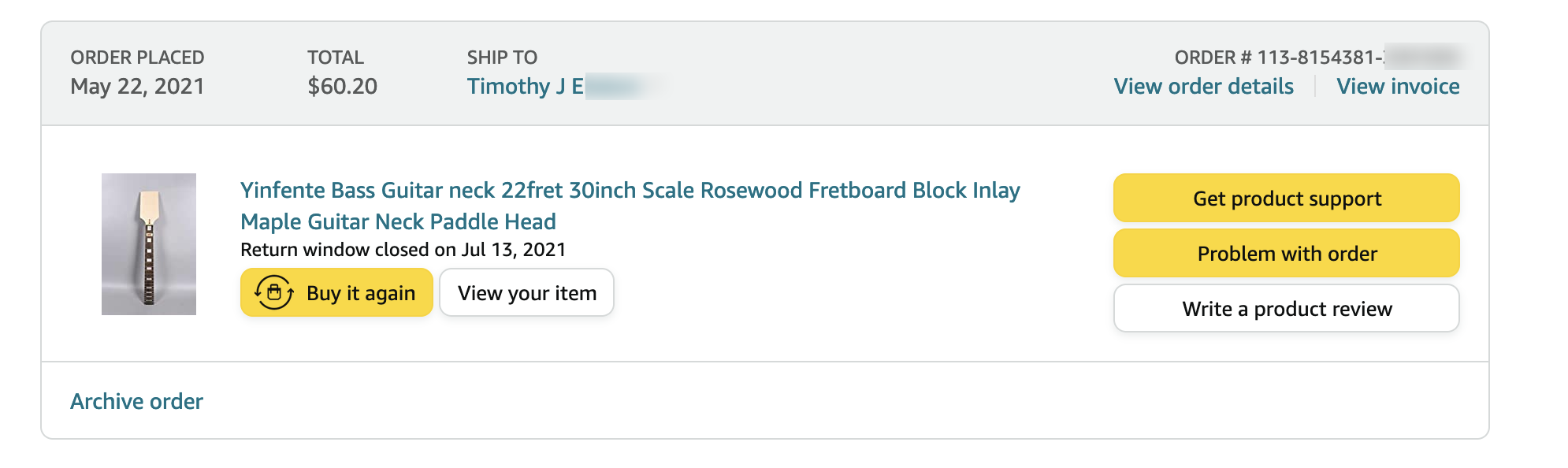
In my experience, you can reduce the thickness of the heel on the neck to get the required height over the bridge, but it's faster, cleaner and more reliable to rerout the neck pocket deeper. Especially if you are not changing any dimensions of the neck pocket except the depth.
I agree with @wiscoaster above regarding considerations for the pocket/joint. We really want joinery on an instrument to be top notch for functionality and looks.The easiest way to do that here is with a router and a trim router is probably good enough for something like this (although I'd recommend getting a used regular router).
You can easily make a quick template for the existing neck pocket with a 3/4" thick MDF board (or any material that is dimensionally stable and consistent). You trace the neck on the edge of the board, cut it out on the inside of the line pretty close to the line. Clamp the template down over the neck pocket and run around the inside of the pocket with a bottom bearing pattern bit like this:
View attachment 5016924
That will cut a perfect copy of the neck pocket into your template. Then without removing the template from the body, change the router bit over to a top bearing pattern bit like this:
View attachment 5016926
And use that to deepen the pocket to your desired new depth in the precise shape of your existing pocket.
Boom, done. Easy-peasy.
But the new bass neck might have a different heel than the existing guitar neck so it may be necessary to modify the pocket. Making the template with a bottom bearing bit would only work if the new neck fits perfectly inside the pocket.