• TalkBass has been independent since 1998. Add your voice.
    Create a free account to reply to discussions, view embedded media, and browse with fewer display ads.
    Join freeLog in
    Want zero display ads or expanded classifieds tools? Compare plans.

Cheap Bass Reality Check

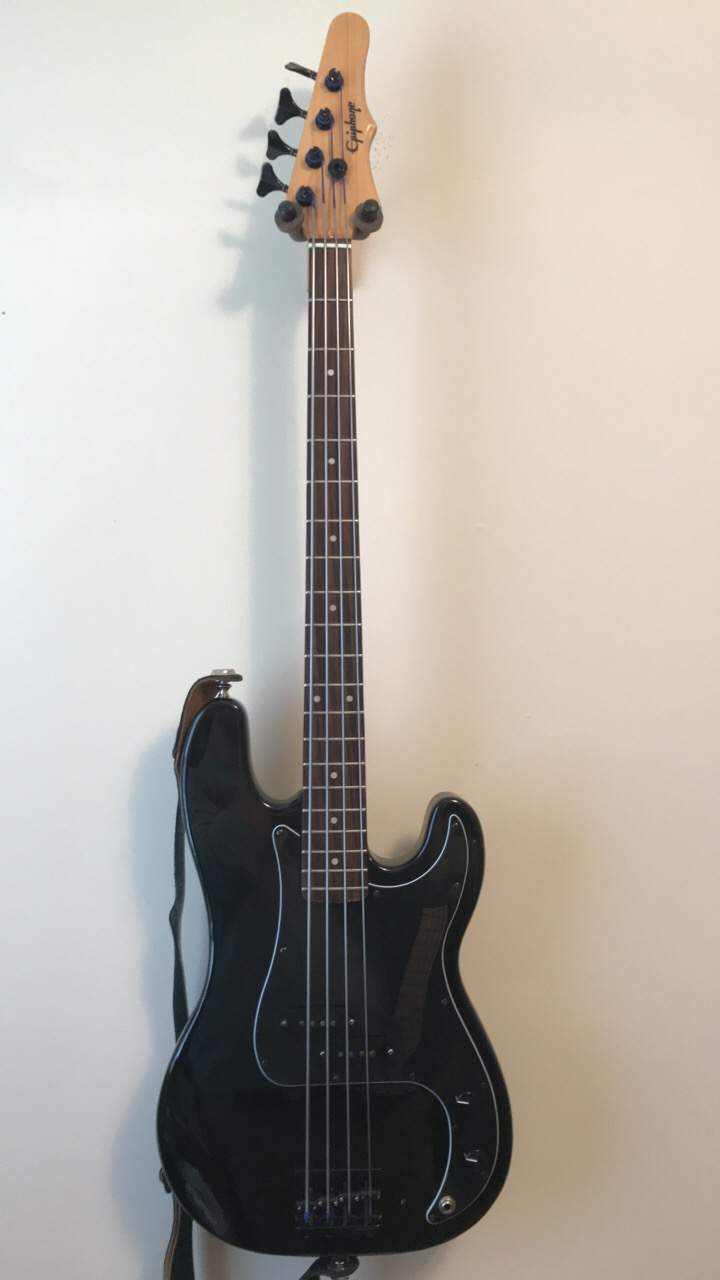
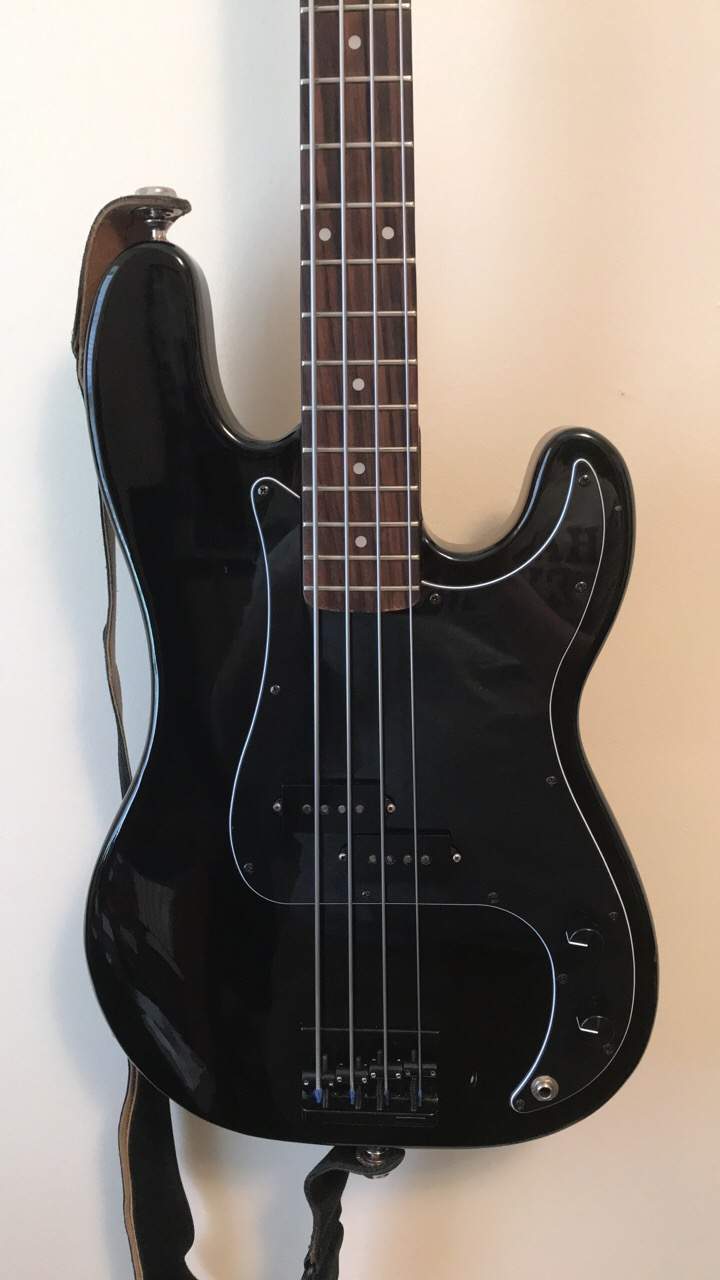
I’ve modded my first bass, a late-90s Epiphone AccuBass P-copy, several times over the years. It’s still a bass I gig regularly, and whenever I let someone else play it they’re blown away. It’s a P with a J neck, which I sanded down and oiled for a super smooth and fast feel. Gotoh bridge and tuners, upgraded pots and wiring, Orange cap, and ‘62 reissue pickups. Currently strung up with Dunlop flats. Only thing I’d still like to do is throw some overwound Fralins in it. Love this bass.

A53A309E-ACC8-41B2-8093-4D5F6CB65BAA.jpeg


43F6F042-4F57-44E9-AA09-83A15FE8BF61.jpeg
 
I don't feel like there's enough difference in the quality of an $800 bass compared to a $300 bass.... like a Squier CV to a Fender MIM. Generally speaking, the cost has to break the $1000 mark before I'm finding enough difference in quality to really make it worth it. Essentially I'm saying that I prefer cheap, modded basses over mid-price, stock basses.

I'm finding this to be true. Local indie shop had a used U.S. Fender Jazz, bound neck, string-thru, that probably weighed no more than 7 3/4 lbs and played like a dream. They wanted $1,100.

BTW, when I went back a few days later, it was sold.
 
Who else has taken a cheaper bass and invested time, effort and $ into making them sound like better instruments to the point where buying a more expensive bass feels like a step backwards?

Take this with a grain of salt please - I'm a meat-and-potatoes bassist who's recently gotten back into bass-as-primary instrument after gigging guitar for decades. Bass gigs I've been picking up have been mostly simple fare bar blues, soul, rock deals ranging from SRV to Marvin Gaye to Otis Redding to Tom Petty.

10 years ago I snagged a Squire Vintage Modified Jazz bass Guitar Center was blowing out for $200, took it home, set it up, and immediately started using it on a weekly guitar gig for 3-4 songs. The nut was cut perfectly, and the neck felt great, and now it seems that its rosewood fretboard isn't something you find on cheap basses anymore.

OTOH, it's a heavy bass, even for a jazz (or P-bass) style body, and all the electronics were pretty not-great. The electronics were an easy fix - I pulled out the soldering iron and replaced wiring, pots, jack and pickups about a year into owning it.

The bridge was last - I found a Gotoh hi-mass one in a local tech's used-parts drawer for $5 plus my old bridge.

Next at bat, if I keep it, will probably be a higher-ratio tuner key upgrade.

Now, there's been some interest from other bassists who've used it at jams I've hosted, and I might have an opportunity to upgrade to a slightly more expensive, and lighter weight bass.

Problem is "slightly more expensive" will still probably mean a pickup upgrade at least - not a fan of stock pickups on anything I've tried. And I'm not sure anything I've tried outside of one feels better - most feel worse, so I'd have to trust that a setup will get it done. Then there's the whole unknown-to-me-newer-fretboard-material thing (and while I love J basses, I don't love maple neck J basses).

So has anyone else had a similar experience? Am I making too much of a thing out of this? What did you end up doing and was it a good choice?

View attachment 4822804
I only own 2 basses that i have left alone:
Warwick Dolphin
G&L L2500
All and I do mean ALL others get modified in a small or MASSIVE way.
I'm always pleased with the progress, and often surprised by the improvements.
I always keep the original parts, and sometimes restore them to the bass if I'm going to lose too much on the sale.
 
  • Like
Reactions: Pocket Dave
Aside: I keep seeing where everyone has multiple basses. No shocker, I've got a closet full of guitars.

Though at 65, I'm trying to downsize gear.

Still, it would be nice to have a backup bass on gigs. Until then, I've got a small go-bag with tools, soldering iron & solder, pots, jack and high G string (tho I've never broken one once since the 70's).
 
A modern "high end" Squier (high in their lineup at least) is every bit as good of a musical instrument as most of the vintage Fenders - it's certainly better made (with CNC machining and all) - there are also a lot of other basses made in Asian factories nowadays that are that good (or better). The reality check is that the best Custom Shop Fender is only a marginal improvement from there. Looking at them, you might find reasons to disagree, but blindfolded (watch Anderton's for this) the differences are pretty darn small.

I have basses I've made, where everything is exactly what I want - truly custom builds. I could easily tell mine from a Squire blindfolded, but mainly because mine are several pounds lighter.

If you have an instrument where you like the physical platform (feel , weight, shape), but something isn't exactly what you want, mod away.
 
Last edited:
My main squeeze Taz originally cost me $450 in 1982 and I have spent at least that much over the years in repairs keeping him in playing shape including having neck pretensioned the fingerboard replaned and refretted by Michael Stevens and Steve Crisp, pickups potted and a repair on one pickup by Jon Bessent @ AusTone and a new nut by Walter Hutcherson @Musical Exchange. Some saw the bass as a junker but to me it was always my Stradivarius.

I bought a Peavey Dyna Bass Unity LTD that was a mess for a bargain during the C19 daze and spent almost as much replacing the worn gold hardware to black and rewiring it to passive, but the result was totally worth it for tone and playability.
 
I don't change tuners or bridge unless there's a specific need. Strings and pickups, if they don't need any routing, are fair game. Basically if it's solid and ergonomically to my taste, I'll mod it. I play 5 and 6s and my bottom of the line Ibanez SR206, even though I have a 'better' SR and a BTB, is my main 6. It's getting Alumitones and I'll experiment with strings once they're in. I'll be using this when I next gig out with no issues.
 
Squier VM P5 I lucked into a couple years ago. NOS - unbelievable find. $340 to my door.

I had a Fender humbucker (from Roscoe Beck V and US P Deluxe V) a friend had given me, so I took it to my tech and had him install it. Other mods:

- Tort PG
- Kickass Bridge
- pot/cap/jack upgrade
- '62-style vol/tone stack

I spent more on mods than I did the bass, but let me tell you it's some of the best $ I've spent. This thing will eat most MIM basses I've played, and maybe a few MIA. A unique and wonderful bass.

NOTE: I do have other basses that cost a good chunk of money, but this is my biggest and best mod project.


IMG-0869.jpg
 
A modern "high end" Squier (high in their lineup at least) is every bit as good of a musical instrument as most of the vintage Fenders - it's certainly better made (with CNC machining and all) - there are also a lot of other basses made in Asian factories nowadays that are that good (or better). The reality check is that the best Custom Shop Fender is only a marginal improvement from there. Looking at them, you might find reasons to disagree, but blindfolded (watch Anderton's for this) the differences are pretty darn small.

I have basses I've made, where everything is exactly what I want - truly custom builds. I could easily tell mine from a Squire blindfolded, but mainly because mine are several pounds lighter.
I build what I like, sell what I dont LOVE
 
I’m with those who’ve only ever broken even. I never tried to mod a bass into another price range, but I’m also just a hack. I was just wondering how hard and fast you consider the principle of “one person’s upgrade is another’s downgrade” … are some things indisputably an upgrade, like shielding in the cavity where there was none, or maybe a passive bypass where there wasn’t one?
 
  • Like
Reactions: Pocket Dave
I once had a gig playing a circuit of pretty sketchy places. I didn't want to take my regular bass to these places so I bought a Yamaha BB-300 bass for $200.00. The only change I made to the bass was installing a Hipshot drop D tuner. The bass served me well for quite a few years.
 
I’m with those who’ve only ever broken even.
If you replace parts for an improvement in some form, like PUs for tone or tuners for neck dive, and the original parts still function, you can often restore to stock to sell and offload the parts separately or use them on another build and not be as badly off financially. It's a hassle, but an option and not for everyone, just a serving suggestion.
 
  • Like
Reactions: KaraQ and cataract
Yea, I did it to my modern player jazz bass. It was a good bass, to begin with, though crafted in China and only $400. But I swapped out pick guards, bridge, even the neck at one point, then I decided to refinish it via a Marty Bell sparkle and replaced the electronics-but kept the pickups, as they sound great. The main reason I did it was because it was fun to do and make it more personal.

20210621_080753.jpg
 
I’m with those who’ve only ever broken even. I never tried to mod a bass into another price range, but I’m also just a hack. I was just wondering how hard and fast you consider the principle of “one person’s upgrade is another’s downgrade” … are some things indisputably an upgrade, like shielding in the cavity where there was none, or maybe a passive bypass where there wasn’t one?
Tighter tolerance, higher quality pots and jacks can save you upgrading pickups.
Fret job and nut filing or replacement.
A solid setup.
 
Both my main players have more money in upgrades than they cost new.

They are my main players because I love the necks and they are super lightweight. Why wouldn't I upgrade the tuners, electronics, and pickups??!!

Resale value isn't a factor because they are my stage instruments......tools of the trade. I'll use them until the paint is worn off and they are all dinged up (just like past instruments).
 
  • Like
Reactions: Paul Vasquez

Latest posts