
Enjoy the benefits of a premium membership!
Upgrade Account
-
TalkBass has been independent since 1998. Add your voice.
Create a free account to reply to discussions, view embedded media, and browse with fewer display ads.
Join free Log in
Want zero display ads or expanded classifieds tools? Compare plans.
You are using an out of date browser. It may not display this or other websites correctly.
You should upgrade or use an alternative browser.
You should upgrade or use an alternative browser.
Class AB Simple Amp
- Thread starter Blues Marvel
- Start date
More options
Who Replied?

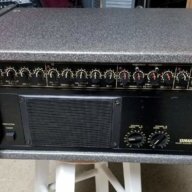
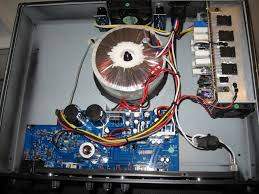
I guess this is the time to jump in here while talking about amp cooling. Pictured a few posts earlier is my Hartke LH500. It has been my workhorse for many years. I've found that playing outside venues in the heat of summer 2018 the SKB rack it was housed in seemed hot to the touch over the power supply section. When I reached inside to touch the amp case it was really hot to the touch. Figuring the heat sinks inside were cooking, I opened it up for the 1st time for inspection and saw that the fan for the boxed heat sink was indeed running. I know that they are supposed to get hot while the fan dissipates the heat and blows it out the back vent. I found an old heat sink fan that ran on 110 and wired it to the amp power supply with a quick disconnect plug since it wouldn't fit into the amp and mounted it on the rear of the SKB case just outside the heat sink vent and now the amp is cool to the touch.
My question is: Is there any engineering involved into the amount of airflow blowing through the output transistor heat sink box or will any old fan do the trick. I don't know why it gets so hot even though the fan is running. Is that normal or I'm over reacting. I'm thinking the cooler the better but maybe that's not how it was designed. Needless to say after all of this, I don't trust the amp anymore although it seems to be working fine. My solution was to buy a Mesa WD-800, the Hartke is my backup. Sorry for the rant. <off soapbox>
My question is: Is there any engineering involved into the amount of airflow blowing through the output transistor heat sink box or will any old fan do the trick. I don't know why it gets so hot even though the fan is running. Is that normal or I'm over reacting. I'm thinking the cooler the better but maybe that's not how it was designed. Needless to say after all of this, I don't trust the amp anymore although it seems to be working fine. My solution was to buy a Mesa WD-800, the Hartke is my backup. Sorry for the rant. <off soapbox>

Passinwind
I know nothing.
- Dec 3, 2003
- 23,079
- 46,048
- Disclosures
- Designer/Toaster Tech @ Passinwind Electronics
Are we going to be run out of town if we do something out of the norm?
I sure hope not! I'll be starting my Class AB DIY amp build very soon, within the next two weeks hopefully. I'm using tubes for the power amp section though, which makes things much much easier. If you're really going to commission a bespoke old school SS build on a pro level, be prepared for sticker shock. I've contemplated doing this at home quite a few times over the years, but other windmills always beckon somehow.


- Feb 12, 2006
- 61,059
- 5
- 221,057
- Disclosures
- Development Engineer-Mesa Boogie, Development Engineer-Genzler (pedals), Product Support-Genz Benz
Yes, there is a LOT of engineering required to cool an amp effectively and also maintain quiet cooling. In this regard as well as others, class AB solid state amps can be a real challenge to design as power levels increase and the chassis size decreases.I guess this is the time to jump in here while talking about amp cooling. Pictured a few posts earlier is my Hartke LH500. It has been my workhorse for many years. I've found that playing outside venues in the heat of summer 2018 the SKB rack it was housed in seemed hot to the touch over the power supply section. When I reached inside to touch the amp case it was really hot to the touch. Figuring the heat sinks inside were cooking, I opened it up for the 1st time for inspection and saw that the fan for the boxed heat sink was indeed running. I know that they are supposed to get hot while the fan dissipates the heat and blows it out the back vent. I found an old heat sink fan that ran on 110 and wired it to the amp power supply with a quick disconnect plug since it wouldn't fit into the amp and mounted it on the rear of the SKB case just outside the heat sink vent and now the amp is cool to the touch.
My question is: Is there any engineering involved into the amount of airflow blowing through the output transistor heat sink box or will any old fan do the trick. I don't know why it gets so hot even though the fan is running. Is that normal or I'm over reacting. I'm thinking the cooler the better but maybe that's not how it was designed. Needless to say after all of this, I don't trust the amp anymore although it seems to be working fine. My solution was to buy a Mesa WD-800, the Hartke is my backup. Sorry for the rant. <off soapbox>

Al Kraft
Supporting Member
- May 2, 2016
- 10,777
- 40,467
- Disclosures
- Mesa Boogie beta product tester and player support
I'll add that in most all cases, cooler is better for the life and often performance of electrical/electronic components (there are exceptions though). I will also second agedhorse's "a LOT of engineering" being required to cool an amp.
Designers have to take into account potential operating envioronment conditions, how folks may rack or colocate gear with other equipment generating heat, and then there are the calculations that address all the cooling modes (e.g. conductive, radiative, convective) being used in the design. Something as simple as color and surface texture can actually make a difference in heat sink performance - this is a much more complex problem than sizing a fan.
Additionally, cooling capability may change over time because things like accumulation of dirt/dust and or material corrosion/oxidation effects can impact thermal management element design performance. Designers have to think about your gear performing well not just new out of the box and during the warranty period, but also years in the future after they've lived the hard life they were deisgned for in the real world.
Thermal management is a critical consideration and something that every amp designer needs to have in their mind at every point in the design process. I say that because total heat generated in the box is one thing, concentrated heat at points or with specific components must also be addressed. Different thermal management techniques are used for different areas of the design. At the end of the day, airflow can often be helpful, but IME as an engineer it's a lot more complex than just airflow alone.
Designers have to take into account potential operating envioronment conditions, how folks may rack or colocate gear with other equipment generating heat, and then there are the calculations that address all the cooling modes (e.g. conductive, radiative, convective) being used in the design. Something as simple as color and surface texture can actually make a difference in heat sink performance - this is a much more complex problem than sizing a fan.
Additionally, cooling capability may change over time because things like accumulation of dirt/dust and or material corrosion/oxidation effects can impact thermal management element design performance. Designers have to think about your gear performing well not just new out of the box and during the warranty period, but also years in the future after they've lived the hard life they were deisgned for in the real world.
Thermal management is a critical consideration and something that every amp designer needs to have in their mind at every point in the design process. I say that because total heat generated in the box is one thing, concentrated heat at points or with specific components must also be addressed. Different thermal management techniques are used for different areas of the design. At the end of the day, airflow can often be helpful, but IME as an engineer it's a lot more complex than just airflow alone.
I sure hope not! I'll be starting my Class AB DIY amp build very soon, within the next two weeks hopefully. I'm using tubes for the power amp section though, which makes things much much easier. If you're really going to commission a bespoke old school SS build on a pro level, be prepared for sticker shock. I've contemplated doing this at home quite a few times over the years, but other windmills always beckon somehow. View attachment 3823118
Very cool. I just all of a sudden got super bored with Class D.
They have no romance no BBQ sauce and they feel like nothing.
Its prolly my old age.
- Feb 12, 2006
- 61,059
- 5
- 221,057
- Disclosures
- Development Engineer-Mesa Boogie, Development Engineer-Genzler (pedals), Product Support-Genz Benz
Class D is a fascinating technology with plenty of "BBQ sauce", plenty of feel, provided the design is sound and exploits these attributes. The more you understand the details of the technology, the more you might appreciate it.
Passinwind
I know nothing.
- Dec 3, 2003
- 23,079
- 46,048
- Disclosures
- Designer/Toaster Tech @ Passinwind Electronics
Vive la difference.Very cool. I just all of a sudden got super bored with Class D.
They have no romance no BBQ sauce and they feel like nothing.
Its prolly my old age.

I've built a few Class D amps for myself and they're decent tools that do what I need them to, but I get my romance elsewhere!
Al Kraft
Supporting Member
- May 2, 2016
- 10,777
- 40,467
- Disclosures
- Mesa Boogie beta product tester and player support
I'm an old timer as well and my take is that while class D is not a new concept, it's sucessful application in bass guitar amps (along with SMPS technology) is still evolving...and far from something to be boring for me quite yet. As for exceitement and extra flavor class D style, I would recommend taking soemthing like a Mesa WD-800 or an Aguilar TH500 or 700 for a test drive and see if you still think they are run of mill solid state sounding and boring. As always YMMV!Very cool. I just all of a sudden got super bored with Class D.
They have no romance no BBQ sauce and they feel like nothing.
Its prolly my old age.

I wonder what all these Amp Repair Shops that were open in the 70's, 80's and 90's, and peoples "Amp Repair Guy that has been at it for over 40 years" they recommend were repairing before Class D amps came about?great time to be alive.
real amps are cheap
turds are expensive lol


