

Enjoy the benefits of a premium membership!
Upgrade Account
-
TalkBass has been independent since 1998. Add your voice.
Create a free account to reply to discussions, view embedded media, and browse with fewer display ads.
Join free Log in
Want zero display ads or expanded classifieds tools? Compare plans.
You are using an out of date browser. It may not display this or other websites correctly.
You should upgrade or use an alternative browser.
You should upgrade or use an alternative browser.
Class D amps sound inferior?
- Thread starter tb4sbp
- Start date
More options
Who Replied?

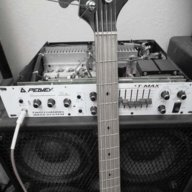
I don't know, I'm an SVT guy all the way but the older I get the harder to move it becomes.. This little badboy right here kicks friggin butt and I have over 200 gigs on this rig and it just kills I think the key was to run it through a 4ohm cab and this Eden 4ohm 112/TCElectronics rig has all the nuts.. I must mention I play in a 6 piece band also with two guitar players and horns and have no problem whatsoever inside or out

It really depends on the player and genre.
Like many players are in love with the Classic Eden heads or Even the Classic Trace Elliot amps.
Most that love affair is familiarity with the Pre Amp and getting tone they like from the pre.
If you glued those classic pre amps to a Ice power power amp.
Im sure most would be more than happy.
Then as some players mention, the cranked sound of a older amp, and even the mid forward tone/ compression of a lot of older non neo cabs. Many players wont get that with a Class D or Neo.
Its much like guitar players and a million amps with the same similar overdrive.
The compression and note attack they get from a certain amp/ certain speaker.
Will never feel or sound the same unless it is that setup.
In a recording you can " emulate" the just sound fine, actually scary how accurate emulations are. It will sound the same.
But in the room at band levels. The feel / the sound the note attack will never be the same.
Like many players are in love with the Classic Eden heads or Even the Classic Trace Elliot amps.
Most that love affair is familiarity with the Pre Amp and getting tone they like from the pre.
If you glued those classic pre amps to a Ice power power amp.
Im sure most would be more than happy.
Then as some players mention, the cranked sound of a older amp, and even the mid forward tone/ compression of a lot of older non neo cabs. Many players wont get that with a Class D or Neo.
Its much like guitar players and a million amps with the same similar overdrive.
The compression and note attack they get from a certain amp/ certain speaker.
Will never feel or sound the same unless it is that setup.
In a recording you can " emulate" the just sound fine, actually scary how accurate emulations are. It will sound the same.
But in the room at band levels. The feel / the sound the note attack will never be the same.
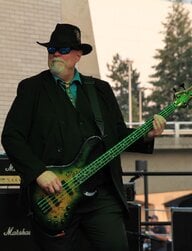
Small is the new big.I don't know, I'm an SVT guy all the way but the older I get the harder to move it becomes.. This little badboy right here kicks friggin butt and I have over 200 gigs on this rig and it just kills I think the key was to run it through a 4ohm cab and this Eden 4ohm 112/TCElectronics rig has all the nuts.. I must mention I play in a 6 piece band also with two guitar players and horns and have no problem whatsoever inside or out View attachment 4268588

What do we do when we get to "Class Z"? Does the world end?
And yet amp manufacturers still refuse to publish their slam measurements. What are they hiding???!!?
"Slam" is a peak measurement, "punch" is an RMS measurement, "grind" is measured at the point of greatest audience density.

- Feb 12, 2006
- 61,038
- 5
- 220,969
- Disclosures
- Development Engineer-Mesa Boogie, Development Engineer-Genzler (pedals), Product Support-Genz Benz
... and splatter is what happens when any of these amps hit the ground from a fall."Slam" is a peak measurement, "punch" is an RMS measurement, "grind" is measured at the point of greatest audience density.
I try to look for a splatter rating of zero when I shop for amps.... and splatter is what happens when any of these amps hit the ground from a fall.
The TT800 is my next stop. I wish I’d bought it first! Having 2 channels would be so handy. We do funk and classic rock. I have a markbass ninja as well. I can tell you the Mesa is better. It seems like I can hear a better separation of notes with my Mesa. It also seems to have a friendlier “base” sound than the markbass. I do like the vle and vpf knobs on the mark, but it feels like all the tone shaping happens there. The rest of the dials are just knobs. Lol

I have two class D heads an Aguilar TH500 and TC BAM200. Class D is all I will buy and all I will ever need.

It either SLAMS, or it doesn't. THAT's the definition of "digital" in a nutshell. (nutshells are also digital because they come in two pieces).
Go stand in front of virtually any modern concert audio system, and tell me it doesn't "SLAM"... Hint: They're virtually all using Class-D amplification now, although there are some others for certain applications, too.
Of course, you can have the best, lightest-weight Class-D solution in the power-amp side, but if the preamp or signals you're feeding into it are garbage or suboptimal, it doesn't matter.
For a light example, a spinning disk in front of a light source with an opening slot(s) or holes that varies with radial location on the spinning disc placed in front of a columnated light source can vary the intensity with the position of the disc relative to the light source. The individual openings are either 0% or 100%, so the question is if this represents digital, or does it represent non-linear?
Hah! This is similar to our camera "shutter checker" at my old workspace - spinning disk, with multiple holes, spinning at a known rate. We'd use this to measure the arcs recorded on film and could determine how accurate the camera shutter was. If the arc had a sideways shift, we knew the shutter curtains weren't accelerating/decelerating properly.

Why I use my Mesa subway preampDI with any amp I play. I just plug it into the FX return and have at it. You'd be surprised at how similar all bass amps sound. Makes it easy to get my sound with any rig.It really depends on the player and genre.
Like many players are in love with the Classic Eden heads or Even the Classic Trace Elliot amps.
Most that love affair is familiarity with the Pre Amp and getting tone they like from the pre.
If you glued those classic pre amps to a Ice power power amp.
Im sure most would be more than happy.
Then as some players mention, the cranked sound of a older amp, and even the mid forward tone/ compression of a lot of older non neo cabs. Many players wont get that with a Class D or Neo.
Its much like guitar players and a million amps with the same similar overdrive.
The compression and note attack they get from a certain amp/ certain speaker.
Will never feel or sound the same unless it is that setup.
In a recording you can " emulate" the just sound fine, actually scary how accurate emulations are. It will sound the same.
But in the room at band levels. The feel / the sound the note attack will never be the same.

I take it that works a bit differently with leaf shutters?Hah! This is similar to our camera "shutter checker" at my old workspace - spinning disk, with multiple holes, spinning at a known rate. We'd use this to measure the arcs recorded on film and could determine how accurate the camera shutter was. If the arc had a sideways shift, we knew the shutter curtains weren't accelerating/decelerating properly.
I take it that works a bit differently with leaf shutters?
Yeah... We had a different device for leaf shutters... It didn't get as much use because most folks using Hasselblads were sending them elsewhere for work if they were leasing or had a service contract for them. The leaf shutter system used phototransistors and a scope. I didn't get to play with it, and had my Mamiya Press lenses tested and CLA'ed by someone else there - they all have in-lens leaf-shutters.
Last edited:
So, I was wondering what the difference is between Class D (Pascal), Class D (Mesa), Class K (Stewart) and why Dave Funk's THUNDERFUNK (A/B I think?) @ 21 lbs/2 spaces/800 @ 2 Ohms just has never been dominated?
I've played all of the above, own the T-funk and can hear the difference?
What's up??
I've played all of the above, own the T-funk and can hear the difference?
What's up??
So, I was wondering what the difference is between Class D (Pascal), Class D (Mesa), Class K (Stewart) and why Dave Funk's THUNDERFUNK (A/B I think?) @ 21 lbs/2 spaces/800 @ 2 Ohms just has never been dominated?
I've played all of the above, own the T-funk and can hear the difference?
What's up??
The Preamps, mostly!

What's up??
The Preamps, mostly!
Try, again...!
Yep - It's the pre-amps that make up the vast majority of tone differences.
Yep - It's the pre-amps that make up the vast majority of tone differences.
It's not the tone...different preamps with the different power sections.
To my ear, the best Class D (Pascal) still doesn't have the grunt/girth and punch (front end attack) that the (I checked) A/B that the Thunderfunk has. It is twice the weight of a 9 lbs amp I give that much. But the day I can't grab a 20 lbs amp that sounds like it does. May as well give up the gym membership. lol


