• TalkBass has been independent since 1998. Add your voice.
    Create a free account to reply to discussions, view embedded media, and browse with fewer display ads.
    Join freeLog in
    Want zero display ads or expanded classifieds tools? Compare plans.

Class D - where are the graphic EQs?

Certainly, but I can’t do a ((freq B - freq A) * pct travel) + freq A in my head while I’m playing. A GEQ has less adjustment but easier to see and set (for me). Actually, the easiest IMO is the per channel EQs that you have on the tablet based mixers, but you would need a touchscreen to include something like that on an amp and not sure I’d want that.
We obviously have different ideas when it comes to EQ that's what makes this forum so much fun everybody has different ideas about stuff. I rarely if ever touched the tone controls on my amp after I have it set how I like it for whatever room I happen to be in. Then if I need to have changes in bass or treble. I use the tone control on my instrument and most of the time those are wide open. I also bury my touch and my position over the pickups or back by the bridge or over the end of the neck to get a different tone.

Even when I used my acoustic amps with graphics I kind of did the same thing I use them to set my basic tone and then varied with my instrument. Also, when I did sound I used the dual 15 and third octave eqs to dial in the basic PA and rarely had to adjust them afterwards.
 
  • Like
Reactions: agedhorse
Certainly, but I can’t do a ((freq B - freq A) * pct travel) + freq A in my head while I’m playing. A GEQ has less adjustment but easier to see and set (for me). Actually, the easiest IMO is the per channel EQs that you have on the tablet based mixers, but you would need a touchscreen to include something like that on an amp and not sure I’d want that.
Then an amp with a sweep mid is just the wrong tool for you. Fortunately there are other options.

I grew up in the pro audio world of graphic and parametric eq’s, so they quickly became second nature to me when using them 4-5 nights a week. Many bass players have plenty of experience with them as well. That’s why there are choices.
 
Last edited:
Certainly, but I can’t do a ((freq B - freq A) * pct travel) + freq A in my head while I’m playing. A GEQ has less adjustment but easier to see and set (for me). Actually, the easiest IMO is the per channel EQs that you have on the tablet based mixers, but you would need a touchscreen to include something like that on an amp and not sure I’d want that.
@60bass: yeah, I know how para-EQ work works. And I suppose that when the time comes, I’ll be fine with that for electric bass.

The upright is a different thing. It’s not just one, or even two, frequencies that may need to be adjusted. There are two often competing goals: a) get the amped instrument to sound like the instrument only louder, while b) preventing the feedback that comes easily with a close-mic’ed giant resonating box. Getting (a) varies from room to room to begin with, and then raising it enough to work with the other instruments while avoiding feedback becomes a second round of adjustments.
 
Then an amp with a sweep mid is just the wrong tool for you. Fortunately there are other options.

I grew up in the pro audio world of graphic and parametric eq’s, so they quickly became second nature to me when using them 4-5 nights a week. Many bass players have plenty of experience with them as well. That’s why there are choices.
But there isn’t anything with the Mesa quality. I mostly just set and forget with the WD-800. I do mostly something akin to the Trace contour / preshape button and leave it there. I’m not a “tone is in the fingers” disciple but if the amp is close enough, I can work with it. Based on the 9% that wanted a GEQ, I don’t think we’ll see a Mesa with GEQ. Bummer, but reality.
 
  • Like
Reactions: agedhorse
Then an amp with a sweep mid is just the wrong tool for you. Fortunately there are other options.

I grew up in the pro audio world of graphic and parametric eq’s, so they quickly became second nature to me when using them 4-5 nights a week. Many bass players have plenty of experience with them as well. That’s why there are choices.
When I went to work for this PA house in ‘94 or so, the main graphs in the rig were White 4400s.

A few times, I literally had to drive those things according to the wishes of the FOH person of the day because they could not get their heads around a 31-band rotary EQ….😁
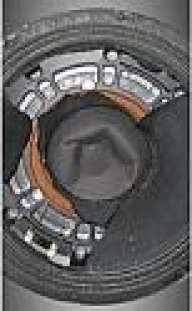
IMG_3480.jpeg


From what I remember at the time, I thought they sounded really good.

They were finally retired for the KT DN3600s.
 
When I went to work for this PA house in ‘94 or so, the main graphs in the rig were White 4400s.

A few times, I literally had to drive those things according to the wishes of the FOH person of the day because they could not get their heads around a 31-band rotary EQ….😁View attachment 7141874

From what I remember at the time, I thought they sounded really good.

They were finally retired for the KT DN3600s.
I ren into to those a couple times. Good units but scary if you don't take time to understand how they worked. IIRC the back panel also looked scary too. With those jumpers and screw lug terminals. They were very good for fixed installation installs where you used them to "tune the room" then leave them alone. Set it and forget it.
 
  • Like
Reactions: Geri O
@60bass: yeah, I know how para-EQ work works. And I suppose that when the time comes, I’ll be fine with that for electric bass.

The upright is a different thing. It’s not just one, or even two, frequencies that may need to be adjusted. There are two often competing goals: a) get the amped instrument to sound like the instrument only louder, while b) preventing the feedback that comes easily with a close-mic’ed giant resonating box. Getting (a) varies from room to room to begin with, and then raising it enough to work with the other instruments while avoiding feedback becomes a second round of adjustments.
Often, two parametric bands work better than. A 10 band graphic for example.
 
When I went to work for this PA house in ‘94 or so, the main graphs in the rig were White 4400s.

A few times, I literally had to drive those things according to the wishes of the FOH person of the day because they could not get their heads around a 31-band rotary EQ….😁View attachment 7141874

From what I remember at the time, I thought they sounded really good.

They were finally retired for the KT DN3600s.
I worked with these as well. No big deal, easy peasy, right?
 
Last edited:
  • Like
  • Love
Reactions: 60bass and Geri O
I did a poll on this topic here last year and the majority of TB members had no interest in a graphic.
Add me to the list for "no interest" on a personal front. From a business front, I've seen too many bassists get into "trouble" with three or four potentiometers. Add a signal shaping feature and planes start dropping from the sky and panic ensues. ;-) OP- as a fellow double bassist, I certainly understand your desire to have one. The market demand just isn't big enough though.