^^This is so true^^
Which brings to mind a couple of questions for the group:
1. What was your first experience with the Sadowsky sound?
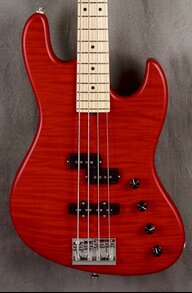
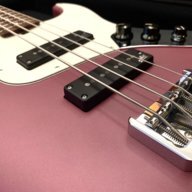
Letterman, on a little black and white television with a 3” speaker. Uncle Will and Duck Dunn are the guys that made me want to play bass. Will did a few years on the show before he played a Sadowsky bass, and played basses with the onboard preamp prior to playing one. I noticed early on he was the only guy on TV talks shows whose bass could be heard. This continued on until every bassist on a late night talk show was playing a Sadowsky. I was a kid in those early days, but being close to NYC, I begged some older musicians that worked with Will to ask him what that new bass he had was. Word came back it was this guy Sadowsky off of 48th St. that was mostly involved in repairs and mods but did offer instruments under his own mark. I mowed lawns and detailed cars to get my first Sadowsky.
2. How many of us got our first exposure to it through Uncle Will on Late Night (with the World's Most Dangerous Band, then the CBS Orchestra)? I did, for sure.
See rambling essay above.
3. How did Roger, in his infinite wisdom, know how to refine and perfect this sound precisely for the real world, decades before the internet and mobile phones?
This I attribute to happy accident, because the physics for it to to happen were already in place. I’m not sure Roger himself knew how to arrive at this sound, but his clientele sure did and he didn't refine his designs in a vacuum. I'm piecing my observations together from hearing things from older players around town, endless interviews with Roger over the years, and maybe Roger himself. Memory fades after you approach a certain age.
A big part of his client base decades ago were the hardest working pros in NYC. This is when there was a thriving studio scene. He sought suggestions and drew from the collective experience of these players. This was real world experience from some of the finest players in the business, who in turn worked with some of the finest engineers and producers. These people knew their stuff and passed their observations and comments onto Roger, who had the knack of taking this intel and creating viable solutions in physical form.
Through full intent, group consensus from working pros, or influence from other early bass preamp designers or classic Fender amp designs, the Sadowsky preamp boost at 4kHz is a frequency naturally found pleasant by the human ear. We are most sensitive in the 1-5 kHz area. This allows note definition to pop through without being jarring or unnatural sounding. The 40 Hz down below warms things up nicely without being overbearing, and the resultant dip around 300 or so adds up to a tone that somehow magically sounds great in a bedroom, on a live stage, or in a studio.
Al this was arrived at years before cell phones. The audio in those handheld devices is highly processed to present what’s being captured in the best way and it can take something that sounds good and make it better. Sadoswky electronics always sounded good when captured by recording devices of all types, from the finest studio equipment to handheld cassette recorders as a result of Roger giving his clients what they wanted. The new wave of smartphone recording is simply following suit.
Last edited: