
Enjoy the benefits of a premium membership!
Upgrade Account
-
TalkBass has been independent since 1998. Add your voice.
Create a free account to reply to discussions, view embedded media, and browse with fewer display ads.
Join free Log in
Want zero display ads or expanded classifieds tools? Compare plans.
You are using an out of date browser. It may not display this or other websites correctly.
You should upgrade or use an alternative browser.
You should upgrade or use an alternative browser.
More options
Who Replied?
GC has them on sale in store for $29.99 for the 9050L.Great value too

My experience as well. The tuners on my metroline and metroexpress (both Japanese) felt superior. Also the pots on the German basses didn't feel as good, (quite loose). Other than that, the German Metroline was a very nice lightweight instrument.Out of five, two had noticeable 'catches' in them and felt like they were grinding or something - not smooth at all. Like someone was putting the brakes on, then letting off, then brakes, etc, etc. Then a third tuner was extremely stiff feeling and with adjustment, just became very sloppy feeling - I could never get it to not either be tough to turn or really loose and sloppy. Being used to, and expecting similar feel to, the Hipshot Ultralites, they were just a total let down. The USA Hipshots I've had are just smooth, no catches, no tough turns...they just work and work very well.
Granted, many haven't had this experience, but I'm not alone in my experience either.


Hey all,
Recently purchased a brand new Metroline Vintage JJ5 in a beautiful open pore almond burst. Sounds great. It’s quite light (just under 8lbs I believe) - which is great. However…I do find that it neck dives quite a bit both sitting and standing (ie on a strap). I know different people are sensitive to different things - one of the things I’m sensitive to is neck dive. It has resulted in my selling many previous basses and guitars.
Have any of you experienced something similar with your Sadowsky and if so how have you remedied the situation? Thus far I have explored the usual possible solutions - lighter tuners (not sure there are any lighter and easy to install than these Sadowsky Lightweights which look to me like rebranded Hipshot Ultralites), adding small weights to the control cavity, changing strap button position (ie moving the end button up the body a bit so the bass naturally hangs with the neck higher - this more permanent tweak is not something I’m really interested in although it is probably very effective). Any insights out there?
Recently purchased a brand new Metroline Vintage JJ5 in a beautiful open pore almond burst. Sounds great. It’s quite light (just under 8lbs I believe) - which is great. However…I do find that it neck dives quite a bit both sitting and standing (ie on a strap). I know different people are sensitive to different things - one of the things I’m sensitive to is neck dive. It has resulted in my selling many previous basses and guitars.
Have any of you experienced something similar with your Sadowsky and if so how have you remedied the situation? Thus far I have explored the usual possible solutions - lighter tuners (not sure there are any lighter and easy to install than these Sadowsky Lightweights which look to me like rebranded Hipshot Ultralites), adding small weights to the control cavity, changing strap button position (ie moving the end button up the body a bit so the bass naturally hangs with the neck higher - this more permanent tweak is not something I’m really interested in although it is probably very effective). Any insights out there?

Hey all,
Recently purchased a brand new Metroline Vintage JJ5 in a beautiful open pore almond burst. Sounds great. It’s quite light (just under 8lbs I believe) - which is great. However…I do find that it neck dives quite a bit both sitting and standing (ie on a strap). I know different people are sensitive to different things - one of the things I’m sensitive to is neck dive. It has resulted in my selling many previous basses and guitars.
Have any of you experienced something similar with your Sadowsky and if so how have you remedied the situation? Thus far I have explored the usual possible solutions - lighter tuners (not sure there are any lighter and easy to install than these Sadowsky Lightweights which look to me like rebranded Hipshot Ultralites), adding small weights to the control cavity, changing strap button position (ie moving the end button up the body a bit so the bass naturally hangs with the neck higher - this more permanent tweak is not something I’m really interested in although it is probably very effective). Any insights out there?
well, my P bass (Warmoth/Allparts bass that is) is really a neck dive monster. As in let go of the neck and the neck dives to the floor within 5 seconds, which for years is why I didn’t gig this bass. Ended up finding a wide strap which basically had what felt like the back of carpet tile on it and it absolutely resolves that issue. Locks it like I have glue on it.
I agree absolutely; for what I experienced slight neck dive is no issue if you choose the right strap

IIRC, the USA made Hipshot Ultralights are actually lighter … don’t remember the exact number, but it seemed pretty significant to me. That might make a difference.Hey all,
Recently purchased a brand new Metroline Vintage JJ5 in a beautiful open pore almond burst. Sounds great. It’s quite light (just under 8lbs I believe) - which is great. However…I do find that it neck dives quite a bit both sitting and standing (ie on a strap). I know different people are sensitive to different things - one of the things I’m sensitive to is neck dive. It has resulted in my selling many previous basses and guitars.
Have any of you experienced something similar with your Sadowsky and if so how have you remedied the situation? Thus far I have explored the usual possible solutions - lighter tuners (not sure there are any lighter and easy to install than these Sadowsky Lightweights which look to me like rebranded Hipshot Ultralites), adding small weights to the control cavity, changing strap button position (ie moving the end button up the body a bit so the bass naturally hangs with the neck higher - this more permanent tweak is not something I’m really interested in although it is probably very effective). Any insights out there?
And, yes - wider, grippier straps help as well.
Thanks. I have also read that about the Hipshot Ultralites. Sent them an email and will see what they say...perhaps a combo of that and a few wheel weights in the control cavity will straighten it out. I already have thick grippy straps that do help - but not when playing seated without a strap...IIRC, the USA made Hipshot Ultralights are actually lighter … don’t remember the exact number, but it seemed pretty significant to me. That might make a difference.
And, yes - wider, grippier straps help as well.

Thanks. I have also read that about the Hipshot Ultralites. Sent them an email and will see what they say...perhaps a combo of that and a few wheel weights in the control cavity will straighten it out. I already have thick grippy straps that do help - but not when playing seated without a strap...
I think Roger has addressed this issue before.....a good strap will fix the neck dive....or you could add some lead to the cavity, J/K lol...

Interesting that we’re so attached to FSOs that we’re willing to live with their shortcomings, despite the fact that there are newer designs that have overcome those shortcomings. For me, not balancing while seated has suddenly (after 40+ years) become really annoying.
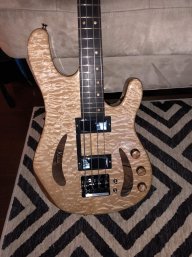
Long time Sadowsky player but surprisingly have never played a P/J configuration.
I’m curious as to how the pickups are balanced.
My experience with other brands has been that the P pickups overpower the J pickup.
I’ve had better success with a dual coil J pickup though.
Thanks !
I've yet to hear a P/J have a balanced sound between the pickups when the bridge pickup is a single coil size. A neck pickup is inherently louder than the bridge pickup due to its location. A precision pickup is typically quite a bit louder than most any single coil sized pickup. The blended p/j sound is unique and quite modern sounding, the classic Vic Wooten.
My Sadowsky isn’t a PJ, but I have a Kinal MK5B with Nordstrand PJ pickups. Originally it came with the NP5v and the NJ5SE, but in that setup the NP5v was a bit too weak (I think it would have been better with the NJ5S). So, I swapped the neck pickup for the NP5 which I like better, which made the P pickup more powerful than the J. Fortunately, I have a John East preamp and there is a pickup level control trimpot inside on the blend knob, so I was able to dial up the gain on the J pickup and now it’s well-balanced. So the moral of the story is go with a hotter wind for the J (like the SE wind) or a not-as-hot wind on the P pickup if you want a more balanced sound…or you can consider an East preamp (or another preamp with an active blend and pickup level controls) if you really want to blend it just right.
Question for the group—
I see people speaking about the pros and cons of the German-made Sadowsky basses. One of the pros is the invisible fret end technology where they leave the fret ends unexposed. My NYC bass was made in 2010, and it doesn’t have that, but it’s still a great instrument. I was wondering if the current NYC basses are using the invisible fret ends?
I see people speaking about the pros and cons of the German-made Sadowsky basses. One of the pros is the invisible fret end technology where they leave the fret ends unexposed. My NYC bass was made in 2010, and it doesn’t have that, but it’s still a great instrument. I was wondering if the current NYC basses are using the invisible fret ends?

Interesting that we’re so attached to FSOs that we’re willing to live with their shortcomings, despite the fact that there are newer designs that have overcome those shortcomings. For me, not balancing while seated has suddenly (after 40+ years) become really annoying.
Re neck dive: the fact is that the FSO shape with horn reaching the 12th fret is superior to most other designs. Some are especially bad, for example those with small bodies and/or short horns, especially when they have 24 fret necks: Warwick Thumb, classic Spector, T-bird/Explorer, the classic Alembic Series basses (though they had large, heavy bodies)... I could go on.
A significant factor with almost any model is the emphasis on light weight. The caveat to weight reduced bodies (chambered, semi-hollow) is that there's less counterweight for the neck, which is likely still made of maple.
As noted by many, a strap can solve the problem. Avoid those slippery nylon ones. Textured leather/synthetic/fabric is the way to go, and of course wider is better.
I just cannot understand why all the fuss about invisible fret ends. Over 50 odd years of regular gigging I have owned more basses then I can remember and fret sprout/ rolled edges has never been a significant issue. If occasionally I have needed to do a light file on fret ends it has been a simple five minute job. Fender has effectively been doing it for years with neck binding on some models, looks nice but more of a pain when you need to refret and nip the tang. Honestly, to me invisible frets is the last thing I would take into consideration when buying a bass.Question for the group—
I see people speaking about the pros and cons of the German-made Sadowsky basses. One of the pros is the invisible fret end technology where they leave the fret ends unexposed. My NYC bass was made in 2010, and it doesn’t have that, but it’s still a great instrument. I was wondering if the current NYC basses are using the invisible fret ends?
I already have 2 other modern basses (Sadowsky Metro and a Roscoe SKB) so I took a chance and replaced the pickups on my Singlecut to EMG 45s HZ passive, played it first time today with the band and man I really love the sound! I am also replacing the hardware to all black
Re neck dive: the fact is that the FSO shape with horn reaching the 12th fret is superior to most other designs. Some are especially bad, for example those with small bodies and/or short horns, especially when they have 24 fret necks: Warwick Thumb, classic Spector, T-bird/Explorer, the classic Alembic Series basses (though they had large, heavy bodies)... I could go on.
A significant factor with almost any model is the emphasis on light weight. The caveat to weight reduced bodies (chambered, semi-hollow) is that there's less counterweight for the neck, which is likely still made of maple.
As noted by many, a strap can solve the problem. Avoid those slippery nylon ones. Textured leather/synthetic/fabric is the way to go, and of course wider is better.
I have had no issues with my FSOs on a strap. I was speaking specifically about playing while seated, with the bass on your knee.

I just cannot understand why all the fuss about invisible fret ends. Over 50 odd years of regular gigging I have owned more basses then I can remember and fret sprout/ rolled edges has never been a significant issue. If occasionally I have needed to do a light file on fret ends it has been a simple five minute job. Fender has effectively been doing it for years with neck binding on some models, looks nice but more of a pain when you need to refret and nip the tang. Honestly, to me invisible frets is the last thing I would take into consideration when buying a bass.
This isn’t group hypnosis. It depends greatly on the climate you live in. Speaking of the USA, I lived on the East Coast in and around NYC, the cold dry winters made fret sprout a real concern. Same with the upper Midwest. Luthiers in those locales mention fret sprout work as very common in the winter months.
Trust and believe that fret sprout could be a real issue, unless you enjoy cutting your hands on fret ends. Some basses exhibit this worse than others, but $20k Foderas and a $200 student model are equally susceptible. Most of my Sadowskys have had a bit of fret sprout. I have a maple neck/maple fingerboard model that is nearly 30 years old that never got fret sprout.
When I lived in Florida, I had no fret sprout concerns at all, even with basses that had it in other climates.
Last edited:
I agree. I’m a little confused by it as well.I just cannot understand why all the fuss about invisible fret ends. Over 50 odd years of regular gigging I have owned more basses then I can remember and fret sprout/ rolled edges has never been a significant issue. If occasionally I have needed to do a light file on fret ends it has been a simple five minute job. Fender has effectively been doing it for years with neck binding on some models, looks nice but more of a pain when you need to refret and nip the tang. Honestly, to me invisible frets is the last thing I would take into consideration when buying a bass.
It’s simply a cost saving measure and Warwick has figured out how to cleverly market it to their advantage.
Maybe I’m remembering incorrectly, but I heard back in the day that “invisible fret ends” was a sign that your bass was “cheaper” because the frets weren’t installed by hand.
Apparently that’s not a thing anymore.

Given the choice I would always select invisible frets. To those critical of it, I’m curious if you’ve ever tried a German Sadowsky with invisible frets. No more sharp ends ever. Having had many Sadowsky basses from NYC’s to Japanese to German Metros and German Masterbuilt basses I prefer the German made Sadowsky’s.
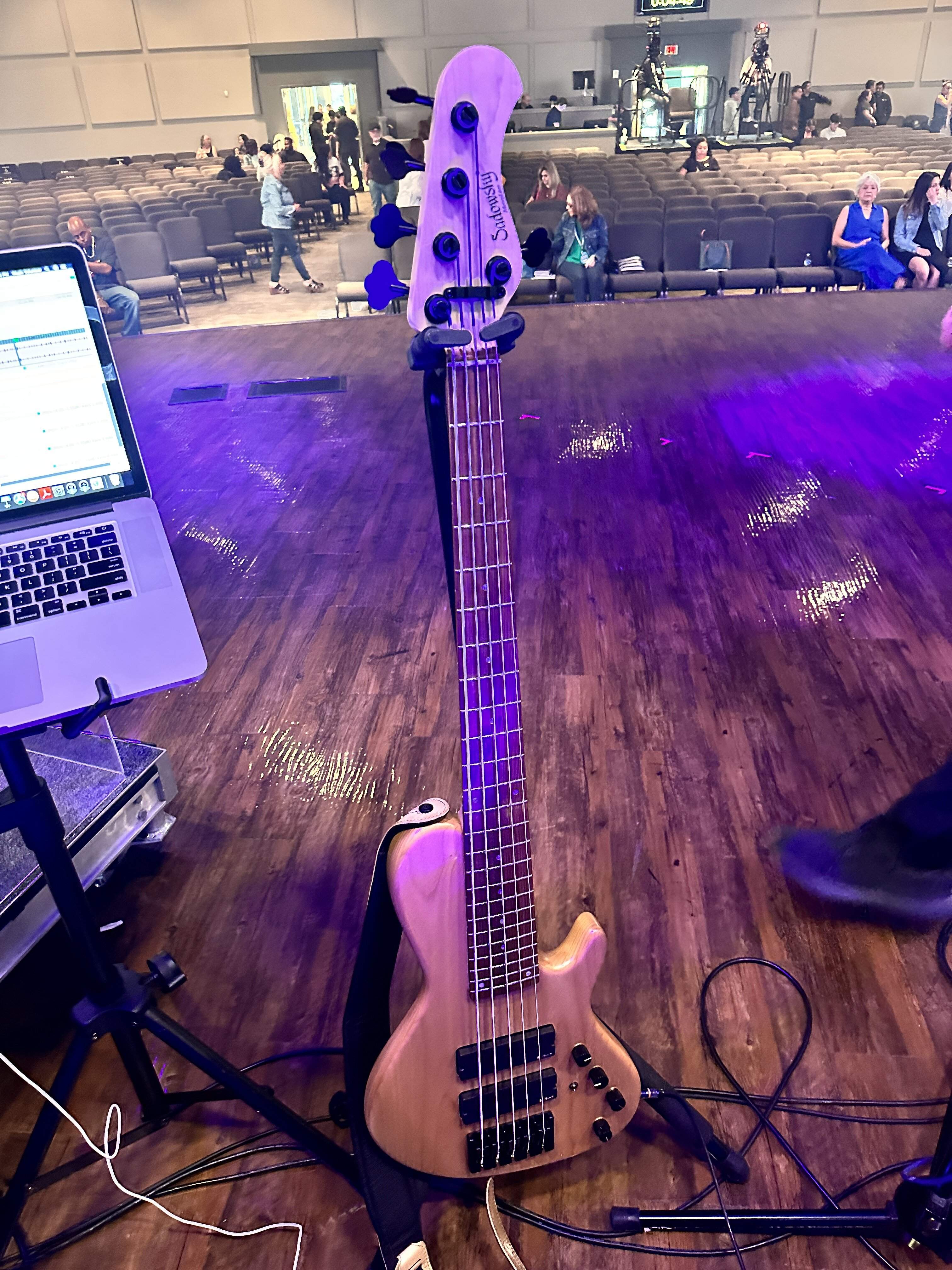
I already have 2 other modern basses (Sadowsky Metro and a Roscoe SKB) so I took a chance and replaced the pickups on my Singlecut to EMG 45s HZ passive, played it first time today with the band and man I really love the sound! I am also replacing the hardware to all black
Hi,
I like the photo of your Singlecut - its an alder / morado combination?
What was the reason for changing the Pick Ups?


