Gold Star Studios was an independent recording studio located in Los Angeles, from 1950 to 1984 Gold Star was one of the most successful commercial recording studios in the world. Founded by David S. Gold and Stan Ross, they opened in October 1950 having designed and built much of the unique cutting-edge custom equipment which Phil Spector later commandeered for his extraordinary efforts. Early on West Coast Jazz artists Gerry Mulligan, Chet Baker, Oscar Moore, The Hi-Los and Swing bands by Louis Bellson recorded there, between 1950-1984 Ritchie Valens cut La Bamba, Eddie Cochran did Summertime Blues, The Righteous Brothers had That Lovin' Feeling, plus Iron Butterfly's Innagaddadavida was done there. Brian Wilson heard Spector's records and began to make many of his group's records at Gold Star using similar methods and the industry followed hoping to replicate the sound. Sonny & Cher, Buffalo Springfield, Duane Eddy, Jimi Hendrix, Neil Young, Dick Dale, Herb Alpert & The Tijuana Brass, The Champs, …even Alvin & The Chipmunks made hits at Gold Star and was home of ABC-TV's first prime-time Rock & Roll Show 'Shindig' that hosted virtually every major pop artist of the 1960s into the 80's. it became a haven for established artists like Bobby Darin, The Who, The Monkees, The Band, The Go Go's, The Ramones, The Association, Art Garfunkel, Leonard Cohen, Bob Dylan, John Lennon, Tommy Boyce and innumerable others.
Gold Star Recording Studios was a trailblazing studio that changed the course of modern music through technology and employing pioneering Producers. The studio showcased David S. Gold's custom-designed and hand-crafted technology and Stan Ross' relentless creativity with groundbreaking methods to raise the use of the recording studio to an art form, this pair of studios pioneered and popularized recording techniques and effects that define modern music. The first platinum album was recorded here and innovative audio effects and techniques like phasing, flanging, automatic double-tracking were perfected here.
The studio was moderately sized and did not have air-conditioning, Spector's laborious sessions were not comfortable yet were unforgettable to the performers who began to trust Spector's unorthodox requests because he made hits while Engineer Larry Levine and arranger Jack Nitzche along with the top session musicians led the West Coast recording scene for over 10 years. There were drummers Earl Palmer and Hal Blaine, the string section was made up of bass players Carole Kaye and Larry Knechtel, guitarists Barney Kessel, Tommy Tedesco, and Billy Strange, this group of musicians became known as the Wrecking Crew.
Be My Baby was the first Ronettes song produced by Phil Spector, released on his label, Philles Records. It exemplified Spector's famed Wall Of Sound production technique where he layered lots of instruments and added echo effects. Spector had already produced seven chart hits when he auditioned Veronica (Ronnie) Bennett, her sister Estelle Bennett, and immediately signed them at the end of March then had the group record a Jeff Barry-Ellie Greenwich song called "Why Don't They Let Us Fall In Love," but decided not to release it in favor of another Barry-Greenwich composition, "Be My Baby." The single entered the charts at the end of August and became the biggest hit and only Top 10 for The Ronettes.
Ronnie Spector - I formed the Ronettes with my sister Estelle and cousin Nedra, but we couldn't get a hit, when we did shows we'd be on the bill as "and others". It was an awful period. Then one day Estelle called Philles Records which was run by Phil Spector, he was probably the hottest producer in America but he answered the phone himself. The next night we had an audition and he just freaked out, "That's the voice I've been looking for", he went nuts over me from that moment. We went out to get sandwiches in his limousine and soon he was taking me for candlelit dinners, when I rehearsed songs at his penthouse he'd keep me later and later, things just got hotter and hotter. He was infatuated with my voice, my body, everything, it was mutual. Be My Baby, which Phil wrote with NYC's Brill Building writers Jeff Barry and Ellie Greenwich documents that initial explosion. Recording it took forever, I rehearsed in New York with the Ronettes, then I had to go to California on my own to sing the lead. My mom usually flew with me but because it was so far she said "Honey, you're 18. You can do this on your own now." Phil picked me up at the airport and kept saying "This record is going to be amazing." In the studio, I had to hide in the ladies' room so the musicians could get their work done, I was very pretty and they'd keep looking at me. While I was in there I came up with all those "Oh oh ohs" inspired by my old Frankie Lymon's records, it took three days to record my vocals, take after take. Phil rehearsed her for weeks and had her do 42 takes before he got the sound he wanted. The recording captures the full spectrum of my emotions, everything from nervousness to excitement. When I came in with "The night we met I knew I needed you so," the band went nuts. I was 18 years old, 3,000 miles from home, and had all these guys saying I was the next Billie Holliday. After that I wasn't allowed in the studio, there may have been a little jealousy thing going on, I had to stay in the hotel while Phil finished the record. The first time I heard it, the Ronettes were on tour. We were lying in bed watching Dick Clark's American Bandstand when he said: "This is going to be the record of the century." And it was us!
Ronnie was the only Ronette to sing on this but pre-fame Cher sang backup vocals with Sonny Bono worked for Phil Spector as a promotion man and gofer; he was dating Cher and introduced her to Phil who then used her as backup on several recordings.
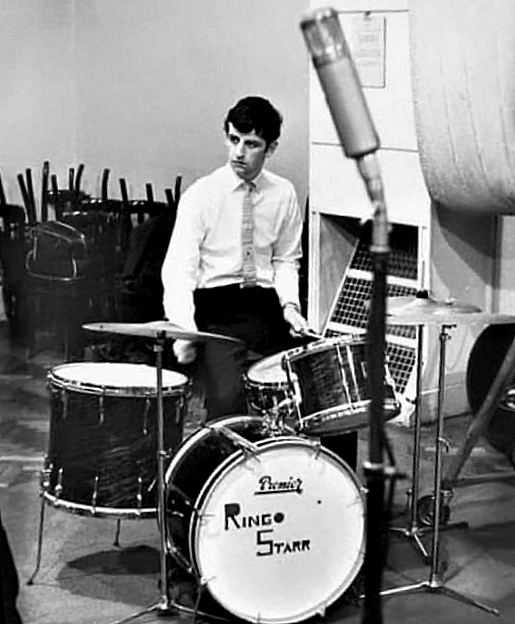
Hal Blaine; drummer - I was Phil's regular drummer. He was very superstitious. He always wanted the same studio, the same microphones, the same night – Friday. For a normal session, you'd have piano, drums, bass and guitar. But Phil would have at least three bass players and four pianists playing at the same time with seven or eight guitarists strumming. The Gold Star studio in Los Angeles was famous for its echo chamber: a room that looked like it had a giant coffin in its ceiling, everything we recorded came out of a speaker at one end and into a microphone at the other. That was Phil's famous Wall of Sound. He had a great big sign on the door of the studio which read: "No admittance. Private session." But if anyone did step into the control booth, he would hold court, dragging them into the studio and saying: "Hal, give them a tambourine!" Sometimes, there'd be more spectators playing percussion instruments than musicians in the studio. It's such a shame Phil's incredible music has been overshadowed. When I worked with him he was a really nice guy. I remember Sonny Bono was his gofer. "Sonny," he'd say, "go for coffee!" He was dating this 17-year-old called Cher and the two of them, Sonny and Cher, ended up among the backing singers for Be My Baby. It's said that Phil made the orchestra run through it 42 times before he pressed record. But a lot of that was theatrics: he wanted the musicians half-crazy, right on the edge. It was the opposite with the drums. I was like a racehorse straining at the gate. But he wouldn't let me play until we started recording, because he wanted it to be fresh. That famous drum intro was an accident, I was supposed to play the snare on the second beat as well as the fourth but I dropped a stick, being the faker I was in those days I left the mistake in and it became: "Bum-ba-bum-BOOM!" And soon everyone wanted that beat. If you listen to me in Frank Sinatra's , I'm playing the Be My Baby beat, just very softly.
Nearly sixty years ago Producer Phil Spector walked into his studio in determined to make his ultimate "wall of sound" masterpiece, he assembled a 21-piece orchestra and a 21-voice choir, he also paid Ike Turner $20,000 to stay away from the studio so he wouldn't interfere with his wife's performance. Seeking perfection, Spector made Tina Turner sing her part over and over and over again, she recalled "I must have sung it 500,000 times, I was drenched with sweat, I had to take my shirt off and stand there in my bra to sing."
Link Removed
Classic Tracks: The Ronettes 'Be My Baby'
How we made the Ronettes' Be My Baby
Eddie Cochran cut some of the best early RnR here
View attachment 4826180
View attachment 4826129