• TalkBass has been independent since 1998. Add your voice.
    Create a free account to reply to discussions, view embedded media, and browse with fewer display ads.
    Join freeLog in
    Want zero display ads or expanded classifieds tools? Compare plans.

Counting: Yea or Nay?

Do you count the beat?

  • Yes

    Votes: 56 49.6%
  • No

    Votes: 36 31.9%
  • I count carrots

    Votes: 21 18.6%

  • Total voters
    113
I recently started taking lessons and my teacher wants me to count beats rather than just feel the beat.

At first I didn't mind this, as the exercises we were working on were pretty simple. But as the lessons get more complex, I find that counting is neutral at best and distracting at worst. I don't feel like counting is helping me keep time, but I'm spending a lot of mental energy and focus doing it, and sometimes it's getting in the way of actually playing melodies.

My teacher has said that everybody counts, yet I've never come accross discussion of counting in all my years of playing music, and only one other person has ever mentioned it (and they said they didn't do it.)

What's your stance on counting rather than feeling the beat?
 
To say that everybody counts, and not specify in what circumstances, is a bit of an overstatement.

I would say counting, while practicing, can be a great way to solidify whatever it is that you're practicing. If you're struggling with a tricky riff, forcing yourself to slow it down and do it while counting out loud, and to the beat of a metronome, is a great way to internalize a rhythm.

For me, I do this occasionally when I'm struggling with a tricky rhythm, heavy syncopation, odd meters, etc. Doing so for half an hour or an hour helps me learn and internalize the rhythm, and within two or three session, the out loud counting is no longer necessary for me and I find I can feel it naturally.

But I rarely count out loud, or even in my head when performing. By the time I am performing something, I make sure to have it down to the point where I can naturally feel any of the tricky rhythms that I had to practice by counting out loud.
 
For me counting is reserved for situations where there is something tricky happening in the music (in general this is music I haven’t had time to fully absorb). For example, I recently had a gig where one of the songs kept changing time signatures and would have one chord for the first, say, four beats and then another on the fifth beat. I counted beats for that one (though only during the tricky bars). I might also count beats at the beginning of a song that I instinctively hear differently (e.g. half or double time) just to ground myself.

However, 99% of the time I’m playing I’m not counting beats. I will often tap my foot but that’s not the same thing.
 
Last edited:
Your teacher wants you to count during practice and in your lessons so you won’t have to on a gig. In learning to read music, I would say the notes and the beats out loud and it helped solidify what I was learning.

Sure, I talked with other self-taught bassists who didn’t count or read. That doesn’t make it unimportant. That just means I can play stuff they can’t.

Listen to your instructor. Don’t second guess him on a bass forum. He has a method and you need to trust his process. Thats what you’re paying him for. You won’t always be counting out loud. But it’s important now, in the learning phase.

Or you can think you know better and see how far that takes you.

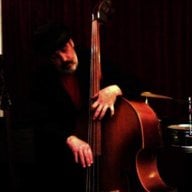
Here’s a video of my bass instructor. We used to do lessons at his house. The counting thing was super frustrating, but it made me better. I had to trust the process, bc he didn’t cut me ANY slack! Shew!

 
Last edited:
Your teacher wants you to count during practice and in your lessons so you won’t have to on a gig.
^^^THIS^^^ I practice so that I can just play when I'm on stage. I might be focused on counting, practicing arpeggios, pentatonic stuff or whatever, but not consciously trying to apply it on stage - the idea being that when practiced enough, it will simply be there and come out.

The only counting I ever did on stage (other than what might have been part of a tune, like the beginning of "Matter of Trust" by Billy Joel) was a gag thing with our drummer, where one of us would yell "ONE!!!" at the other. The only caveat (and what made it funny, but probably only to us) was that it be anywhere OTHER THAN the one.
 
You count when you need to. Being unable to count would be something I'd work on.

A teacher sometimes just teaches from a plan without thought to the student. Others let you set your own plan. Neither of those is a great teacher. A few teachers can look at your weaknesses and give you something to improve on them. That's a great teacher. It might be that your teacher understands you are struggling here and that's why they want you to count.
 
  • Like
Reactions: sean_on_bass
I'm trying to get better at counting and understanding rhythm, and it's an uphill battle for sure. Everyone's background with music is different, but for me it's been especially challenging because of my background with orchestra as a kid. Obviously we had to read music reasonably well, but actually counting beats was never something that we had to worry about – that was the conductor's job.

Personally, I've gotten a lot of mileage out of Rich Brown's instructional videos on YouTube lately. I'd strongly recommend checking out his videos on practicing with a metronome if you've never seen them. Here are some of my favorite tips in no particular order:
  • Turn off beats 1 and 3 on your metronome, leaving just the 2 and 4.
  • In addition to counting, sway back and forth to feel the rhythm in your body. Try to align with the 2 and 4.
  • Most challenging part: don't play the instrument until I'm locked into the tempo.
  • If you're tapping your foot, try to pay attention to the 8th note subdivision, counting upbeats on the "upstroke" of your foot and downbeats when your foot hits the floor. 1 & 2 & 3 & 4 & ...
  • Try counting while listening to music, especially if you can listen while commuting to work or something like that. This got a lot easier for me after I got used to a metronome only playing beats 2 and 4!
I probably said a lot of obvious stuff, but it wasn't obvious or explained to me when I was starting out, so I guess it's worth posting. I hope some of that helps, and good luck with the lessons!
 
There's a part in a song I play with a Top40 band that I have to count every single time or I'll mess it up, even though we play it at virtually every gig.

It can also help if you're trying to communicate with other musicians (and vice versa) about a variety of things. Personally, I can deal with people that don't know the note names much better than those that can't count. We can talk in fret numbers, but there's no verbal substitute for telling me that we come in on the & of 1.

And it helps to understand other concepts down the line, which is likely one of the reasons your instructor is having you do it. It definitely helps me when working out a tricky part.

I don't actively count to 4 over and over when I'm playing a song, but am aware of it at all times (that's just practice and experience). It's a quality skill to develop, IMHO
 
  • Like
Reactions: Brandon Shea
Counting is integral to reading, but I got away with faking it for most of my life. Playing handbells forced me to count, because when you're playing, say the 2nd sixteenth note in a group of 4 on beat 3, you're pretty unlikely to nail it otherwise. But when I'm grooving on an ostinato bass part I'm not counting, and I doubt anybody does, at least after they've learned it.
 
I struggle a lot with counting, but I am glad I took it on. It is really important for reading as others stated and can be helpful in charts. Well it may sound dead simple a noob like me having count in a 12 bar blues is helpful when you are dealing with unsure guitarist or other lead instrumentalist. For Upright it has helped a lot to count on bass and also other instruments I mess with.
 
  • Like
Reactions: Gopherbassist