• TalkBass has been independent since 1998. Add your voice.
    Create a free account to reply to discussions, view embedded media, and browse with fewer display ads.
    Join freeLog in
    Want zero display ads or expanded classifieds tools? Compare plans.

D'addario Chromes or Fender 9050's?

I recently bought a new bass, it's the Ibanez AFB200-tks.
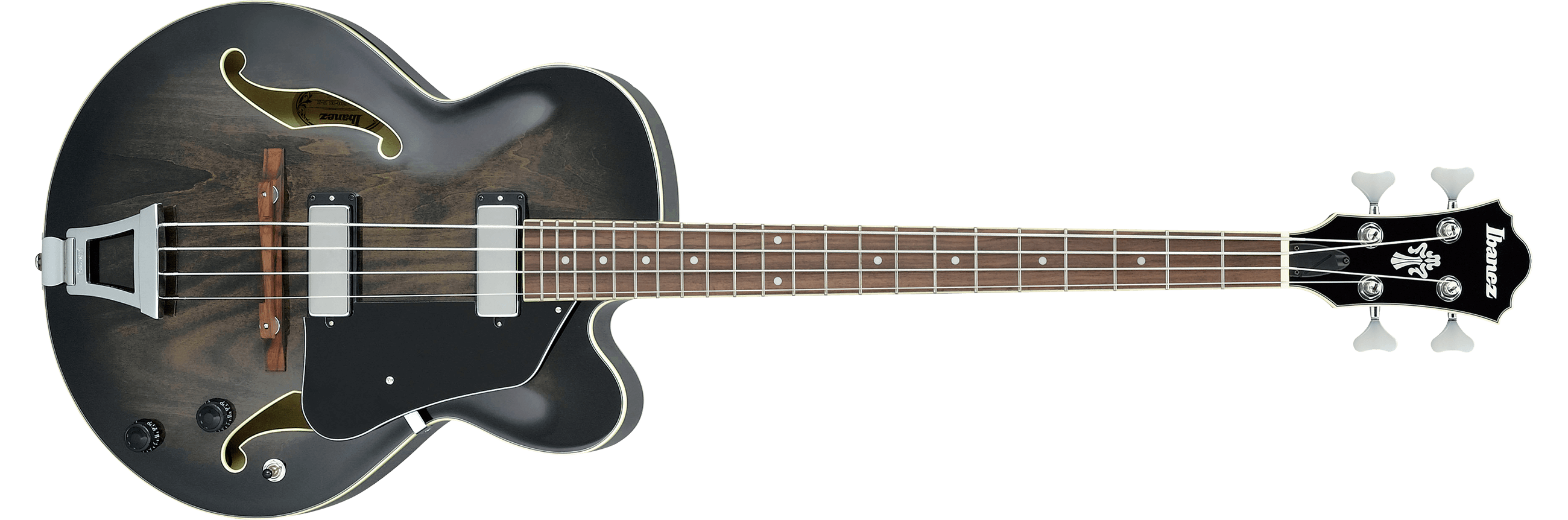
p_region_AFB200_TKS_5B_02.png

It's an acoustic/semiacoustic bass with humbuckers, and i want to put flatwound strings on it. But I don't have any excperience with flatwound strings at all, so I don't know which strings to choose. While reading about different kinds of flatwounds strings, there where two strings that i really liked. The D'addario Chromes and the Fender 9050's.
Which strings do you guys think would sound best for this bass? And is there anything else i should need to know about flats before buying?
 
I recently bought a new bass, it's the Ibanez AFB200-tks.
p_region_AFB200_TKS_5B_02.png

It's an acoustic/semiacoustic bass with humbuckers, and i want to put flatwound strings on it. But I don't have any excperience with flatwound strings at all, so I don't know which strings to choose. While reading about different kinds of flatwounds strings, there where two strings that i really liked. The D'addario Chromes and the Fender 9050's.
Which strings do you guys think would sound best for this bass? And is there anything else i should need to know about flats before buying?
By the bye, can you measure the distance between the E string ball-end anchoring point (at the trapeze tailpiece) and the tuning post? I'm fairly sure that the 5-string version of your bass can accommodate long-scale strings - which is an advantage: plenty more choice - but I don't know about the 4-stringer.

[Since you're at it, can you also measure between ball-end and nut? This would be the minimum string winding length. I suspect short-scale strings by most manufacturers are too short for it, and it takes at least (nominal) "medium-scale" strings to clear the nut.]
 
The D'addario Chromes and the Fender 9050's.
Which strings do you guys think would sound best for this bass? And is there anything else i should need to know about flats before buying?


Fender 9050L would be my choice over the Chromes any day. That said, I'm not familiar with that particular bass, so take it with a grain of salt. ;)

Three things regarding those two flats...
  1. Those two are notorious for being sticky to start out with. That has to do with some of the residue of the compound used in the final polishing process. Make sure to give them a good cleaning with an isopropyl alcohol wipe BEFORE INSTALLATION to get rid of the gunk from the factory. (They in fact come from the same factory.)
  2. Flats in general take at least a month or two before they settle, so don't pass your judgment on them too soon. Play them in real good for the first few months.
  3. Flats are all about how they sit in the mix. Don't judge them until you have a chance to test them in a live band setting.
I was going to ask the same question asked by @HaphAsSard above. They're both 37" in winding length (ball end to taper/silk). Make sure the E string is not too long for your bass.
 
By the way, while you're considering those two, you might want to consider the Ernie Ball Stainless Steel (NOT Cobalt) Flats as well. I have the Group IV (40-95) on my P bass right now and I'm very happy with them. Not as "clanky" as the Chromes and not as "grindy" as the 9050s; they're smooth and mellow with a very good midrange clarity.
 
By the bye, can you measure the distance between the E string ball-end anchoring point (at the trapeze tailpiece) and the tuning post? I'm fairly sure that the 5-string version of your bass can accommodate long-scale strings - which is an advantage: plenty more choice - but I don't know about the 4-stringer.

[Since you're at it, can you also measure between ball-end and nut? This would be the minimum string winding length. I suspect short-scale strings by most manufacturers are too short for it, and it takes at least (nominal) "medium-scale" strings to clear the nut.]
upload_2023-8-11_18-1-27.png
 
  • Like
Reactions: HaphAsSard
By the bye, can you measure the distance between the E string ball-end anchoring point (at the trapeze tailpiece) and the tuning post? I'm fairly sure that the 5-string version of your bass can accommodate long-scale strings - which is an advantage: plenty more choice - but I don't know about the 4-stringer.

[Since you're at it, can you also measure between ball-end and nut? This would be the minimum string winding length. I suspect short-scale strings by most manufacturers are too short for it, and it takes at least (nominal) "medium-scale" strings to clear the nut.]
upload_2023-8-11_18-4-54.png


Based on those measurements you posted, I might suggest the GHS Brite Flats in "medium scale" with 35.5" winding length (ball end to taper/silk). They're actually half-rounds/groundwound, but in terms of tonal character, they're very close to the Fender 9050.

[Invalid or Expired Link Removed].

TI Jazz Flats, recommended above, come in "short scale" with 35.5" winding length. (JF324).
 
I like 9050s the best. They also happen to be the least expensive name-brand flats. Why not try them first? They sound good the day you put them on, but gradually get mellower over time. There are a zillion flats and everyone has their favorite. They all respond very differently to each other, and nearly all of them are indistinguishable from one another in live or recorded mix, unless you are seeking a sound that is uncharacteristically bright for flats.

I think that full-scale flats would probably be fine on that bass.
 
I prefer the Fenders between the two, but they are both good choices and sit somewhere in the same general ballpark as far as flats go. Agreed on the prior recommendation of cleaning them off before installing them though (I generally tend to use a rag and a little bit of spit or water, rather than alcohol, thoroughly drying after of course, but either way they'll feel a lot better if you git the gunk off first).
 
I have the same bass that came with chromes, didn't like it at all.

I put on TI JF's, and they sound remarkable. It gets the nod anytime I play it. standard length worked, with a bit of the unsilked portion around the peg, but no breaks. I don't think the Fender will be as forgiving going around the post.
Why didn't you like the Chromes?
 
I prefer the Chromes, but only because I can get them in 40-95. Tone and feel are pretty darn similar. (Comparing both in the 45-100 sets.) if you can get the guage you like, I’d vote for the slightly cheaper Fenders.

I play 45-100 rounds and I found going down on the gauge for flats gave an easier transition; flats can feel a bit stiffer than rounds.

side note: I have an Artcore guitar, hands down my favorite 6 stringer. Amazing quality for the price. Enjoy! :)
 
Last edited:
Based on those measurements you posted, I might suggest the GHS Brite Flats in "medium scale" with 35.5" winding length (ball end to taper/silk). They're actually half-rounds/groundwound, but in terms of tonal character, they're very close to the Fender 9050.

[Invalid or Expired Link Removed].

TI Jazz Flats, recommended above, come in "short scale" with 35.5" winding length. (JF324).

When I first decided to try flats many years ago, I tried Chromes and they weren’t terrible. After deciding to keep using flats, I tried Jazz Flats and was simply blown away at how great they are. Some people might be turned off by Jazz Flat’s high price, but if you consider that they last for years, they’re actually inexpensive.
 
Why didn't you like the Chromes?

Not the person you asked, but I've also tried Chromes and found them not to my liking. They are very stiff feeling (as many flatwounds are) but sound-wise they sit somewhere between traditional flatwounds and roundwounds. They've got a clankiness to them that just wasn't what I was looking for. I found another set (GHS Pressurewound) that still split the difference between round and flat, but had more low mid growl to them and felt more pliable.

Lots of folks like the sound of Chromes, they aren't bad strings. They're just not what most people think of when imagining traditional flatwound strings.
 
I like the Fender 9050 ML. The fatter G string blends well. Gauges are: 50, 65, 85, 100.
That said, I'd probably start with a set of light gauge Chromes. I have a set on my P bass and they sound and feel great. They also come in Medium Scale, which may fit perfectly on your bass.
 
Medium-scale Chromes might fit, if barely. They might (or might not) require some shaving of the headstock-end silk, in order to eke out some extra length; and/or being held outside the nut slots (keeping a phone card - do they even exist anymore? - between them and the nut, or a pencil just ahead of the nut) for some days, until they complete their initial stretch. You could accelerate the process by tuning them a semitone sharp in the meantime.
Thomastik-Infeld JF234 would not need such a procedure (35.5" long, ball to silk).
If you want long-scale strings (as said by @michael_t, Fender 9050 sets are long-scale only), you might thread the low E through a 2cm long piece of metal tubing, so that the latter stays between ball end and the end of the trapeze tailpiece (and being partially hidden by it, for a decently clean look). This would ensure that, at the other end of the string, the fat part stays just clear of the tuning post.
 
Last edited:
  • Like
Reactions: fourfinger

Latest posts