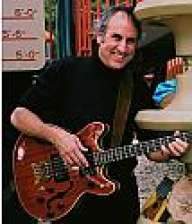
I see you've gone and edited your earlier post. Yep, there's all that info. So, despite lengthy conversations with both Jack and Ron about that bass (and its sunburst replacement), I'll let it rest at that. I'm certainly not going to get into an argument with a cut 'n' paste from interviews Jack has given, nor am I going to quote at length conversations I've had with either man, or Owsley. After all, its Internettown. But I'd be curious to know where you might have seen my bass.
I'm just saying all we have to go on is what they say. And they all say something different at different times. I've also corresponded with Rick on a few occasions. He's a very knowledgable guy. Rick has said he added the second magnet in interviews, and so has Jack. Clearly some of the pickups had two, and some didn't.
Here's the thing about old pickups. Let's take the PAF for an example. When people try and recreate them they agonize over the details; what alloy steel is in the keepers and pole screws, what grade alnico was used, etc. All these things add up to the finished tone, and pickup makers often mistakenly think these parts were chosen because of the way they sounded. But they weren't. They used off the shelf parts. They just happened to have come upon a good combination. Even down to the amount of wire wound on the pickups. Seth Lover, who designed the Gibson humbucker, has said they didn't count turns in the beginning, they just wound them until they were full!
So Hagstrom probably did the bare minimum to get a working pickup. Not because they were being cheap, but because as long as the pickup worked the way they intended, that was what was needed. But also when you are manufacturing something, you do have to watch the bottom line. So it's very possible they designed the pickup for two magnets, but sometimes made them with one.
Another point is the laminated keeper. Some people think it was to reduce eddy currents, but since they were not insulated from each other, it was likely just because it's easier to stamp or drill a series of round holes in a thin piece of steel than a thick one. Then you just stack them up to the thickness you need.
Also I realize I was thinking about the fretless M-85 that Lesh had. Ron Wickersham says that was the first active bass they did. But then Dan Schwartz says no, it was Jack's Jazz bass or the sunburst Guild. Jack says the brown Guild was active, and Rick says no, it had a varitone in it. Confusion abounds.
So I'll take you work for it!