• TalkBass has been independent since 1998. Add your voice.
    Create a free account to reply to discussions, view embedded media, and browse with fewer display ads.
    Join freeLog in
    Want zero display ads or expanded classifieds tools? Compare plans.

Dead spots on G string - Why??

That's one of the things they try to do with graphite rods. It may or may not actually work.

A graphite neck certainly works...at least the one on my modulus. It has no truss rod or adjustment so it's stiff as a board...um STIFFER than a board. Since it can't be bent, if it's flexing it has to be up at TV frequencies!

Now a truss rod style graphite neck or graphite bars leaves quite a bit of flexibility in the neck hence it can vibrate.

By the way you CAN eliminate dead spots! All you have to do is jam your headstock into a wall and play your bass that way and all dead spots are HISTORY. It's a tad inconvenient, but seems to me there ought to be an invention in there somewhere!
 
This is what I am talking about:

Family-Portrait.png


Derail alert: Hey BassHappy, what is the carved t double cut beauty on the top left?

It is PRS #11, a bass Paul Reed Smith built in 1977 to replace #7, which he built specifically for me. If you are truly interested, all of the technical and historical details are here:

http://www.innertainment.net/PRS-A.html

And the article in Vintage Guitar Magazine is here:

http://www.vintageguitar.com/3685/paul-reed-smith-11/

Thanks for the kind words!

BassHappy
www.innertainment.net
 
Dead spots are not a phenomenon that has anything to do with Fender or 34" scale or even bass guitars. All string instruments can have dead spots to one degree or another. Double bass, cello, violin etc.

The neck and body have resonance, they go into motion at some resonant frequency, when that resonance competes with the phase of the vibrating string, bad things happen.

Changing the mass of the instrument changes the resonance so adding weight, like titanium discs or similar devices will alter that resonance and diminish the dead spots or move them to another place on the neck perhaps.

In it's worst manifestation, this issue can cause horrible overtones where it is difficult or impossible to discern the fundamental of the note, this is sometimes referred to as a "wolftone". The cause is the same as a dead spot.
 
Is it possible to find a Fender P bass without a dead spot on the G string?

Yes. None of the Fenders I own have any dead spots. I often find dead spots all over the place on Ken Smith basses and Warwicks, though. I personally feel like using all of the crazy woods as laminates in the neck causes it. A Fender is just a piece of maple (maybe with a piece of rosewood slapped on top). That's always been just fine for me.
 
That will do nothing.

Yep. It was "born with it", so to speak. Ultimately, the only true cure for a dead spot is replacing it with an neck that doesn't have one. Sometimes they may not be apparent right off the shelf/out of the box either. Sometimes a dead spot's symptoms won't manifest until that first post-factory crank of the truss rod.

The best band aid I've found is compression, but still, its a band aid.
 
A few here with bolt necks have the same thing, same area.
The neck thru's here do not have that issue.
The REAL Steinberger's(1980's versions: 1 normal, 1 with TransTrem) I've owned did not have that issue as EVERY fretted note had the same "body" as the next.
 
I personally feel like using all of the crazy woods as laminates in the neck causes it. A Fender is just a piece of maple (maybe with a piece of rosewood slapped on top). That's always been just fine for me.

You might want to believe that dead spots have something to do with "crazy wood laminates" but I really don't think that has anything to do with it. Of the many basses I've owned (well, not many compared to some folks on TB) only three of them had laminated necks. These were all Warwicks. One of those was one of the worst basses I've had for dead spots (the Streamer Stage 1) while another (Thumb bolt-on) was one of the best in terms of being dead spot free.
 
Yes. None of the Fenders I own have any dead spots. I often find dead spots all over the place on Ken Smith basses and Warwicks, though. I personally feel like using all of the crazy woods as laminates in the neck causes it. A Fender is just a piece of maple (maybe with a piece of rosewood slapped on top). That's always been just fine for me.

Not so much:smug:

My guess is, you perceive a dead spot more easily on a bass with pickups stacked close to the bridge (like the two basses you mention). Lots of initial note attack and strong midrange with the two you mention, which just PUMPS those upper harmonics out of a base for sure (which would magnify the perception of the fundamental dropping off a bit)

I guess if they were 32" scale, there wouldn't be a problem:D:hiding:

Again, guys, remember, a typical dead spot on a wooden necked instrument is not much of a problem at all. Easy to play around, and as you can see from this thread (and the 40 or 50 similar other threads over the past 10 years), many people can't even hear them at all!
 
  • Like
Reactions: bass nitro
I put a Hipshot D tuner on my PBass and the dead spot on the G string moved from Db to C

Also, I have had some success in minimising dead/hot spots on my Ric by trying a bunch of different strings. Settled on some TI flats (very low tension). Variations are still there but are now much more manageable.

+1 in that one of the only ways to 'move' and possibly minimize a dead spot is to add mass to the headstock (hence the 'fatfinger' product).
 
Not so much:smug:

My guess is, you perceive a dead spot more easily on a bass with pickups stacked close to the bridge (like the two basses you mention). Lots of initial note attack and strong midrange with the two you mention, which just PUMPS those upper harmonics out of a base for sure (which would magnify the perception of the fundamental dropping off a big) :p

I guess if they were 32" scale, there wouldn't be a problem:D:hiding:

Again, guys, remember, a typical dead spot on a wooden necked instrument is not much of a problem at all. Easy to play around, and as you can see from this thread (and the 40 or 50 similar other threads over the past 10 years), many people can't even hear them at all!

Yeah, I always felt it was the opposite and that the dead spots were more noticeable (to me anyway) on basses where the pickup was more toward the neck. Since the overtones aren't really in pitch with the plucked note, it seemed more apparent playing at an area of the neck where the attack was softer at the front and stronger at the rear of the note. It just seemed easier for me to live with more initial attack and less overtones than less attack and more overtones that tend to drift away from the intended pitch.
 
Okay, so I tried the fatfinger on some basses, and in every case it seemed to just move the deadspot down one semi-tone.

I'm starting to get the feeling that maybe every 34" scale wooden neck bass has the deadspot, it's just that some people are less sensitive to it. I mean, every neck is going to have a resonant frequency, right, so how could there not be a deadspot?
 
Okay, so I tried the fatfinger on some basses, and in every case it seemed to just move the deadspot down one semi-tone.

I'm starting to get the feeling that maybe every 34" scale wooden neck bass has the deadspot, it's just that some people are less sensitive to it. I mean, every neck is going to have a resonant frequency, right, so how could there not be a deadspot?

Density?
 
Okay, so I tried the fatfinger on some basses, and in every case it seemed to just move the deadspot down one semi-tone.

I'm starting to get the feeling that maybe every 34" scale wooden neck bass has the deadspot, it's just that some people are less sensitive to it. I mean, every neck is going to have a resonant frequency, right, so how could there not be a deadspot?

+1 The fatfinger is a 'sometimes hit but mostly miss' solution.

And again, other than the seemingly magical 32" scale mentioned above;), every wooden neck instrument I've ever played has some sort of dip in the fundamental sustain somewhere in the typical range on the neck. Most are not a problem, and as we can see from this thread, +1 that some (whether due to inexperience, playing style, or just whatever) don't even notice them.

For the most part, not a big deal, and even moderate dead spots can be easily 'played around'.
 
One kinda fun (but at the same time demoralizing) way I figure out my dead spot situation is to turn on an octave pedal and start ascending up the G string, holding each note out for a while.

If the note has a deadspot, you can hear the fundamental dropping out really clearly because the octave effect, which responds to the fundamental, will audibly jump up to I think an octave higher.

Anyway, if you think your bass doesn't have dead spots, probably don't do that or you won't get much sleep tonight ;)
 
+1 The fatfinger is a 'sometimes hit but mostly miss' solution.

And again, other than the seemingly magical 32" scale mentioned above;), every wooden neck instrument I've ever played has some sort of dip in the fundamental sustain somewhere in the typical range on the neck. Most are not a problem, and as we can see from this thread, +1 that some (whether due to inexperience, playing style, or just whatever) don't even notice them.

For the most part, not a big deal, and even moderate dead spots can be easily 'played around'.


Wow, talk about denial and rationalization!

To each his own.

Yes, you certainly hit the nail on the head, something truly magical about those 32" medium scales. It is amazing that an inch shorter neck can make such a huge difference in this particular issue. It's unfortunate that only a few folks on here can confirm or deny, as very few folks have extended experience with QUALITY medium scales. They are in short supply but growing day by day.

If you owned the brand new 1972 Jazz bass I owned you would be humming a different tune. Dead spots on both the G and D strings from frets 4 to 7. And I mean DEAD. The fundamental didn't even ring for half a second. I thought Fender were sending their "seconds" overseas to the GI's, and maybe they were. Will never own a full scale Fender again, no use for them.

The tune that made me sell the bass is here:

 
Wow, talk about denial and rationalization!

To each his own.

Yes, you certainly hit the nail on the head, something truly magical about those 32" medium scales. It is amazing that an inch shorter neck can make such a huge difference in this particular issue. It's unfortunate that only a few folks on here can confirm or deny, as very few folks have extended experience with QUALITY medium scales. They are in short supply but growing day by day.

If you owned the brand new 1972 Jazz bass I owned you would be humming a different tune. Dead spots on both the G and D strings from frets 4 to 7. And I mean DEAD. The fundamental didn't even ring for half a second. I thought Fender were sending their "seconds" overseas to the GI's, and maybe they were. Will never own a full scale Fender again, no use for them.

The tune that made me sell the bass is here:


Again, dead spots, for the most part, are a minor, trivial issue. Very few instruments of any scale have serious ones, and again, it has NOTHING to do with 'price'. Wood is wood;). I would never swap out string tension for the possibility of a slightly more even 'one or two notes' on a G string (if that is even the case in general).
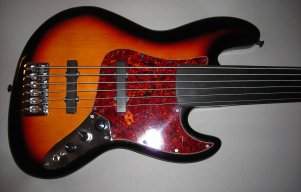
My current 34" and 35" scale basses have very, very minor deadspots that most would not even notice. Eliminating a brand and entire class of bass due to a sample of one instrument is quite silly IMO.

And yes, per your example, you can find the rare instrument (any brand, any price) that has a severe one for sure. As long as you play long whole notes up and down the neck prior to purchase, that is a pretty low risk.... even the most tin ear player can hear a truly nasty dead spot and avoid those relatively rare situations.

Zero issue on the vast majority of basses, and many don't even notice them (as you can see in this thread).