• TalkBass has been independent since 1998. Add your voice.
    Create a free account to reply to discussions, view embedded media, and browse with fewer display ads.
    Join freeLog in
    Want zero display ads or expanded classifieds tools? Compare plans.

Demystifying Tube Amps---The Standby Switch

IME, another good reason for the amp to be in standby is for when you switch the amp power to "on" and then knock yer axe over. Now, I've only ever done that with a 6-string (so we don't really care, right? :D ) but it would mebbe sound even worse with a bass thru a 500 w. head.
Bah...it sounds great to do that. Everyone should do it at least once in their lives :D
 
  • Like
Reactions: Iristone and vvvmmm
Never heard any relay in my tubes.
giphy.gif
 
Interesting sidetrack about the labeling (or mislabeling) of the standby switch. I tend to think of it as the opposite of the power switch, i.e., if standby is on, you can't hear signal passing, and if it's off, then the signal gets amplified. That makes the most logic to me.
 
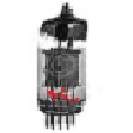
One thing not mention is the Tubes that are made today. Most are Chinese or Russian, which have had problems
with quality control over the years. Switch or no Switch, a bad tube will flash over at any given time. I have used many a 572B with problems out of China. Good news, they seem to be fixing the problems. It has been argued for years, its better to run a tube constant then on /off stressing the filaments with inrush voltage and current.
Every thing has a life span. Electro-Harmonix anyone ?
 
Interesting sidetrack about the labeling (or mislabeling) of the standby switch. I tend to think of it as the opposite of the power switch, i.e., if standby is on, you can't hear signal passing, and if it's off, then the signal gets amplified. That makes the most logic to me.
And over in camp commonsense not shared by half the bassists it's the other way around. Standby is ''not making sound'', On is ''all go''.
 
Before we had 3 prong electrical outlets, the standby was how we stoped the amp from humming on stage, before we got our hands on the instrument. to complete the ground, play with the hum ballance control on the rear or start the
set so no one was the wiser that out Jazz Bass was doing flight of the bumbelbee all by it's self. :headphone::D
 
Interesting sidetrack about the labeling (or mislabeling) of the standby switch. I tend to think of it as the opposite of the power switch, i.e., if standby is on, you can't hear signal passing, and if it's off, then the signal gets amplified. That makes the most logic to me.

I'm a fan of "0" and "1" on the standby switch, myself.
 
  • Like
Reactions: JimmyM
I use my standby like a mute switch. Here’s what that has done for me; my gear is in my shop which is 300 feet from my house. I’ve played my bass a while, then flip the amp on standby and do something else a while. Then I go up to the house and the next day, walk in and find my amp on, but in standby. That’s only happened a few times and there has been no apparent damage, but I now go through a shutdown check of a few things before I head up to the house.....
 
  • Like
Reactions: JimmyM and Seashore
One thing that irks me is the inconsistent standby labelling on amps. Some manufacturers label standby “on” as the amp is in playing mode. Others label “on” as the amp is in standby. It’s confusing.

IMHO the correct terminology is Standby and Operate. The terms On and Off apply more appropriately to the power switch. I believe the use of these terms would greatly reduce confusion.
 
I use my standby like a mute switch. Here’s what that has done for me; my gear is in my shop which is 300 feet from my house. I’ve played my bass a while, then flip the amp on standby and do something else a while. Then I go up to the house and the next day, walk in and find my amp on, but in standby. That’s only happened a few times and there has been no apparent damage, but I now go through a shutdown check of a few things before I head up to the house.....

Pffft, you don't need a standby for that, I've done it without one loads of times :D
 
  • Like
Reactions: vvvmmm
Interesting, I always thought the standby switch was basically a mute switch so we didn't have to go through warm up again. Got rid of the residual hum, allow things to be plugged and unplugged, without restarting the amp or changing settings, and good for those of us who routinely cut it tight getting back on stage after the break.
For practical purposes that is how most of us have used them. Lets you warm up the tubes and keep things muted for whatever else you might do (tuning, etc) without having to worry about the amp not being sufficiently warmed up when it’s time to play. Also prevents those feedback incidents in the event you forgot to turn down.
 
Some years back I had a switch nameplate made which eliminated all confusion for two amps I’d built: in one position it read Play and in the other it read Standby. I probably got the idea from a commercial product.

It has been argued for years, its better to run a tube constant then on /off stressing the filaments with inrush voltage and current.
The Standby switch controls the plate voltage supply (and usually, where there is one, the bias supply) and doesn’t affect the heater (filament) circuit which is, in all consumer designs I’ve seen, energized by the Power switch. The concern for stressing filaments with inrush current is misplaced because that is suitably addressed in the tube’s design. Just don’t slam the thing repeatedly with excess line voltage.

Now, if you were to address transmitting tubes we’re in an entirely different ballpark. Guitar, bass, PA and hi-fi amps do not use transmitting tubes so applying those guidelines is inappropriate and misguided.
 
  • Like
Reactions: JimmyM