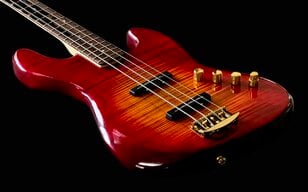
Trying to differentiate how my sound will change when switching between the 250Hz and 600Hz on my Ibanez BTB. Any help would be appreciated.

Enjoy the benefits of a premium membership!
Upgrade Account
-
TalkBass has been independent since 1998. Add your voice.
Create a free account to reply to discussions, view embedded media, and browse with fewer display ads.
Join free Log in
Want zero display ads or expanded classifieds tools? Compare plans.
You are using an out of date browser. It may not display this or other websites correctly.
You should upgrade or use an alternative browser.
You should upgrade or use an alternative browser.
Difference between 250Hz and 600Hz
- Thread starter agreene88
- Start date
More options
Who Replied?Trying to differentiate how my sound will change when switching between the 250Hz and 600Hz on my Ibanez BTB. Any help would be appreciated.
Just try it. Don't boost anything on the amp, though. If you boost that region on the amp AND the bass, you won't get a good sound and it's possible to kill your speaker(s).



Ah, beat me to it!Difference is 350 Hz.
Seriously - we could fill up a ton of bandwidth with descriptions but this is as brief as it gets: 250 is at the top end of what we describe as "chesty" or "thick" when boosted and "hollow" when cut; and 600 is at the lower end of "growly" when boosted and "scooped" when cut.
Depending on your other equipment and EQing who knows how it will effect your sound until you try it.
But for me I wouldn't think you would boost either, rather I think those controls would mostly be useful if you were going to cut/scoop out some mids. So saying the rest of you EQ is flat, cutting in the 250 range should give you a more old school scoop, think Jaco. Where as cutting the 600 range more modern Marcus Miller scoop. Of course YMMV.
But for me I wouldn't think you would boost either, rather I think those controls would mostly be useful if you were going to cut/scoop out some mids. So saying the rest of you EQ is flat, cutting in the 250 range should give you a more old school scoop, think Jaco. Where as cutting the 600 range more modern Marcus Miller scoop. Of course YMMV.
The suggestion to just listen, although sensible on the face of it, is not actually helpful. I'm struggling with this same issue and have had questions and comments on other threads but am still working on it. When you just switch it, there is little difference in sound unless you have the bass EQed a certain way before you can tell. It sounds like, based on the Jaco vs Miller suggestion, that I want it in the 250 ("up") for deep rather than more trebly tone. Right? It has been suggested that the switch is most useful for those who wish to go quickly to a good tone of slapping. I don't slap and probably wish I didn't have this switch. But which position is for deep tones, 250 or 600? Sorry if the question is lame.

The suggestion to just listen, although sensible on the face of it, is not actually helpful.
I don't wish to sound unhelpful, but I fail to see how a description of sound can be more helpful than listening to the sound itself.
But which position is for deep tones, 250 or 600? Sorry if the question is lame.
Which sounds deeper to you?
Again, not to sound unhelpful, but each of us describes sound in a different way, and also prefers tones in a different way, surely if you have the bass, you should play with it until you find the tone/sound you like.
Can't recommend this enough :
Buy a pair of inexpensive studio monitoring headphones.
Plus your bass into a device that allows you to use those headphones to monitor the tone.
Makes a massive difference in hearing the details of your bass tone.
Buy a pair of inexpensive studio monitoring headphones.
Plus your bass into a device that allows you to use those headphones to monitor the tone.
Makes a massive difference in hearing the details of your bass tone.
This should be obvious but just to make sure: that mid switch doesn't do anything unless you cut or boost your mids. If the mid knob is at the center (flat) position, flicking that switch does not affect the sound. But when you cut or boost the mids, you really should hear the difference. 
IMO "deep" is when you cut some of the mids at 600 Hz and boost the bass a little. But it of course depends on the rest of the signal chain.
IMO "deep" is when you cut some of the mids at 600 Hz and boost the bass a little. But it of course depends on the rest of the signal chain.

The 600Hz position is high mid emphasis, and the 250Hz is for the low mid emphasis, and the switch only works in conjunction with the mid cut/boost control. You can hear the difference best if you set the bass and treble boost/cut controls to flat, and set the mid control to a little boost. I'm not sure if it does anything with the mid control in the cut mode.
I would respectfully disagree with the nomenclature. From a sound engineer's perspective, 1 kHz, or 1000 Hz, is considered the reference frequency, and defined as the middle of the midrange band. Octaves either half or double the frequency, so it is from this point of reference that most sound reinforcement techs, and many musicians, including myself, call 250 Hz upper bass, and 600 Hz lower mids.The 600Hz position is high mid emphasis, and the 250Hz is for the low mid emphasis, and the switch only works in conjunction with the mid cut/boost control. You can hear the difference best if you set the bass and treble boost/cut controls to flat, and set the mid control to a little boost. I'm not sure if it does anything with the mid control in the cut mode.
I would respectfully disagree with the nomenclature. From a sound engineer's perspective, 1 kHz, or 1000 Hz, is considered the reference frequency, and defined as the middle of the midrange band. Octaves either half or double the frequency, so it is from this point of reference that most sound reinforcement techs, and many musicians, including myself, call 250 Hz upper bass, and 600 Hz lower mids.
If only the manufacturers agreed with their approach to knob labeling.
Indeed.If only the manufacturers agreed with their approach to knob labeling.

Only if you're insanely loud to begin with. Otherwise, game on.Just try it. Don't boost anything on the amp, though. If you boost that region on the amp AND the bass, you won't get a good sound and it's possible to kill your speaker(s).

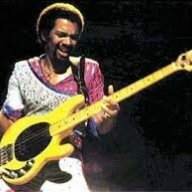
You know what? Seriously though, 250 Hz does wonders for a Stingray. Others are correct, it's not mids, it's hi lows, the real boomy stuff.
I would respectfully disagree with the nomenclature. From a sound engineer's perspective, 1 kHz, or 1000 Hz, is considered the reference frequency, and defined as the middle of the midrange band. Octaves either half or double the frequency, so it is from this point of reference that most sound reinforcement techs, and many musicians, including myself, call 250 Hz upper bass, and 600 Hz lower mids.
I thought that a P-bass pickup in the right location has a boost (relative to say a single coil pickup) around 250 hz?

You cant just try it? The internet is slowly killing us all. Lol.
I agree. Just try it and you'll know immediately.
Surely the OP will know the answer before they read these posts, assuming they're mucking around with the bass right now.
Last edited:


