• TalkBass has been independent since 1998. Add your voice.
    Create a free account to reply to discussions, view embedded media, and browse with fewer display ads.
    Join freeLog in
    Want zero display ads or expanded classifieds tools? Compare plans.

Dingwall Owners Club

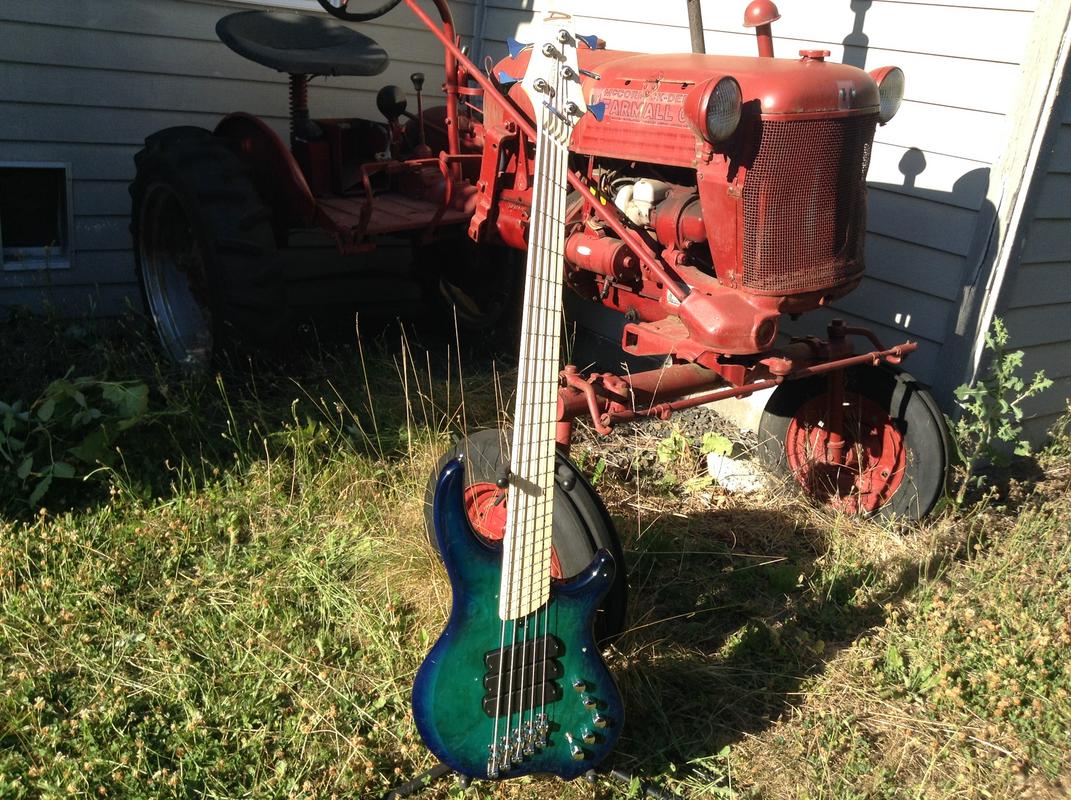
OOOOH YA!


Dingwall_Infront_Of_Tracktor.jpg


Walepool Blue Burst! Even better color in life. drool

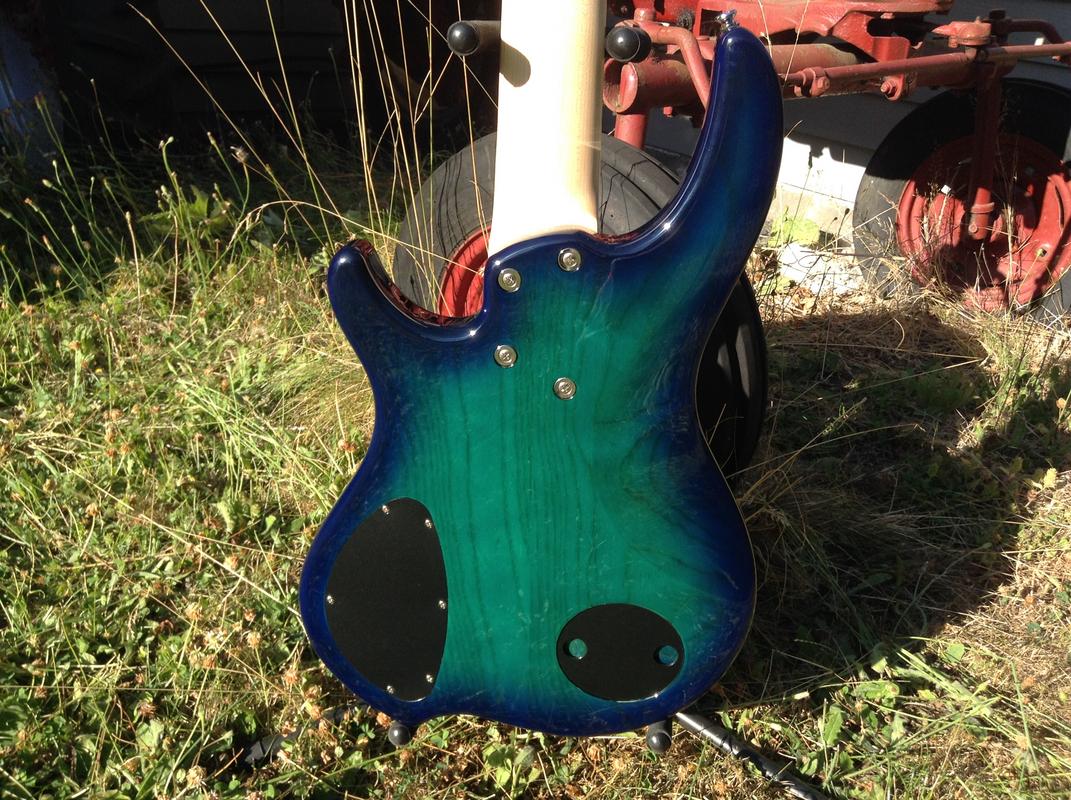
Dindwalll_Back_Body_Close_Up.jpg


My first Dingwall and five string and I am playing it like I have had it for years. :thumbsup:

Thank you @bebass at Sho Me Music.
Link Removed
 
General setup question!

If I feel like there's slightly more pressure needed to fret lower frets, could that be a sign I need to tighten the truss a bit more? I'll know for sure after changing the strings next week. The ones currently on are quite dead, which doesn't help, but it feels like a truss rod adjustment is in order.
 
General setup question!
If I feel like there's slightly more pressure needed to fret lower frets, could that be a sign I need to tighten the truss a bit more? I'll know for sure after changing the strings next week. The ones currently on are quite dead, which doesn't help, but it feels like a truss rod adjustment is in order.

Absolutely you should put on fresh strings before making any determinations about anything. Strings are underrated as one of the most important aspects of the instrument.

After that, you should never really need to guess whether a truss rod adjustment is in order. Just hold the bass in playing position and use two hands, one hand to fret the lowest string at the first fret, and the other hand to fret the lowest string at the 13th fret, and observe how much gap there is between the string and the 6th or 7th fret. The gap should be between the thickness of one standard sheet of office paper and four standard sheets of office paper, depending on your preference, about two sheets of paper is a good typical setting. With a high quality bass with very even frets, you can get down to 1 sheet of paper's thickness or even a hair less. But that is super low action, and will buzz if you dig in.

if you have a set of automotive spark plug feeler gauges, you can use that to measure the gap between the string and the 6th or 7th fret, which is called the relief. With a dingwall, you should be able to achieve eight or nine thousandths of an inch if the frets are in good shape.
 
Last edited:
Sheldon has an excellent series of setup videos on youtube. Takes you through set up step by step.

Whatever strings you choose will determine what you need to do.

Also, climate changes will have an effect on the neck. The Cirrus I set up in January in Washington state, (moderate temperatures but very damp) needed a good bit of adjusting on the truss rod to work with the very light DR Pure Blues VW set. Also, the bass shipped cross country with the strings de-tensioned, for whatever strange reason.

The stock Peavey strings it came with were stupidly stiff and high tension, and the action was a mile high. Tensioning the rod brought the stock strings down to playable, but with the new strings, the rod needed loosening since they were much lower tension. I was just happy the truss rod was functioning properly.

Now, here in the Columbia River Gorge, its very hot and very low humidity, what we call fire season or summer. Today, the truss rod needed about a half turn of loosening to go from a slight backbow to very little relief.

And truss rod adjustments can take a day or two to settle completely. Which is why I dislike truss rod covers that are screwed on with tiny, soft metal screws. Same for screwed on battery covers. The Dingwall battery hatch is just magic.

With Dingwall strings or Paysons, you should need very little adjustment between sets.

Even with dead strings, you should be able to dial in a setup you like.
 
What do you think the biggest low E string is that would fit in a D bird (standard nut, without expanding the slot)?
I’m thinking about trying a set of DR DDTs. I’d like to drop all strings one whole step, and possibly drop tune the low string down to C on occasions. I was originally thinking of tuning BEAD, but now I’m thinking about going this route. Anyone here have thoughts on this?
 
Last edited:
Just checked the action, seems good. Could barely fit two plies of paper in there. Thanks for the tips. I think I was just imagining things. I am used to shorter scale lengths, having had a 32" 5-string, and a 32-35" Super P5.

Any idea what strings are on it? If your setup looks good (as Andyman001 says above, check your nut) you may just have a set of strings on there that are just higher tension than you prefer.
 
  • Like
Reactions: The_Owl
Any idea what strings are on it? If your setup looks good (as Andyman001 says above, check your nut) you may just have a set of strings on there that are just higher tension than you prefer.
According to the seller, the standard Payson five string fanned fret stainless steel strings. I believe the Dingwall strings I ordered have slightly thinner gauges. Dunno about tension. I really liked the Dingwall stainless on the Super P5, they lasted really long as well. I'm expecting I'll like the long scale ones just as much. They felt less tense, but that could very well have been the shorter scale length. I tend to prefer lighter tension, since I pluck with a light touch.

Again, the strings are quite dead, which usually makes them feel a bit more stiff.
 
Last edited:
Again, the strings are quite dead, which usually makes them feel a bit more stiff.

Also not to be discounted is the bizarre phenomenon of psychoachoustics which can cause you to believe you are feeling something when in fact it is entirely a result of what you are hearing. The dead strings can actually make you believe that you are feeling something that is not physically there. A cool experiment to try is to put some headphones on and play some loud music, and while doing so, play the bass unplugged and see how it feels and notice if you feel a difference. You very well may.
 
  • Like
Reactions: AB Nate and The_Owl
For sure. I'm already in love with the bass. The fundamental on the B-string is insane. Even with completely dead strings, the fundamental rings forever. I thought I'd had great B-strings in the past, but the difference with this AB was instant and extremely obvious. The hype is true in this case.

A lot of other basses have good sounding B-string, but often because of the overtones, rather than the fundamental. The fundamental of the ABHS hits you like a ton of bricks, even acoustically.
 
OOOOH YA!


View attachment 3089390

Walepool Blue Burst! Even better color in life. drool

View attachment 3089391

My first Dingwall and five string and I am playing it like I have had it for years. :thumbsup:

Thank you @bebass at Sho Me Music.
Link Removed
I was actually floored when it came in ahead of schedule. I am in love with these new Combustion colors.
and...nice tractor...we used to have one almost just like it.
 
What do you think the biggest low E string is that would fit in a D bird (standard nut, without expanding the slot)?
I’m thinking about trying a set of DR DDTs. I’d like to drop all strings one whole step, and possibly drop tune the low string down to C on occasions. I was originally thinking of tuning BEAD, but now I’m thinking about going this route. Anyone here have thoughts on this?
I have a 118 on my NG2 That didn’t require any nut modification. I tune it between B and C

From the looks of it I bet you get to at least a 120 without needing to modify/ replace nut. Bigger than that I’m not sure.
 
Also not to be discounted is the bizarre phenomenon of psychoachoustics which can cause you to believe you are feeling something when in fact it is entirely a result of what you are hearing. The dead strings can actually make you believe that you are feeling something that is not physically there. A cool experiment to try is to put some headphones on and play some loud music, and while doing so, play the bass unplugged and see how it feels and notice if you feel a difference. You very well may.
I delved deep into the subject when I worked as an acoustics engineer. Pretty amazing. I would bet a LARGE number of people's sound comments fall in this category of psycho-acoustics influence. I did all sorts of experiments. If a person has a large visually stimulating PA system with only one per side hooked up versus that same one-per side, same exact gain settings. Almost EVERYONE will say the multiple cabs was MUCH louder and better hahahaha. Many times I have had band members say they want me to have a different sound; I go and pretend to tweak the knobs. MUCH better, they say hahahah. If a person thinks something will sound great it has a much better chance of sounding great than if they think it will not sound good.
 

Latest posts