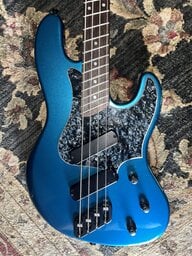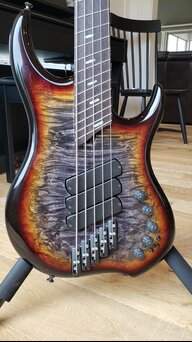
Sorry about the stupid question, but can you still order the Super J with teh control plate? That was my favourite aesthetic and I'm not sure if I can.
Someone still has one listed in classifieds (not me):
For Sale - Dingwall SJ4

TalkBass has been independent since 1998. Add your voice.
Create a free account to reply to discussions, view embedded media, and browse with fewer display ads.
Join free Log in
Want zero display ads or expanded classifieds tools? Compare plans.
Sorry about the stupid question, but can you still order the Super J with teh control plate? That was my favourite aesthetic and I'm not sure if I can.

I WISH!!yup. Looks gone to me.....
@Andyman001 was it you?????!!!!! You lurker you!

Bummer! I was hoping you got to snag that up. It was similar, only nicer, then that one I had.I WISH!!
I'm on a spending freeze ATM, on account of being poor.
There is one just like that in the classifieds for a steal right now.Ah man, what I wouldn't give for a D-Bird (within reason, of course). I love the D-Roc, but something about that classic shape... *mwah*
I know... and if I didn't just buy a D-Roc a few weeks ago, I'd be all over it.There is one just like that in the classifieds for a steal right now.


My SJ4 is less than a year old. I was going to adjust the string height the other night and the E bridge screws were very tight in both directions. As a result I didn’t fool with the others. Any of you experienced this? I ended up leaving well enough alone. Thx!
My SJ4 is less than a year old. I was going to adjust the string height the other night and the E bridge screws were very tight in both directions. As a result I didn’t fool with the others. Any of you experienced this? I ended up leaving well enough alone. Thx!
Thx for the quick reply guys! They are brand new Dingwall medium scale nickels. And they are not bottomed out...~ 1/32” left on all. The E was so tight I was concerned of stripping it. The screws are set level and I was going to adjust them slightly to more match the subtle curvature of the end of the neck.
Sorry for the delay. Had some time today so I threw on my fancy headphones and listened critically to the differences. Keep in mind I have FDV pickups in my Z3.Thanks, that is super useful. Have you tried Bp-Np (parallel), and Bs-Np (parallel) in comparison to Bs-Ns (parallel)?

Very nice! As an aside how do you like the Strandberg? I have been wanting to get one but can't play one prior to ordering so I've been hesitant.
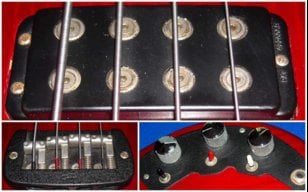
Many thanks for taking the time to test and write this up. This is quite useful. Adjusting for pickup combinations volume differences is the thing I enjoy the least with my DingwallSorry for the delay. Had some time today so I threw on my fancy headphones and listened critically to the differences. Keep in mind I have FDV pickups in my Z3.
B-N (p) vs (s) is tricky to get an exact comparison without recording because of the volume difference and having to adjust amp or input gain. Really though series just adds a little punch in the low mids, and an increase in the high mids a bit also. Switches parallel is flatter. But really the tones are quite close and a little eq can easily make them equals.
Leaving the B in series and the N in parallel was interesting though and I'm glad you mentioned it because it's a pretty different sound. It of course lowers output and some bass and low mids with it, but it also further scoops the high mids. It leaves this interesting growly but dark parallel tone that reminds me a little bit of a Warwick Thumb with the highs rolled off.
I have no idea if that helps lol. There were so many options in the end I basically decided that I liked switching between passive and active more and leaving everything in series (other than dropping the B or N to parallel when playing the Droc or B-M series positions).
Good luck with your project!
The “thumb” tone is not quite what I expected, but I’m interested - I should never had sold my old Streamer, one of those earlier ones that growled like the thumbs after them, and I sometimes miss that tone. It looks like I’ll stick with first installing switches for neck and mid fd3 pickup on my C5, and if all goes well will do the same to the passive ABZ5 (FDVs). Pics will follow unless I make a mess...Many thanks for taking the time to test and write this up. This is quite useful. Adjusting for pickup combinations volume differences is the thing I enjoy the least with my Dingwall
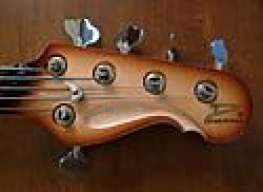
I thought FD3 and FD3n pickups are reverse split coil, so how would parallel/series switches work on them?

I thought FD3 and FD3n pickups are reverse split coil, so how would parallel/series switches work on them?