Yes - IIRC, I ordered them in large and maybe could have gotten away with medium
I ordered those with mine as well, but the mediums that came with it were fine for me, so I didn't need to try others.

TalkBass has been independent since 1998. Add your voice.
Create a free account to reply to discussions, view embedded media, and browse with fewer display ads.
Join free Log in
Want zero display ads or expanded classifieds tools? Compare plans.
Yes - IIRC, I ordered them in large and maybe could have gotten away with medium


I don't find I have to adjust my IEM levels too much; mostly the guitar because he often doesn't send the same signal level to the PA every time.
I forgot about Plunge. I reached out many years ago just for some custom plugs but due to work I couldn’t sneak in to see Simon during his hours.Nate, I use IEM’s from Plunge Audio here in Calgary. I think mine are the “engineer” model. They aren’t cheap, but they are nearly perfect in every way. Almost full noise isolation when in my ears, flat and wide frequency response for pretty much the whole frequency spectrum, and so well built. I use a mix of gear depending on where I’m playing (live or in studio) but generally I keep it as simple as possible for my IEM mix. Just me, lead vocals, and a bit of drums and guitar to keep my place in the music straight.


This will obviously depend on your computer, but PCI/PCIe and FW are effectively dead at this point. USB-A is still around and kicking, and is perfectly fine for most applications where your I/O count is low. USB-C is the new standard and has sufficient bandwidth for basically any application. I’ve run 32 simultaneous tracks via USB-C without so much as a hiccup.

The simple fact that most manufacturers aren’t building them with those connection protocols anymore. USB-A, USB-C and TB are where the market is going, or rather already is. FW is dead. PCI/PCIe is only still around in specialty applications.What makes you say so, market statistics or something ?
When I find time to get back to the leather bench and make another strap I gotta do one for myself out of this Giraffe print we have.

The simple fact that most manufacturers aren’t building them with those connection protocols anymore. USB-A, USB-C and TB are where the market is going, or rather already is. FW is dead. PCI/PCIe is only still around in specialty applications.
Hey Matt,I know this question has probably been beaten to death but what was relevant a year or two ago maybe different now?
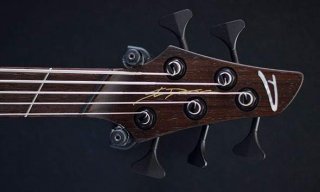
I just picked up a used NG2 5 string that the previous owner converted to an NG3 using the conversion kit. I am thinking about upgrading the pickups. The pups in there now have major string rash , it’s doesn’t effect the sound but I like nice things. The stock pups seem a little to bright and clanky for me. I can dial it down to an acceptable level, which I do. But I like upgrading, I like making things custom for me.
Our band plays a lot of classic rock, some new rock , some old bluesy type . We play a large variety.
I have listened to the sound samples on the Dingwall site. I like the sound of the P-Tone, FD3 and the Super Fatty ll.
What are some real world experiences some of you may have had? What combinations did you find that worked best in a 3 pup configuration? Do you think there is really a major difference between the import pups and the others?
I don’t really have to upgrade I just want to.
Thanks ahead for any input you may have.
Matt
Not at all. Other than legacy machines you’ll find most professional level operations are largely USB-C these days. It’s fast enough for anything that’s needed, comes built into any computer you buy, and as such manufacturers all went that direction. There are some great articles on the death of PCI/PCIe. These days if you’re on a modern computer it doesn’t make sense to buy anything that’s not USB-C save for low track count operations where even USB-A (3.0) is perfectly fine. Network connections via Ethernet are actually quite slow in practice. Dante, Madi, AVB, etc. are more for expansion than direct computer connection in most cases.It's not trendy for sure, but at the pro-level I have the impression it's either here to stay or gets slowly replaced by networked interfaces no ?
Not at all. Other than legacy machines you’ll find most professional level operations are largely USB-C these days. It’s fast enough for anything that’s needed, comes built into any computer you buy, and as such manufacturers all went that direction. There are some great articles on the death of PCI/PCIe. These days if you’re on a modern computer it doesn’t make sense to buy anything that’s not USB-C save for low track count operations where even USB-A (3.0) is perfectly fine. Network connections via Ethernet are actually quite slow in practice. Dante, Madi, AVB, etc. are more for expansion than direct computer connection in most cases.
Oh okay. I wouldnt know a thing about that - never used that kind of big equipment before. I was thinking smaller size, more every day consumer level.I'm not so sure about that - as soon as you get high-end converters and preamps portability is out anyway, it's gonna be several rack units regardless of the type of connectivity to the daw host.

They’re probably around somewhere. I haven’t read any in quite a while. All you have to do is compare the spec of even consumer-tier USB-C interfaces to the few remaining PCIe models still available to see that it’s not worth bothering with a technology that’s on its way out. Why bother with PCIe when many USB-C interfaces will get you sub-1ms latency on surprisingly high track counts? Get to professional tier USB-C and you can retain sub-1ms latency across 64+ tracks without breaking a sweat on an off the shelf computer.Ok, interesting.
Do you have any good article on the death of pcie which you could share ?