• TalkBass has been independent since 1998. Add your voice.
    Create a free account to reply to discussions, view embedded media, and browse with fewer display ads.
    Join freeLog in
    Want zero display ads or expanded classifieds tools? Compare plans.

Do I need to know theory to play?

The fifth above still throws me. Like how do I know when it is and how do I know when it isn't?

Sounds to me that potentially some ear training is in order. My recommendation to you would be to spend some time really focusing on the bass parts in the music that you're already listening to.

So I guess what I was getting at is since so much of just the "basic" theory is so confusing to me should I talk with him about maybe easing off the theory and just learn songs and play? And try to understand it as I go? Like maybe I learn a song and after I've learned it we discuss some of the theory with it?

This seems like the perfect next step to me, and as far as I'm aware isn't an uncommon way of teaching either.

Good luck! Keep with it, and whatever you do don't get frustrated!

One quick note, I remember back when I was first getting started (on guitar but it still applies), one thing that helped me was the fact that I was pretty much inseparable from my guitar. Any time I was listening to music or even watching TV, I'd have my guitar in my hands noodling along - either along with any music I was hearing, or just in general. Over time, even that type of low-key experience builds up, and in a month or two you'll be able to look back and see how much you've advanced.

There really isn't a wrong way to learn how to play an instrument. Do what works for you, and more than anything, just have fun and play!
 
  • Like
Reactions: CPR4LIFE
One more "no" here. I've learned "by ear" previous century, Internet was not born. I was trying to play what i was hearing on radio, on cassettes .. I've beaten several to death by listen the same part on and on. :D
Hopefully you can do it very easily today, with all tools to lower tunes without changing the pitch, vids, etc..
I've tried several time to learn theory but never been able to use it, cause i couldn't see how to apply it when all came by itself quite easily. Arpeggios were already there in my playing habits, scales too without i've "formalise" it. I don't know what i exactly play; but as i'm not willing to become a professional player, that's not a problem.
The only thing i have learned to play with is chords charts: mandatory IMHO to play jazz standards during jam sessions at first, and the name of notes on the bass neck. Very usefull to play in a band.
Little by little, time to dedicate to music in my life has lower. So i decided to dedicate this time to really play and my work routine is to try to play things.
1) Tunes we decide to play in the two bands i play in. And always try to make improve my parts little by little
2) Tricks, tips, exercises i can grab from internet to make evolve my playing little by little. (for example, Damian Erskine vids are really good ones to do it)
3) Tunes I like and which can be challenging for me; that i try to play and note it as I can. (kind of tab with specific manner to write it to understand what i've written when i come back to the tune later). And very important: i don't only try to learn the bass part: i try to play some sax solos, or other instruments parts on my bass. That is sometimes helping to play things differently than you would play a bass part. And it's really funny. A good solo example is the Miles Davis trumpet one on So What. Very pleasant to play on the bass. :cool:
 
Last edited:
  • Like
Reactions: CPR4LIFE
Wow! I never expected this thread to take off like it did. There is a tremendous amount to unpack here and I thank you all for commenting!

See, I don't even know enough to communicate everything so you have an understanding of where I am. I've taken up the bass late in life (I'll be 52 sooner than I care to be) and right now I don't know anyone here that I can play with to learn more. So I play along to songs on YouTube or in my own collection. I'm not looking to compose any songs and I highly doubt that I'll ever be good enough to play in a band. What I'd really like to be able to do is play songs I like and perhaps be able to play with some other people now and then. I've only lived here 2 years though and meeting people is hard at this stage of life. And it's also intimidating because I don't have much confidence in my abilities. I'm ok with roots & fifths, but that's about it. The fifth above still throws me. Like how do I know when it is and how do I know when it isn't? Octaves...eh...not always sure on that either. I've figured out the key of a few songs by ear (Please Please Me for one), but I know it'll take a long time to get any good at that.

So I guess what I was getting at is since so much of just the "basic" theory is so confusing to me should I talk with him about maybe easing off the theory and just learn songs and play? And try to understand it as I go? Like maybe I learn a song and after I've learned it we discuss some of the theory with it?

Also, and this may sound foolish...but 1) I decided on bass because I was intimidated by guitar and I thought bass would be easier...4 strings and you play one note at a time so how hard can that be? Boy was I wrong! I mean I didn't expect it to be simple but man... and 2) I started spinning my mom's Beatles records on my Snoopy record player when I was 3 and haven't stopped listening to music since...so I truly thought it would come to me easier than it has. And I think that last bit frustrates me too.

I really do appreciate all the advice and support...and it seems y'all are enjoying this discussion so I'm glad if you got anything out of it!
That helps contextualize things. Your goals are not at all lofty and the good news is that you don't need to worry about nailing down a bunch of theory - you need to just have fun. A lot of teachers feel that they have to teach in a way that helps provide a student with a solid musical foundation as opposed to just helping a student learn riffs and songs on their respective instrument. This is a totally legitimate (and often preferred) approach. The thing is, some people do just want to have a bit of fun on their instrument and that, too, is totally legitimate. It sounds like you need to have a good chat with your teacher about what exactly it is you'd like from your lessons. The last thing you want to do is lose interest because you are getting bogged down by the theory of how the music works, when all you want to do for now is have some fun playing.
 
Last edited:
  • Like
Reactions: pcake and CPR4LIFE
An encouraging note to the "by ear" players: Ear training is a HUGE part of music theory! You might know more "music theory" than you realize. If you have a good ear for key signature, scales, arpeggios, rhythm, timbre/texture, dynamics, articulation, etc. then that's a pretty solid music theory foundation, in my opinion. :)
I second that.
My own abilities to hear chord changes was not a 'gift' at all. It was necessity.

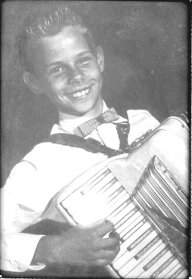
In the early 60's there were no cassettes, just the AM radio. In various garage bands I was tasked to figure out chords of the rock and roll songs on the radio, because I 'took' accordion lessons. (Go figure)

Just imagine waiting for the latest Beatles, or Stones song to come on the radio. I might grab a chord or two, but then had to WAIT until they played it again !

Many T.B.er's here have great ears also just by playing and listening.

Bottom line: no musical gift or being a prodigy; just working and adding a new skillset. So now subconsciously I 'see' numbers progressions and intervals when I hear a song.

I recommend you use your ears; I'm sure you will get better every day.
Just ENJOY the music.

Take care,
Mike
 
Last edited:
If you're taking lessons, everything your teacher is showing you is part of music theory. And, if they are a good teacher, everything that is shown will have an application for your level of playing.
IMHO experience, a lot of people (and this includes university curriculum) teach music theory as a disassociated piece of information with little or no practical application. Information without application is a pointless exercise in memory (but it does give the teacher something to talk about, test, and grade).
For instance, learning a blues progression will help in learning 50's rock and roll. Learning the birth dates of Elvis and Chuck Berry will not. Learning the 'proper' resolution of a Neapolitan 6th chord will offer very little help in playing jazz. It will come in handy, however if you're trying to understand the harmonic choices of J.S. Bach.
 
  • Like
Reactions: CPR4LIFE
Wow! I never expected this thread to take off like it did. There is a tremendous amount to unpack here and I thank you all for commenting!

See, I don't even know enough to communicate everything so you have an understanding of where I am. I've taken up the bass late in life (I'll be 52 sooner than I care to be) and right now I don't know anyone here that I can play with to learn more.

Welcome to Talkbass CPR4LIFE. Don't get discouraged. Much like you I picked up the bass about a year and a half ago. I was 51 when I did, so I'll be 54 sooner than I care to be. Music, and the bass in particular, had always interested me. But I was way too busy with other things to do anything about it. When I hit 50, I guess midlife crisis time, there was much more I wanted to do and learning the bass was at the top of my list.

So I spent a paltry sum to buy a beginner's P-Bass on the cheap. I got myself a Bass for Dummies book, a Hal Leonard Method book, and Rocksmith Software for my computer.

In your original post you mentioned that practicing music theory was a drag, and I kind of agree. I didn't know Ionian from Aeolian, or Pentatonic from Mixolydian, and a circle of fifths - (what the heck is that?) - sigh. The worse part is that I didn't have a clue where to begin.

Well, for a beginner, Rocksmith is a very good investment, because it makes practice, and learning some of these concepts actually fun. This makes learning to play interesting because I'm achieving what I wanted, which was to play songs. I started by trying to learn some songs that I liked. Rocksmith and the Invalid Link Removed were there in spades. I didn't have to learn theory to start learning songs, because all I was doing was following along on a computer monitor pretty much as if I was learning to read TABS. But the learning does not stop there. The lessons in Rocksmith help you with the practice and teach you some concepts, but they are not enough. You start learning to actually read tabs and musical notation and get to practice with the books. If you develop bad habits in Rocksmith you will pay for it. For example finger positioning is important for smooth playing. This is where the books, YouTube videos, and a live instructor really start to fill in the gaps.

The Session Mode in Rocksmith is where I've gotten to practice a lot of music theory. Because it makes the process entertaining, and it is totally non-judgemental. You get to see the relation of the notes on the neck. You get to hear/feel the difference and relationship between the chord notes and scale notes. An AI Band is playing in the background as you are practicing and you can start to get a feel for timing, rhythm, and really get into the groove. You get to hear what sounds good, what does not sound good, and what sounds better. I believe this is invaluable. The lessons and practice in Session Mode have been what has helped music theory really click for me. You can have the AI just play a metronome in the background or you can be jamming with session drums, guitars, keyboards and percussion.

The most crippling thing for me has always been lack of motivation. Because the software teaches you songs as well as has so many other tools, it is a fantastic resource to keep me motivated and practicing. I try to dedicate at least 10 minutes a day to practice. When I was trying to dedicate an hour it never happened because of schedule conflicts, but anyone can spare 10 minutes. That usually turns into 20-30 minutes, and on weekends and some nights I can spend 2-3 hours in practice - because it is not boring. Learning scales and theory from an instructor never got me to have that level of motivation.

I bid you well in your journey with the bass. I'm having a great time learning and getting better. I hope this information gets you some other resources to get you to where you want to be.
 
Last edited:
As an Amazon Associate, TalkBass may receive commissions from qualifying purchases made via links on this site.
  • Like
Reactions: CPR4LIFE
Update: I've since had another lesson and spoke with my instructor about learning a song and then discussing theory as it relates to that song. He's on board. He said he was doing that previously but it wasn't clear to me because of the way he discussed it...but now it's discussed in a way that I know what's being discussed. Examples: I leaned "Season of the Witch" by Donovan. It's a very simple little bass line. A-A-G-D. He explained to me how A and D were the chords and G was a "filler" note. So that makes sense to me now. Also, awhile back I had learned the Donny Hathaway version of Jealous Guy (live). At the end of the song there's a C-D-G followed by some fill measures and back to C-D-G, repeat until the song ends. I have now figured out 2 fills...unfortunately, that cycle occurs 8 times :banghead:

Also, what he was trying to show me that had me so confused last lesson was simply playing 4 beats on the root in measure one, 4 filler notes in the scale in measure two, and then back to the root in measure three. The reason I got confused was because he threw 2 chords at me at once (A and D). So I got totally lost. I had no idea what we were doing! In this last lesson we did it with one chord. 4 beats of A in measure one, 4 beats of filler notes on the scale in measure two, and then back to the root in measure 3, etc. So now it makes sense to me. If that makes sense to y'all?

Anyway, I feel better about what I'm doing now and feel as if I've made some progress!
 
The easiest way to see how music works is to look at a keyboard and study the key of C beginning with the C major scale and then how to build chords from it.

Plus it's easy to see intervals in it and their variations. Stay in C to get the concepts down and then apply those ideas to other keys gradually as you progress.
 
  • Like
Reactions: CPR4LIFE
Admittedly, I know relatively little academic music theory. Of course I know scales, chords, etc., but haven't studied it in depth. But here's something I've noticed. I think it's easier to understand if you play melodies, and still easier to learn if you play melodies and harmonies.

Everybody I know who is really good with theory plays piano, with one exception, a guitarist. College music students on any instrument have to learn piano. I was fortunate that I played a melodic instrument for many years -- cello. But I never learned piano.

I've coped with my level of theory knowledge, but there are situations where I struggle, such as complex modern chord changes.
 
I think it's easier to understand if you play melodies, and still easier to learn if you play melodies and harmonies.

Of course, bass can be approached this way as well. Before I started playing bass (or guitar for that matter), I had years of piano and sax (primarily alto) training under my belt. While my approach to bass has evolved as I've focused on it, initially I treated it very similarly as I would the saxophone, which has a supporting, but melodic role in many arrangements. I focused much more on melodies and countermelodies than the more rhythmic approach that often is associated with bass theory. A lot of that has stuck with me.

I'm going to say something unpopular and maybe come to regret it, but I find that much of the "theory" associated with bass - even the term passing note to be kind of demeaning.

No, I'm not playing "passing notes": that is a carefully crafted countermelody to the vocal line that syncs perfectly with the drum pattern in a way that ties both together, but can stand on its own in terms of tastefully bringing interest to the song. Tell me you like it, or tell me you don't, but do NOT tell me they're "passing notes"!

Sorry. ;)
 
  • Like
Reactions: fdeck and CPR4LIFE
...
... Tell me you like it, or tell me you don't, but do NOT tell me they're "passing notes"!

Sorry. ;)

Sorry to be the bearer of bad news, but if the note you play (whether on bass, sax, violin or voice or whatever) is not a chord tone it is a passing note. Nothing demeaning about it when you know the correct musical, i.e. not literal, definition of a passing note.
 
Sorry to be the bearer or bad news, but if the note you play (whether on bass, sax, violin or voice or whatever) is not a chord tone it is a passing note. Nothing demeaning about it when you know the correct musical, i.e. not literal, definition of a passing note.

Yes, you're correct. Trying to think of why I get my back up sometimes in situations as I mentioned... Hmm, deep introspection...

Not just with bass, but across musicians in general I've encountered many musicians that I believe use rudimentary theory to dictate their compositions as opposed to trying to see how what they're doing fits with the much bigger picture. I'm in no way saying that theory is the cause, but I do feel that it can be misused - especially when over-simplified, by those either not naturally inclined, or who haven't yet gained enough experience to develop their own instincts.

When talking to those musicians, personal issue here again, I get the sense that they can tend to see what I'm doing as just doing the math in my head and playing the output because it's correct - as opposed to being the instinctual creative art that I consider it to be. Yes, I think very highly of myself. :D

Anyways, I guess it's like with most things, the more you know, the more you realize you don't. Despite my formal training, and even some dedicated theory courses along the way, I'm still pretty terrible at theory - BUT I'm more inclined to give something that may not seem to jive with simple theory a chance if I feel it'll work well in-context. I'm certain that more complex theory would explain why it does... but if I were to limit myself to working within the confines of the basic knowledge of theory that I do have, everything I do would be uninspired.

I guess that's a long-winded way of saying that I prefer to work with musicians that don't limit themselves based on their knowledge of theory, and when I come across those that I feel are for whatever reason, I find it frustrating - especially when it's projected onto my work.

There - creepy insight into my psyche complete. :bag::bag::bag:
 
Last edited:
Yes, you're correct. Trying to think of why I get my back up sometimes in situations as I mentioned... Hmm, deep introspection...

Not just with bass, but across musicians in general I've encountered many musicians that I believe use rudimentary theory to dictate their compositions as opposed to trying to see how what they're doing fits with the much bigger picture. I'm in no way saying that theory is the cause, but I do feel that it can be misused - especially when over-simplified, by those either not naturally inclined, or who haven't yet gained enough experience to develop their own instincts.

When talking to those musicians, personal issue here again, I get the sense that they can tend to see what I'm doing as just doing the math in my head and playing the output because it's correct - as opposed to being the instinctual creative art that I consider it to be. Yes, I think very highly of myself. :D

Anyways, I guess it's like with most things, the more you know, the more you realize you don't. Despite my formal training, and even some dedicated theory courses along the way, I'm still pretty terrible at theory - BUT I'm more inclined to give something that may not seem to jive with simple theory a chance if I feel it'll work well in-context. I'm certain that more complex theory would explain why it does... but if I were to limit myself to working within the confines of the basic knowledge of theory that I do have, everything I do would be uninspired.

I guess that's a long-winded way of saying that I prefer to work with musicians that don't limit themselves based on their knowledge of theory, and when I come across those that I feel are for whatever reason, I find it frustrating - especially when it's projected onto my work.

There - creepy insight into my psyche complete. :bag::bag::bag:

Wow, all that. I was just about to add that really it's just an unfortunate term hung over from a time when simple (modal) then counterpoint were essentially buried by the development of functional harmony and melody was made subservient to harmony.
 
  • Like
Reactions: Kro and CPR4LIFE
Wow, all that. I was just about to add that really it's just an unfortunate term hung over from a time when simple (modal) then counterpoint were essentially buried by the development of functional harmony and melody was made subservient to harmony.

Well, if you recall that term was just one example I gave.

My personal issues run much bigger/deeper. :)
 
You don't need to know music theory to play music and songs. As you develop into your music, some of the music theory will surface and you'll be learning music theory without even knowing it's music theory that you're learning. Many famous musicians have created world class music in studios under the guide of producers. And they made great music. Thus, you can play and create music without even knowing music theory. But to do it will take a lot of effort and passion in how much you put into your craft.
 
  • Like
Reactions: CPR4LIFE