• TalkBass has been independent since 1998. Add your voice.
    Create a free account to reply to discussions, view embedded media, and browse with fewer display ads.
    Join freeLog in
    Want zero display ads or expanded classifieds tools? Compare plans.

Do you have to have a 5?

Ok, so here's the real answer without any agenda pushing (like it validates anyone to convince others to do what they do :) )

If you are a studio player or someone who freelances on a variety of different styles, you should probably get a 5. May not need it often, but you will probably need it at some point.

If not, play whatever you want.
 
Last edited:
For me the benefit is less about having lower notes as it is having the same notes being able to be played higher up the neck. Playing a scale up and down the neck more than across. Maybe it’s because I’m a guitarist just getting into bass, but I like it. I also love the feel of a bigger neck and even like the closer string spacing. I have a schecter 5 with black beauty coated strings that just feels like butter to play. I also like having the low b for my thumb to rest on and lean against
 
  • Like
Reactions: joe grime
Tony Levin only needed 3 strings
maxresdefault-3793711988.jpeg
 
  • Like
Reactions: Rezdog
Years ago I kept wanting to go below bottom-E, so I bought some Dewtron bass pedals which I could extend the range down to a C (sadly those pedals went, 'cos they'd be worth a few bob now).
Some players tuned their bottom-E string down to a D; I think John Wetton did that. For me that's a bit of a faff
I have a few basses with Hipshot drop-D eXtenders which can flip the E down to a D, effectively automating the down-tuning; they do what they say on the tin.
Kubicki basses had a flip-down lever to add two frets on the bottom string.
You can go down a whole string on a 4-string, so do BEAD; a number of bass players do this, including Ian Hill of Judas Priest, but you then lose the higher notes and have to transpose strings compared to normal tuning.
But all of those require doing something which makes a change away from just the normal playing of the instrument.
If you want to go low and keep full-range, you really need a 5-string; just play the bass and when you get to E you've got the extra string there, plus it's there all the way up the neck, so it's a natural extension.

There are a few issues with 5-strings:
  • You need to shift away from the "bottom-E" mindset, as the E is no longer the bottom string.
  • A set of strings costs more.
  • The necks tend to be wider.
  • Some basses seem to have a dull-sounding B string compared to the others.
  • Your amplification might not be happy playing a low-B.
  • Until you get used to it, you may struggle with swapping back & forth between a 5 and a 4; however, folks can play bass, guitar, acoustic, synth, pedals, whatever, so it's just a matter of getting over that hurdle.
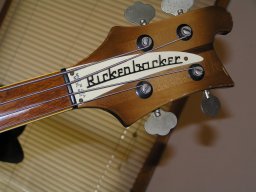
My favourite 5-stirings are a couple of Warwick MIG bolt-on Corvettes; I was very disappointed with the Rickenbacker one (the only Ric I've sold) and my Status ones have really nice necks but suffer a bit from the dull-B; I've also got another fat-neck Warwick Corvette which doesn't suit my fingers. I've had a couple of RockBass 5-ers they were for me unplayable, also a Music Man SUB5 which was just big.
I don't see the point of a 6-string bass; I'd rather have a doubleneck with a guitar on it.
I'd really like a Chapman Stick to try and get my head around - maybe this year will be when I pick one up!
 
Last edited:
  • Like
Reactions: Snert
I have four of them. I played 4 string basses for a very long time - decades in fact but now I play 5 string basses exclusively because I prefer the options they give me in range and access. None of them have uncomfortable necks. All of them sound and play great.
If you play with horns or larger groups, having a low Eb is handy too.
 
Last edited:
  • Like
Reactions: ToddB1963
We just added Baker Street in my duo and with a 5 I can play the intro and signature sax part (the guitar covers the sax part) by playing up the neck on the B string. On the third chord of the intro there is a little descending slide I play on G string. The main slide I use my pinky on D and G strings at 14th frett (with octave up), after the slide I hit a low D then hit a fifth (A on E string) then the D on E string to be in position to slide again. Couldn't do it with a 4.
 
A five string bass is a completely different instrument than a four. If you don't want to get out from your comfort zone, disregard a fiver. If you want to start thinking in a different way instead, having a new visual and physical approach to the fingerboard, then a fiver would be a boost, for you. One thing "to me" seems clear, anyway: the five string bass currently is the new standard. Since quite a large slice of time. But you can definitely earn your daily bread with a four, I guess. Btw: learn to use/play a fiver, anyway. And have a decent one at home; a Squier or similar, well setup. Practice with it, learn the tricks. Maybe bring it to the next audition, too. You never know what a bandleader might want from the bassplayer... :)
 
  • Like
Reactions: Blues Bass 2
If you're playing a lot of modern or funk music in keys of B through Eb, sure, a fiver would be an asset.

Otherwise, it's another string to mute, and if you're an anchored-thumb 4-string guy, you'll probably want to switch to a floating-thumb technique.
I wish I had that much technique... trying to sort that out though. I do think its one of the bigger things holding back my improvement
 
  • Like
Reactions: Pocket Dave
Ok, so here's the real answer without any agenda pushing (like it validates anyone to convince others to do what they do :) )

If you are a studio player or someone who freelances on a variety of different styles, you should probably get a 5. May not need it often, but you will probably need it at some point.

If not, play whatever you want.

To say I am a "studio player" carries a connotation that would not be accurate to my mind. A Sean Hurley type I most certainly am not. That said, I do most of my playing in my home studio or those of friends I collaborate with so some level of flexibility is good. I have a good Jazz and Precision so I have those options. The "right" 5 probably makes sense. I wont let the bass stable get out of control so I need to choose wisely
 
Helps me get creative..but if you are playing across 5 strings, you really need a good clean speaking 5 and notes up near the 9th fret really sorts the men out from the boys in terms of basses, ime.

Thats why I use a 120 there. Have even used a 118.