Given that I've been playing nothing but 5's (and 6's) for the last 20 years, yes, I need a 5. I don't like playing fours at all anymore, feels like something's missing.

TalkBass has been independent since 1998. Add your voice.
Create a free account to reply to discussions, view embedded media, and browse with fewer display ads.
Join free Log in
Want zero display ads or expanded classifieds tools? Compare plans.

I bought a Kiesel 6 string headless… I needed to make some ergonomic adjustments but once I did, it feels lighter than any 4 I ever played…. You might want to consider a headless. Ibanez makes some nice ones in the $1000 range.I just bought a Fender American Standard Jazz Bass 5. It's a great bass and sounds incredible...but I do not like playing 5 strings and I absolutely hate playing heavy basses (to me heavy is anything over 9.5 pounds), and this bass weighs in at 10. So why did I just spend over a grand on a bass I don't enjoy playing? because I needed one for the band I'm in. Many of the songs we play require the extended range of the 5. Plus, it really helps with my hand position to be able to play a little higher up the neck making use of the B string. I'm keeping it for now, but like most of the 5 strings I've owned over the years, it probably will see the classifieds at some point.

Tony Levin only needed 3 strings

I guess my attempt at dry humor was a bit too subtle ... lol.I'm yet to find one.
And often plays a 12.
I
I use a carbon steel wok almost entirely in the kitchen. It is the most versatile pan I have ever owned. Now I am confused.....

If you're playing a lot of modern or funk music in keys of B through Eb, sure, a fiver would be an asset.
Otherwise, it's another string to mute, and if you're an anchored-thumb 4-string guy, you'll probably want to switch to a floating-thumb technique.

I dont get the thinking about 'may not use it many times'
I use it when and how I want.
Of course the trick is not to overplay...but the reason you might also want to do that is because gtrs hate it. joke!!


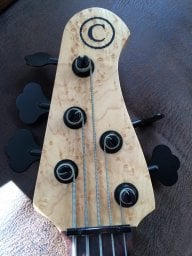
I bought a Kiesel 6 string headless… I needed to make some ergonomic adjustments but once I did, it feels lighter than any 4 I ever played…. You might want to consider a headless. Ibanez makes some nice ones in the $1000 range.


 R - but for me the answer is yes. I NEED a long scale 5 string and if I can't have one, I'm going home!
A five string bass is a completely different instrument than a four. If you don't want to get out from your comfort zone, disregard a fiver. If you want to start thinking in a different way instead, having a new visual and physical approach to the fingerboard, then a fiver would be a boost, for you. One thing "to me" seems clear, anyway: the five string bass currently is the new standard. Since quite a large slice of time. But you can definitely earn your daily bread with a four, I guess. Btw: learn to use/play a fiver, anyway. And have a decent one at home; a Squier or similar, well setup. Practice with it, learn the tricks. Maybe bring it to the next audition, too. You never know what a bandleader might want from the bassplayer...
.
Sure. But one could also say "better to have it and not need it than need it and not have it"? I wish someone had told me that in a short time, a 5 (for me) would be a requirement before I over-improved my Squier Jazz 4!Ok, so here's the real answer without any agenda pushing (like it validates anyone to convince others to do what they do
If you are a studio player or someone who freelances on a variety of different styles, you should probably get a 5. May not need it often, but you will probably need it at some point.
If not, play whatever you want.