
Having a colletion of Peavey Cirrus basses that were all made the same month with the only difference being the wood and finishes, it does appear that a hard coated finishes (Tiger Eye, Red Oak) have a brighter and less warm tone that the ones with satin finishes (Walnut, Bubinga). With all things the same (including strings) I can hear a subtle difference. Maybe that means something, maybe it doesn't but that is my experience. YMMV.

Enjoy the benefits of a premium membership!
Upgrade Account
-
TalkBass has been independent since 1998. Add your voice.
Create a free account to reply to discussions, view embedded media, and browse with fewer display ads.
Join free Log in
Want zero display ads or expanded classifieds tools? Compare plans.
You are using an out of date browser. It may not display this or other websites correctly.
You should upgrade or use an alternative browser.
You should upgrade or use an alternative browser.
Do you think finish thickness affects tone?
- Thread starter Engle
- Start date
More options
Who Replied?If you get your tone from knob positions on the amp then I can see where this finish conversation seems crazy. Everything vibrates. On our basses anything that diminishes vibrations affects the tone. What diminishes those vibrations affects what the pickups pickup. 
Paul Reed Smith asked if you have an electric guitar that sustains for 15 sec. and one that sustains for 45 sec. which one's body is diminishing the vibrations?
If you do your knob twiddling at the amp for your tone and you are happy so be it. In the signal path are your fingers. What part touches the string and how. Body parts. Construction techniques. Then there are strings. Then cable. Higher capacitance cuts highs. Pre and amp. Speaker cab. All sources of tone shaping. Without turning any knobs.
If you hear what your bass sounds like in air not plugged in then place parts of the body against walls molding etc. and your ear to the upper horn you can experience a lot of what's going on with your bass. If you aren't hearing all kinds of vibrations/sound then try different basses. When you hear rounds roaring through your bass body then you are getting to this. If you wish that to be your sound then everything down the signal path can help you preserve this or not.
We bassists are hearing differently and choosing gear to get what we want. It doesn't mean anyone is wrong or deluded.
Paul Reed Smith asked if you have an electric guitar that sustains for 15 sec. and one that sustains for 45 sec. which one's body is diminishing the vibrations?
If you do your knob twiddling at the amp for your tone and you are happy so be it. In the signal path are your fingers. What part touches the string and how. Body parts. Construction techniques. Then there are strings. Then cable. Higher capacitance cuts highs. Pre and amp. Speaker cab. All sources of tone shaping. Without turning any knobs.
If you hear what your bass sounds like in air not plugged in then place parts of the body against walls molding etc. and your ear to the upper horn you can experience a lot of what's going on with your bass. If you aren't hearing all kinds of vibrations/sound then try different basses. When you hear rounds roaring through your bass body then you are getting to this. If you wish that to be your sound then everything down the signal path can help you preserve this or not.
We bassists are hearing differently and choosing gear to get what we want. It doesn't mean anyone is wrong or deluded.

Yes, it does — everything about the bass affects the way the bass vibrates, which in turn affects the way the string vibrates.
But it’s bound to be subtle. Could anyone notice the difference in this case? Tough to prove, as you’d have a hard time isolating it as the only difference in a test.
But it’s bound to be subtle. Could anyone notice the difference in this case? Tough to prove, as you’d have a hard time isolating it as the only difference in a test.

grass makes sound when it grows. each blade of grass is uniquely individual and makes a different sound relative to adjacent blades of grass. many studies have been done on the sound grass makes as it grows
i cant hear it - therefore the sound of grass has no bearing on my decision-making if ordering sod for my lawn
i cant hear it - therefore the sound of grass has no bearing on my decision-making if ordering sod for my lawn


Anything that affects the resonance of the wood affects the tone, assuming you believe that the wood matters at all.

Yes, in fact my bass is equipped with a knob for finish fine-tuning purposes ..
I obviously voted NO.
I obviously voted NO.


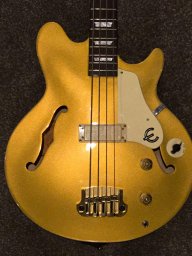
I think that on acoustic instruments like guitars and mandolins, it can make a difference. Somewhat less on hollow-body guitars. On solid bodied instruments, it’s negligible.

The only way to tell would be to take the body off a bass, refinish it 3 ways, re-assemble with the exact same electronics, exact same setup (pickup height etc) and set of strings (not a new set) with each finish, and record it EXACTLY the same way with each finish. Including who plays it and how they play it as well as exactly how it's recorded.
Then, have 10 bassists listen to the three samples blind and see if they can tell any difference.
I'd bet $100 that nobody could tell a damn bit of difference if it were done properly. IMO finish isn't going to significantly change the way the strings vibrate.
On an acoustic instrument like a cello or upright bass or acoustic guitar, it would make all the difference. Sitting and playing an electric bass unplugged you'd probably notice a difference. Plugged in, nah.
Then, have 10 bassists listen to the three samples blind and see if they can tell any difference.
I'd bet $100 that nobody could tell a damn bit of difference if it were done properly. IMO finish isn't going to significantly change the way the strings vibrate.
On an acoustic instrument like a cello or upright bass or acoustic guitar, it would make all the difference. Sitting and playing an electric bass unplugged you'd probably notice a difference. Plugged in, nah.

Can I ask what you put on them?
I use Danish oil for a bit of color, and then Minwax spray poly for a hard (but thin) protective finish. Non hardening pil finishes don't really help with protection - poly clues together the wood fibers on the surface, which makes it into a composite structure, which is much tougher than the wood fibers alone. What Fender and other folks do is add a thick layer of poly, which adds stuff on top that doesn't help that much with protection, but a thick layer is much easier to buff out without burning through it - that all aids in making a gloss finish that looks shiny. I do satin finishes, in part because I like the look, in part because I hate fingerprints, in part because I can make a tough finish that isn't thick, and in part because I'm not that good at gloss finishes.
Until i see scientific evidence that finish thickness affects the magmetic field of a vibrating string, i will assume it has no measurable impact on sound
You're not looking at this properly. It's not about the magnetic field, it's about the string's vibration.
The entire instrument vibrates when you pluck a string - if you want proof of that, consider that a Snark tuner works when clipped anywhere on your bass - the whole thing is vibrating. That is not debatable. Anything that changes the vibration of the system changes the end conditions where the string ends are anchored - the bridge and (more importantly) the fret. When you change the end conditions on the string, you change how it vibrates. When you change how the string vibrates, you change how it sounds. What is debatable is if you can hear it. That gets into psychoacoustics, which is far less concrete.
Does finish change the sound of a bass? My opinion is yes, but that the finish on the neck makes more difference - it's more involved in how the string vibrates than the body, because it moves more - it's much thinner and less massive than the body vibration. A finish on the neck makes it more rigid in its outer layers, so the thing is overall stiffer. At the very least, it's going to affect the dead spots a bit. Will you hear the difference? I have no idea, but that answer is probably no - your hearing is a huge variable in that. I'm pretty sure the difference is subtle enough that doubters (you stating you are one) will never hear it, because they won't want to, and won't listen closely enough to hear it. But I have enough experience with subtle differences and blind testing in audio (I designed pro audio gear for a living for my entire career) that I will guarantee there is someone out there that can hear it - there are people with very good hearing.
Last edited:

Nothing that pickup height adjustment or EQ can't resolve 

I have a 89/90 MIJ P that has a poly finish thickness of close to 1/16”. I was astounded when I dropped it and a chunk that thick blew off the lower bout.
Sounds like a P bass.
same with an old squier vm jaguar I bought as a project bass. Stripping that old thick poly was quite the herculean task it was soooo thick and awful haha.

IMO...
Scientifically, of course it changes the tone - how could it not? Like the tonewood discussion, physics demands that there be at least some differences.
That said, the changes are likely so miniscule as to be audibly irrelevant.
I believe this to be true solo, and even more so in the mix.
Scientifically, of course it changes the tone - how could it not? Like the tonewood discussion, physics demands that there be at least some differences.
That said, the changes are likely so miniscule as to be audibly irrelevant.
I believe this to be true solo, and even more so in the mix.

- Apr 29, 2003
- 9,074
- 9,791
- Disclosures
- Contributor- Bass Musician Magazine | Marketing Manager- Trickfish Amplification

I'm in the camp of "every element of the instrument probably affects tone, at least a tiny bit". That said, the player, strings, pickups, pickup position, scale length, active/passive features are by far the biggest factors IMO.
Is there a micropube of tonal difference between naked wood and a super thick poly over a super thick sparkle finish? I would guess yes. Would it be detectable by me? I would guess maybe.
Is there a micropube of tonal difference between naked wood and a super thick poly over a super thick sparkle finish? I would guess yes. Would it be detectable by me? I would guess maybe.

I started the discussion with electric bass.On what instrument?

A thin coat of oil of nitro will let the wood "breathe" in or out humidity, no? Would that affect tone?
You have a point here.
Last January, I bought a brand new Fender AV II '54 P Bass with nitro finish. I put it on my shipping scales and it weighed 8 lbs, 6 oz in Jan. '23.
Just last week Oct. '23, I put it back on the shipping scales to confirm it's weight (because I'm trying to sell it.) and it now weighs 8 lbs, 7.4 oz. So, it has gained about 1.5 oz in weight. I live in Ohio and we have humid summers.
So yeah! Nitro and oil finishes do seem to breath in or out humidity................now, whether if that signifyingly effects tone or not, lord knows!

And differences perceived in most cases are, I believe, due to psycho-acoustics on the part of the listener.
I'll just add a point raised in a similar, past discussion, which I consider worth repeating here:The only way to tell would be to take the body off a bass, refinish it 3 ways, re-assemble with the exact same electronics, exact same setup (pickup height etc) and set of strings (not a new set) with each finish, and record it EXACTLY the same way with each finish. Including who plays it and how they play it as well as exactly how it's recorded.
Then, have 10 bassists listen to the three samples blind and see if they can tell any difference.
major and minor mods like refinishing typically involve disassembly of the instrument. When the latter is put back together, setup and especially neck and bridge screw tightening may make an audible difference which is then attributed to the "only" new variable.
So, if one wants sets out to prove or disprove the influence of finish on tone, they should probably find a way to sand and spray while keeping the hardware and electronics in place.
I'll just add a point raised in a similar, past discussion, which I consider worth repeating here:
major and minor mods like refinishing typically involve disassembly of the instrument. When the latter is put back together, setup and especially neck and bridge screw tightening may make an audible difference which is then attributed to the "only" new variable.
So, if one wants sets out to prove or disprove the influence of finish on tone, they should probably find a way to sand and spray while keeping the hardware and electronics in place.

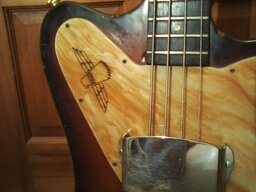
Over in the Thunderbird club, I commented that part of what makes an Epiphone thicker than a similar Gibson is the thick finish on Epiphones (at least the modern ones).
That thick poly finish is durable and probably a lot faster to produce than a Gibson nitro finish.
I don't believe the finish thickness makes any difference to the output sound of an electric bass, but
I've been wrong before...
Do you think it makes a difference? If so, can you produce evidence?

I think the finish will only affect the sound of an acoustic instrument.
If somebody is willing, I’m more than interested in an AB comparison between two identical basses with different finishes sounding different when not plugged into an amp.
Latest posts
-

-

-
 Adding J pup to P bass, should I go 60’s or 70’s spacing?
- Latest: Gianni "Orlandez" Orlati
-
-
