
Gaolee
Official leathers tester and crash dummy
Only four fingers? You don't use your thumb sometimes?Fingers
Fingers
Fingers
Fingers
Speaker Cab
Strings
Amp
Pickup
Everything Else

TalkBass has been independent since 1998. Add your voice.
Create a free account to reply to discussions, view embedded media, and browse with fewer display ads.
Join free Log in
Want zero display ads or expanded classifieds tools? Compare plans.
Only four fingers? You don't use your thumb sometimes?Fingers
Fingers
Fingers
Fingers
Speaker Cab
Strings
Amp
Pickup
Everything Else



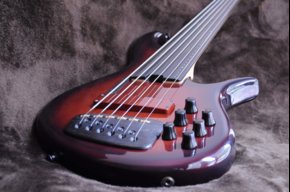
Yes.
I had a parts bass (Moses Graphite neck, Bartolini MM pickup, passive electronics) and the bass just sounded dead...plugged-in or acoustically.
It was like hearing a bass with worn-out roundwound strings; no depth, no sustain, no liveliness.
I bought it because the parts were top notch & I figured all it would need was new strings and a setup.
But I tried 3-4 different sets of progressively-brighter strings, and none of them made a difference.
The finish was an ugly baby blue, but the neck and all the hardware was black, so I though the bass would look cool in a natural finish.
I started sanding the finish off..and kept sanding, and sanding, until I got rid of the blue, then the thick primer coat, then the sealer coat...and finally down to the actual wood of the instrument.
The difference was night and day - the bass sounded completely different, and much better.
grass makes sound when it grows. each blade of grass is uniquely individual and makes a different sound relative to adjacent blades of grass. many studies have been done on the sound grass makes as it grows
i cant hear it - therefore the sound of grass has no bearing on my decision-making if ordering sod for my lawn

Splitting hairs in a thread topic that is about splitting hairs?In Asia they have grass (it's called bamboo, but it is a grass) that you can hear growing.

Bamboo ain't no hair. But they do split it and glue the pieces of it together to make flooring.Splitting hairs in a thread topic that is about splitting hairs?


It affects appearance and durability, but that's about it.Over in the Thunderbird club, I commented that part of what makes an Epiphone thicker than a similar Gibson is the thick finish on Epiphones (at least the modern ones).
That thick poly finish is durable and probably a lot faster to produce than a Gibson nitro finish.
I don't believe the finish thickness makes any difference to the output sound of an electric bass, but
I've been wrong before...
Do you think it makes a difference? If so, can you produce evidence?

I think most of the what people report as a difference can be attributed to other factors changing when the instrument is reassembled.I'll just add a point raised in a similar, past discussion, which I consider worth repeating here:
major and minor mods like refinishing typically involve disassembly of the instrument. When the latter is put back together, setup and especially neck and bridge screw tightening may make an audible difference which is then attributed to the "only" new variable.
So, if one wants sets out to prove or disprove the influence of finish on tone, they should probably find a way to sand and spray while keeping the hardware and electronics in place.
I would further stipulate that it be a through-neck bass. Disassembling necks/bodies to refinish just adds too many hard-to-control variables.I am not sure how one would realistically test this to confirm it either way. I think you would need to take a bass with a finish, play it and measure the tone print, then remove the finish or re-finish the same bass, and play it and re-measure the tone print.