

Enjoy the benefits of a premium membership!
Upgrade Account
-
TalkBass has been independent since 1998. Add your voice.
Create a free account to reply to discussions, view embedded media, and browse with fewer display ads.
Join free Log in
Want zero display ads or expanded classifieds tools? Compare plans.
You are using an out of date browser. It may not display this or other websites correctly.
You should upgrade or use an alternative browser.
You should upgrade or use an alternative browser.
Do you think the scale will ever tip back towards hi-fi/active basses?
- Thread starter Just Wrong
- Start date
More options
Who Replied?
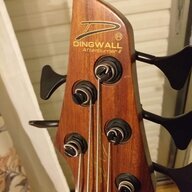

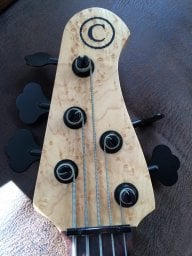
Almost all of my basses are active, but with generally with a passive tone control, and I periodically go through phases in which I'm playing them passively...well, playing them actively in the sense of musical engagement! Seriously, some time with a Fender Roscoe Beck V bit me hard, and the Nordstrand single coil blades sound great in passive mode on my Lakland/Pedigo with a John East variable/mids pre.

The music genre I listen to is dominated by Modulus
i'm not sure i can embrace the premise: IMO, bass/brand diversity is the 'growth variable', i.e., passive vs. active is gone, irrelevant.Do you think the scale will ever tip back towards hi-fi/active basses? If so, how do you think it'll happen?
TB perception
 yeah, and "TB perception" doesn't track the real world accurately, e.g., no one in the real world cares about anything but the money (or cost) and the notes that have to be played to get the money (or justify the cost).
I can’t tell if a bass is active or passive in a band mix and neither can you.
...the balance has not so much shifted as literally disappeared. There is no balance these days....Top 40 radio has pretty much disappeared and given way to a highly fragmented internet based structure. People listen or play with active interest in much smaller niche audience circles, courtesy of the internet...there is literally no status quo any more. As a result, players are using all manner of different instrumentation. Claiming any single kind of instrumentation as dominant may apply to a specific niche; but, the bigger picture is far more chaotic.
per the discussion: IMO, IME, and FWIW, producers who used to insist on "gotta have a P-bass" are mostly dead. most modern producers (the real ones) are looking for a "vibe" instead of a specific, literal sound = because the specific, literal sound in the final production will be cast to 'fit in' long after the talent has gone...they want a sound that can be manipulated for their purpose(s). playing the right notes/vibe trumps everything else.

The music genre I listen to is dominated by Modulus
What genre is that?


Yeah, just look at the pedal setups you see some bass players use.modernaires want a bass to sound like anything BUT a bass, vintage bass is becoming lost in the noise.
I didn't know who Sean Hurley is, so I looked him up. Said he predominantly played a Jazz Bass before switching to a P for session work...
we just recorded a song I wrote. my main bass was not the bass. "my sound" did not vibe at all. i had to play a P and I've been exclusively an MTD guy for the last 20 years. go with what works guys!!!! Jimmy always knowsNot everyone is hired for “their sound.” Someone recording music for commercials doesn’t really care about “your sound.” And neither do most bandleaders and solo artists of renown. Sure, they might hire a famous name for “their sound,” but us folks without a name don’t get that luxury, and if you don’t give them what they want, they’ll find someone who will, and they’ll let their friends know you’re a trouble maker.
So refuse to play that 335 at your own risk.
D
As a retired pro engineer I have to say a lot of what people think about p-bass in the studio is not all that true. At least in my experience in some famous rooms and top bands.
The bass player and bass tracks are not some red headed step child. They get all the attention and time needed. I spent as much time on bass as drums at times. Recording is a mixed bag. Sometimes every minute is counted and there are predetermined recipes and other times the clock is not considered and there is plenty of time to futz.
As far as passive vs hi-fi active? It depends. Too many variables involved. I like whatever makes you play well, have a good vibe, and no technical issues. That is in the studio.
As a trend, I figure everything that goes around will come back around. Usually does.
EDIT - Forgot the OP was talking session player. Session players are typically hired with a sound and vibe in mind for a particular style, genre etc. That sound and style is usually associated with the players preferred instrument. I do agree it would be hard to land in LA without a P and J bass and expect work.
The bass player and bass tracks are not some red headed step child. They get all the attention and time needed. I spent as much time on bass as drums at times. Recording is a mixed bag. Sometimes every minute is counted and there are predetermined recipes and other times the clock is not considered and there is plenty of time to futz.
As far as passive vs hi-fi active? It depends. Too many variables involved. I like whatever makes you play well, have a good vibe, and no technical issues. That is in the studio.
As a trend, I figure everything that goes around will come back around. Usually does.
EDIT - Forgot the OP was talking session player. Session players are typically hired with a sound and vibe in mind for a particular style, genre etc. That sound and style is usually associated with the players preferred instrument. I do agree it would be hard to land in LA without a P and J bass and expect work.
Last edited:
Phish, Dead and Panic. AKA improvisational hippie jam band music.What genre is that?
AlwaysThere's that story of Sean Hurley moving to L.A. with a five-string active Lakland to become a session player just to realize it's a P-bass world out there. It wasn't always the case though. There was time when hi-fi or active basses were all the rage, like Warwicks, Ken Smiths, Alembics, Tobias, Zons, Spector etc.
Do you think the scale will ever tip back towards hi-fi/active basses? If so, how do you think it'll happen?


modernaires want a bass to sound like anything BUT a bass, vintage bass is becoming lost in the noise.
It does still sound like a bass. Players are just exploring the limits of the instrument and finding that it is capable of being very versatile.

YMMV. I'm a jack of all trades in a small scene and I do plenty of material that utilizes the "modern" bass guitar sound: smooth jazz, Grateful Dead, original funk, contemporary country, broadway musicals, etc.
Doing a 230-year-old Mozart symphony with low Cs - on a 5-string double bass made in East Germany - makes me start to wonder if EADG is actually the blip? (Not hating - over half my collection is 4-string.)
Doing a 230-year-old Mozart symphony with low Cs - on a 5-string double bass made in East Germany - makes me start to wonder if EADG is actually the blip? (Not hating - over half my collection is 4-string.)
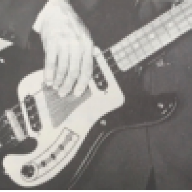
The vintage one looks pretty cool!( 2023 ACTIVE BASS)
( vintage PBASS)


The Duke of Ellington stated it best when he said, ‘It Don’t Mean a Thing (If It Ain’t Got That Swing)’.
A tool is mostly a tool.
A tool is mostly a tool.

- Jun 30, 2010
- 49,618
- 222,150
- Disclosures
- musician/artist/owner - Gildaxe
She kept playing after the 60s and when I first heard of her, she was playing the SRX.
In the 60s, any player had little choice of what the could play, and the P was the most common, so saying that the reason the P was used by someone back then is like saying people in the 1920s drove Model Ts.
There were other basses sold/played in the '60s - hollow-bodies of a few different brands were very popular. (as in, players did have a choice) But a Fender bass was the bass of choice by the industry at large, and put an indelible stamp on a decade of some of the best music ever made/recorded. Paul McCartney is "known" by his Hofner bass even though he also played a Fender J and a Ric to name two. So yes, I know she kept playing and played basses other than a P but all I was inferring was that the iconic Carol Kaye is known by her Fender P.
Last edited:


