

Enjoy the benefits of a premium membership!
Upgrade Account
-
TalkBass has been independent since 1998. Add your voice.
Create a free account to reply to discussions, view embedded media, and browse with fewer display ads.
Join free Log in
Want zero display ads or expanded classifieds tools? Compare plans.
You are using an out of date browser. It may not display this or other websites correctly.
You should upgrade or use an alternative browser.
You should upgrade or use an alternative browser.
EBMM Music Man Basses...why so much $?
- Thread starter Mike Sorr
- Start date
More options
Who Replied?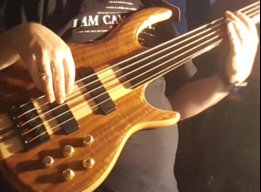
So much $, because they're extremely overrated.
Out of the loop.... the thread had gone far beyond that with logic, research, real data and facts, and a general understanding that all things American have risen with inflation in similar ways.
I'd like to chime in with some informed opinion. I am a business/economics journalist, and I cover San Luis Obispo, the town in California where all the American-made EBMM instruments are built.
California is generally a fairly expensive place to do business as a manufacturer. However, plenty of companies simply deal with -- Fender's factory is here, so is Taylor Guitars -- because they want to live here. However, the cost of living in California varies quite a bit. The coast is expensive and the inland and desert areas are less o.
The real estate is getting more and more expensive in San Luis Obispo, which is a very pretty town near the coast. At the same time, Sterling Ball has been pretty committed to trying to pay his employees a living wage. Several years ago, they removed all the string manufacturing to the Inland Empire area for precisely this reason. They could not make the strings in SLO, pay their employees a decent wage and sell the strings at a competitive price point while still making a sustainable profit margin.
If you think about it, EBMM resisted the urge to put its name on imported instruments for a very long time -- longer, in fact, than any of the other big American makers. They finally gave in. There's simply no way they can pay their employees well and sell basses at entry level price points and still make a profit of any sort. Remember, just to stay in business you have to make enough profit to re-invest in upgrading your facilities, tools, etc.
So here's what you should really think about. When you pay $1,400 for an instrument from Fender, you are paying for many more layers of executives, marketing, debt service hangover from private equity, etc than you are for a EBMM instrument. The financially sophisticated among you can check out FMIC's aborted attempt to go public if you don't believe me.
EBMM on the other hand, is still (to my knowledge) family owned and controlled by the Ball family. I'm sure they make pretty good money, but to my knowledge they haven't done anything silly like saddle the company with huge and expensive debts so they could take a fat payday (yes, I'm talking about FMIC's private equity raiders, in case you were curious). So more of your money goes to the people who made the instrument.
For the record, I have no connection to the company, nor do I even have one of their basses (though I have in the past, and they're nice). But they are still an employer here, and I've been able to talk a bit with Sterling Ball about the business climate.
Thanks for this enlightening post! Well done


Here is a factory tour link. I think it'll be pretty obvious by the end. If I had the cabbage I'd buy one tomorrow. 
https://www.youtube.com/watch?v=Q_oXBvr8AhU&feature=youtube_gdata_player
https://www.youtube.com/watch?v=Q_oXBvr8AhU&feature=youtube_gdata_player

I own a beautiful EBMM Stingray Classic 5 in retroburst. I did not buy it as a financial investment, I simply love it for what it is. It sounds wonderful & I'll probably have it buried with me. I just got a MIM Fender Jazz Deluxe 5 today which is truly unremarkable at this time, after I finish modding it almost anybody would kill to have it that knows what it will be. But I buy basses for 1 reason- I love to play them. The Musicman I know I could sell for a profit- the Fender I would take a loss on, but I plan on dying with both.
I saw that video several times. A lot of machinery there 
Here is a factory tour link. I think it'll be pretty obvious by the end. If I had the cabbage I'd buy one tomorrow.
https://www.youtube.com/watch?v=Q_oXBvr8AhU&feature=youtube_gdata_player

Whoo lawd! That bass at the end was gorgeous! I want one in a 5 string!Here is a factory tour link. I think it'll be pretty obvious by the end. If I had the cabbage I'd buy one tomorrow.
https://www.youtube.com/watch?v=Q_oXBvr8AhU&feature=youtube_gdata_player
Whoo lawd! That bass at the end was gorgeous! I want one in a 5 string!
Yea... I'm sure it's no accident that Sterling landed on that "random" choice. "Just that classic"... their most elite coveted sexy wood choice bass model.
He's a really good player, I didn't know that before ... although I quote him in my Sig.
I'm sure this has been brought up before, but here:
So when you pay a lot for an EBMM, you're paying extra to have it made by a company run by a guy who can play the heck out of the instruments he makes.
Wonder what a playing duel between Sterling Ball and the CEO of FMIC would sound like?
So when you pay a lot for an EBMM, you're paying extra to have it made by a company run by a guy who can play the heck out of the instruments he makes.
Wonder what a playing duel between Sterling Ball and the CEO of FMIC would sound like?

EBMM makes a fine bass - it's sometimes hard to believe that they're production instruments. I don't own one either!

Wonder what a playing duel between Sterling Ball and the CEO of FMIC would sound like?
Heh. Not that it matters, but I don't think anyone who ever owned Fender could play an instrument, including and especially Leo Fender.
- Jul 3, 2004
- 1,300
- 641
- Disclosures
- Endorsing Artist: Ernie Ball MusicMan Guitars
Clearly, Sterling loves what he does..he loves the instrument..I believe that translates into what you get when you buy the instrument..
Yeah, that's true! Obviously it didn't stop Leo Fender from making good stuff. But Leo was also known to constantly ask players what they thought about his instruments and to constantly be trying new things, some of which failed pretty badly.Heh. Not that it matters, but I don't think anyone who ever owned Fender could play an instrument, including and especially Leo Fender.
I don't want this to turn into a thread to bash FMIC, but the current FMIC strategy is a little bit like Taco Bell. Taco Bell rarely if ever releases a truly "new" product; the restaurant just finds way to recombine and re-arrange its existing set of ingredients (beans, "meat," cheese, etc.) into different stuff. FMIC is kind of the same way. Most of its "new" products are from its existing set of pre-1980 ingredients, recycled. This has started to change recently with the Chinese-made Fenders.
The reason FMIC does this? Innovation is expensive. In a factory setting, new tooling and new processes take up time, capital and space and mean that you have to hire more expensive people who can handle multiple tasks.
EBMM, on the other hand, genuinely seems to try to develop new stuff on a regular basis. Entirely new body shapes. Differently wound pickups. New wiring schemes that require new routing patterns. You get the idea.
In fact, if I were a business school professor, I would probably tell EBMM, "For the size of your company, you have too many products and you design new things too often. Simplify."
But who wants that?
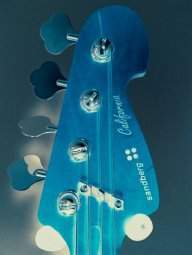
I have one for nearly 10 years (stingray) and it's a workhorse built like a tank, it's not even heavy on batteries. Lovely fat neck and THAT sound punches through the mix every time. Roll off the treble and it's a very versatile bass that can be played to almost any music. Cons: sounds a bit 'hard' doesn't have the woody tone of a pbass. Mine weighs a ton, it's alder, I guess swamp ash would be lighter. Overall, worth every penny.

Have you considered a Sterling Ray 34? For $729, they are only 1/2 the price of a Sting Ray, and I believe the only difference is that the Sterling Ray is manufactured in Indonesia which is probably why they're cheaper, due to lower labor costs.

Same here. Well, other than the basses: a Midnight Blue 4 and a Honeyburst fretless in my case, but I love them both. Were they inexpensive? Er, no. Were they worth it: hell yeah! Both were absolutely lovely to play the moment I picked them up: and I know I've no realistic worries about them. No complaints here: I'm a happy girl. Except for my endlessly insatiable GAS, of course.I own a beautiful EBMM Stingray Classic 5 in retroburst. I did not buy it as a financial investment, I simply love it for what it is.
A lot of people might think they're expensive because they are mis-interpeted as a "one trick pony" that's only good for slap and hard rock. To that I say, check out the dual pickup models, the HS (humbucker single) in particular. They are plenty versatile.
But of course they don't sound like a P bass. If you want that sound, you should buy a P bass. Every player should have at least one P bass!
But when you want something a little different, that's high quality, and that won't cost $3,500 and up like a Lakland? EBMM is there for you. A Stingray costs $220 more than an American Standard P ($1,250 for the P, $1,470 for the Ray) and for that price difference you get active electronics.
What about that is over priced? If anything Fender's prices have gotten a bit high for passive basses!
But of course they don't sound like a P bass. If you want that sound, you should buy a P bass. Every player should have at least one P bass!
But when you want something a little different, that's high quality, and that won't cost $3,500 and up like a Lakland? EBMM is there for you. A Stingray costs $220 more than an American Standard P ($1,250 for the P, $1,470 for the Ray) and for that price difference you get active electronics.
What about that is over priced? If anything Fender's prices have gotten a bit high for passive basses!

A lot of people might think they're expensive because they are mis-interpeted as a "one trick pony" that's only good for slap and hard rock. To that I say, check out the dual pickup models, the HS (humbucker single) in particular. They are plenty versatile.
Or better yet, check your technique. Versatility is also in the player.

I'm still trying to get my head around the idea that the OP bought a bass 15 years ago for $750, sold it for $2200, and THEN gripes that he can't find one for $750!
I'm a recent owner of a '99 SR5, and it is an excellent bass. If you don't like the sound, get something else. If you don't want to pay the price, don't buy one.
I paid $900 for mine, and I consider it a bargain. This is the first and only SR5 have seen around here for under a grand. Market values are funny things. I bought a '63 Gretsch Chet Atkins Country Gentleman for $425 in 1982, and sold it for $3100 in 2007. By the next year, the bottom had dropped out and I'd see Country Gents on eBay with 0 bids, page after page. I got lucky.
The OP got lucky, and now he wants to get lucky again. Nothing wrong with that, but the odds are against it happening.
I'm a recent owner of a '99 SR5, and it is an excellent bass. If you don't like the sound, get something else. If you don't want to pay the price, don't buy one.
I paid $900 for mine, and I consider it a bargain. This is the first and only SR5 have seen around here for under a grand. Market values are funny things. I bought a '63 Gretsch Chet Atkins Country Gentleman for $425 in 1982, and sold it for $3100 in 2007. By the next year, the bottom had dropped out and I'd see Country Gents on eBay with 0 bids, page after page. I got lucky.
The OP got lucky, and now he wants to get lucky again. Nothing wrong with that, but the odds are against it happening.


