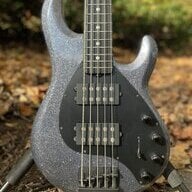
Looks like you've gotten some pretty good advice so far, but I figured I'd chime in. I've had a StingRay Special 4H since 2019 - it was bought new and from the first run I believe. In the past, I have used EB Hybrid Slinkys as my round wound string for my basses, but the stock EB Super Slinkys really suit the Special in my opinion. I have used them ever since the stock strings were replaced.
My special was setup by my trusted luthier to the specs I am comfortable with and that I use on all my other basses. I'll list the details below, but obviously these are specs I like and may not be suitable for others. I like to play with low-medium action where I can pop the strings when playing aggressive, but play with no/minimal fret buzz with a lighter touch. I play finger-style 80% of the time.
- Neck: I set my necks to between 0.008-in and 0.010-in as measured by a feeler gauge at the 7th or 8th fret on the E string while the first fret is depressed via capo and the fret right at the body is depressed. In the case of the Special, I depress the 17th fret.
- Bridge: My saddles follow the typical alignment where the E saddle is farthest back and the G saddle is closer to the neck; the A and D saddles are roughly staggered in this alignment or are near equal as intonation requires.
- Action: I measure action from the top of the 12th fret to the bottom of the open string - no strings are depressed. I typically aim for 6/64-in at the E, 5.5/64-in at the A, 5/64-in at the D, and 4/64-in at the G (i.e. 3/32-in to 2/32-in). Minor adjustments are then made for each particular bass.
- Shim: Using the measurements above, my particular Special did not require a shim (or the factory shim was sufficient, I have not inspected). Saddles had plenty of room to move without bottoming out. That being said, if you are close to bottoming out, I have found that the saddles screws can be loose and subject to movement, therefore a shim is needed to add additional tension.
- Pickup: I use factory recommended guides for pickup height after the above adjustments are made. My special did not need additional adjustment for an even sound. I understand the Special pickups are particularly strong and can benefit from some distance from the strings.
- Strings: I discussed my string preference previously, but I take care to make sure that I have at least two windings on the string post and that the strings have a pronounced downward angle behind the nut.
- Misc: After each adjustment (neck, saddle distance, saddle height, etc in that order) I make sure to tune to pitch and examine intonation. Each guitar will require instrument-specific adjustments.
Assuming there are no significant issues with the neck or frets, the above should provide you with a decent baseline for setup. Again, these are specific to me. I am sure there are others who do things differently or who would disagree with some of my statements - that's perfectly fine.
Most folks probably set their basses up until they feel right and could care less about the measurements. I'm an engineer with OCD, so measurements it is. As I tell myself, if it feels good, play the dang thing or else you're wasting your time.