• TalkBass has been independent since 1998. Add your voice.
    Create a free account to reply to discussions, view embedded media, and browse with fewer display ads.
    Join freeLog in
    Want zero display ads or expanded classifieds tools? Compare plans.

Entry level bass is total BS?

Hey guys and gals! I'm a bit perplexed and perturbed. What is the deal with the term "entry level bass"?! Entry level to me is code for "cheap". I understand not many of us have a Warwick Corvette with SVT full stack with a board full of pedals with MIDI budget but really, ENTRY level? I think the term does a disservice to the beginner. You go out you buy an insert your who's who brand here and BAM! All of a sudden the beginner is spending more time at the GC butcher, I mean repair technician spending there pennies instead of learning! IMHO the places that all of these guys go wrong is in the electronics and the bridge! The electronics will work right if the assembly is correct and come on for pete's sake use better hardware for the bridge saddles! Rant over and always friends, Keep 'em straight up there!
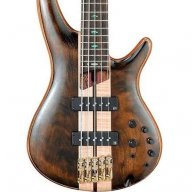
I've bought a ton of entry level basses. Never needed a single guitar tech.

Maybe 30 years ago there was shoddy workmanship, but in my experience, today, price doesnt have a lot of bearing on this. Most of the problems I've had have been with more expensive basses.
 
  • Like
Reactions: Tom Young and pcake
Some reasons that I'm glad my first instrument, a bass, was cheap entry level.
When I was getting used to just handling it I would do jack-ass things like.... forget I was plugged in and yank the cord. Lean it against something and watch is slide and slam onto the floor. Straight up trip over it while getting the strap stuck in the stand. Jam headstock into drywall, mic stands, tables low ceilings. ...I'm really glad I started with crappy instruments. It probably should have come with a helmet and pads.
 
Hey guys and gals! I'm a bit perplexed and perturbed. What is the deal with the term "entry level bass"?! Entry level to me is code for "cheap". I understand not many of us have a Warwick Corvette with SVT full stack with a board full of pedals with MIDI budget but really, ENTRY level? I think the term does a disservice to the beginner. You go out you buy an insert your who's who brand here and BAM! All of a sudden the beginner is spending more time at the GC butcher, I mean repair technician spending there pennies instead of learning! IMHO the places that all of these guys go wrong is in the electronics and the bridge! The electronics will work right if the assembly is correct and come on for pete's sake use better hardware for the bridge saddles! Rant over and always friends, Keep 'em straight up there!
Beginner is the target consumer. I think Beginner is somewhere between $80 and $500 depending on your parents income. $1,000 is pretty sweet for a beginner, must be nice to start that high. I had friends in High school with their action jacked up to an inch, with the whole string wound around the machine head in a huge mess. My first electric guitar had completely wore out frets so I jacked the action up half an inch. It didn't stay in tune either.
 
The only reason people quit is because they don't want it enough.

I think that’s a pretty gross oversimplification of what goes on when somebody first gets into music and later decides to drop it. I know the whole Horatio Alger and As Man Thinketh positive affirmation mythology tells us that anything you desire is achievable if you want it enough. But that's really not true. There are realities (financial constraints, unavoidable time-consuming responsibilities, health and physical stamina, and lack of qualified instructors, etc.) that, in a fairly large number of cases, you can't simply wish - or push yourself past - despite all the magical thinking you can muster.

As I've explained to some would be musicians, desire isn't enough. You also need the resources and tools to make a go of it without wasting huge amounts of time and frustration over it. And while it's very true that sometimes the basic lack of commitment or discipline is the real culprit, that alone isn't always the case.

Maybe we can all work and try a little harder than we sometimes do. But to say the only reason somebody quits is because they don't want it enough is just flat out wrong based on some of what I've seen in the course of my lifetime.

Too much too soon sinks a small minority. But too little too long is what I've seen as the thing that causes most people to either quit or fail at something.

But that's just my own feeling. I won't be offended if some choose to disagree.
 
I have been playing bass for 43 years and have had many basses... boutique, high end, expensive, American made, Fenders, Alembics, Smith, Carvin, Rickenbacker, and the list goes on and on. I just picked up this "entry level bass" and LOVE it... probably the only Precision Bass I'll ever own. I bought a custom tortoise shell pickguard and bridge ashtray cover... awesome backup bass!!;
IMG_20171214_091137185.jpg
IMG_20171214_091142823.jpg
IMG_20171214_091154902.jpg
 
When I play guitar, it's often a 1980s Squier Bullet that's been modified over the years. Entry level, but sounds and plays great. No problem.

The drum kit I play all the time is a late '60s off-brand entry level kit made by Pearl in Taiwan. That's because it was made in an era when Japanese meant cheap, but this kit was even cheaper. It sounds fantastic to me, jujst like a splatty old Pearl kit is supposed to sound.

So much for entry level. Give it time. What's entry level now will be funky and retro someday. It doesn't mean bad.
 
  • Like
Reactions: Tom Young
It's not code. It's overt.

Are you against the designation or the existence entry level basses? Short of setup, what "repairs" are all these entry level basses requiring to function?

+1

the cheapest basses typically just need a decent setup. The pickups may not be great, etc, but it will make a sound, a sound that you can use at a gig anywhere, and they're not going to crumble under your fingers or anything. I hear a lot of people moaning about the tuners and bridge and needing to replace them when they're absolutely ok. A lot fewer moan about the nut, which is something I'd often replace on those instruments... go figure ;)
 
Hey guys and gals! I'm a bit perplexed and perturbed. What is the deal with the term "entry level bass"?! Entry level to me is code for "cheap". I understand not many of us have a Warwick Corvette with SVT full stack with a board full of pedals with MIDI budget but really, ENTRY level? I think the term does a disservice to the beginner. You go out you buy an insert your who's who brand here and BAM! All of a sudden the beginner is spending more time at the GC butcher, I mean repair technician spending there pennies instead of learning! IMHO the places that all of these guys go wrong is in the electronics and the bridge! The electronics will work right if the assembly is correct and come on for pete's sake use better hardware for the bridge saddles! Rant over and always friends, Keep 'em straight up there!

entry level instruments allow a younger and typically financially more restricted person to get into making music.

Yes, they have limitations, yes, they don't use the best components... but with very few exceptions, they're instruments I would happily play a gig or 50 with. Mostly, they need a little 'love': the fret ends may be a bit sharp, the nut may not be best cut making a set uf hard, levels typically benefit from levelling... etc... Nothing particularly complicated or even expensive to do if you can't do it yourself. Electronics? Yeah, you may get pickups that don't sound the best, but they will work. At worst, you may get pickups that are microphonic which is a real nuisance in a loud environment... you can buy a cheap replacement set for peanuts that will do the job, if it comes to that. It will work. Bridge? What problems do you have with bridges in cheap instruments? They're remarkably simple affairs, typically, and even the softer metal used in many definitely does the job.

An entry level instrument is a hell of a lot better than no instrument.
 
Entry level applies to many industries. Not just bass guitars. In the musical instrument industry, it is referring to instruments designed, built, and marketed towards students 'entering' the world of musical study. Entry level cars, homes, etc exist and share similar marketing traits. It is not intended to be insulting or indicative of poor quality. It is intended to define the market audience so there is no confusion as to whether the seller is marketing the item as it's entry, mid market, or premium product. That's all there is to it.
 
My personal view of it is not so much the designation or existence as it is the liberal use of the term by the manufacturer. In my opinion I feel the manufacturers use sub par parts and poor quality control practices. I've encountered many beginning musicians quickly lose interest in what I consider to be one of the most amazing activities to have ever been discovered by humans. This being due to random parts affecting quality of sound and playability. To elaborate, items like bridge saddles being stripped and losing tune or loss of action or tuners not being properly fastened. The biggest foul that I have personally seen is poor ground in the control cavity. I could go on and on but thanks for the reply!

all those are very cheap and easy things to fix, and the vast majority of entry level instruments don't suffer from that.

Learning to play an instrument is not just learning the mechanics and the musical aspect of it, but its mechanics. If you play trumpet, you will also learn to disassemble the valves and clean everything properly, oil the moving parts, etc... if you don't, that trumpet won't work well for long.
Same goes for an electric guitar. Education. Maybe we should help educate the newer players about those aspects, and fuel less their GAS for another instrument (they'll get there soon enough for sure).

My very first guitar was a very battered instrument, I was something like the 5th or 6th owner, having belonged to various other kids in the neighbourhood. In those days, a Fender was something that we could only dream of. My guitar was a cheap Japanese instrument that looked the part but was not very well made. Still... it worked, and proof of that was that the frets were very worn out by the time I got it (previous users used it a lot). My guitar strings buzzed. My cousin, a knowitall who by virtue of being older we all listened to, said the nut slots were too low and the guitar was screwed up, I was wasting my time with it, I made a mistake.
It broke my little heart because there was no way I could afford a 'good' instrument any time soon. Instead of giving up, 'though, I kept playing it because I was not willing to not play. Eventually, I met other people who had a clue, and from them I learn that a guitar can be adjusted in many many ways. My worn frets were a limitation and I could not afford to have them levelled but at least I knew that they could be fixed and it was not that expensive. And I took care of the nut, and learnt what the truss rod did, and the poor quality tuners were ok once I had a decent nut in place... and I got it set up with friends and it became playable. And I learnt that potentiometers could be cleaned... and replaced if needed, for pennies. And I learnt to change the circuitry and made the bridge pickup on my strat copy to have its own tone control, which is a mod I do on every strat to this day. And later got the frets levelled for less than I even thought at the time... and that guitar was perfectly useable, with limitations... but I learnt a lot, and what I learnt stayed with me since.

Entry level instruments have their point, and with a little education their 'problems' become non problems 9 out of 10 times.
 
  • Like
Reactions: Tom Young