• TalkBass has been independent since 1998. Add your voice.
    Create a free account to reply to discussions, view embedded media, and browse with fewer display ads.
    Join freeLog in
    Want zero display ads or expanded classifieds tools? Compare plans.

Epiphany: I've been playing my 5 like a 4 with an extra string

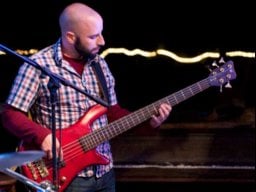
I was watching a bassist play and he looked so effortless because he rarely moved his hand. His hand always hovered around the 8th or 10th fret, like a statue.

Then a light bulb went on in my head and I realized I've been playing my 5er like a 4-string down by the nut using open strings as much as possible. I've never really embraced the 5th string.

So, I'm going to take all my band's songs (about 50 songs) and transpose the notes up around the 10th fret and use the B string regularly.

When watching that bassist, I noticed that he used open strings regularly but in a different way. It's a mental shift.

Any advice on "where" I should strive to place my hand? I'm thinking I should keep my hand around the C scale beginning with 8th fret on the B string.
 
I only play 4's so this may be off the wall but I remember a video Fodera did about a year ago where a highly accomplished bassist talked about how to easily view string interrelationships to facilitate moving between 4, 5, 6, and 7 string basses. Worth searching for. Perhaps someone here has better memory and can recall more detail on how to locate the video?
 
  • Like
Reactions: jdthaddeus
It’s not only what is the easiest. It is more what sounds the best. Some parts just sound better on the E string (more focused sound). Whereas for other lines the B string up high sounds fine. So sound should come first. Unless you play a very fast lick that is technically better possible in one position or so.
This ^^^

I love my fiveer. Yet, I play all over... for sound. In certain songs, I want the longest string possible. In others, short is fine and I'm up higher.

Know thy fretboard, I keep telling myself.

.
 
I was watching a bassist play and he looked so effortless because he rarely moved his hand. His hand always hovered around the 8th or 10th fret, like a statue.

Then a light bulb went on in my head and I realized I've been playing my 5er like a 4-string down by the nut using open strings as much as possible. I've never really embraced the 5th string.

So, I'm going to take all my band's songs (about 50 songs) and transpose the notes up around the 10th fret and use the B string regularly.

When watching that bassist, I noticed that he used open strings regularly but in a different way. It's a mental shift.

Any advice on "where" I should strive to place my hand? I'm thinking I should keep my hand around the C scale beginning with 8th fret on the B string.


Here's my story. I got my first five string back in Y2K. I was struggling a bit playing songs I was already comfortable with on four string -- I was frequently off by one string (a common goof when transitioning). Extremely fortunately for me, a couple months after I got my fiver I joined a new band that played a whole bunch of material I was not familiar with. So, I decided to learn that material on five -- and found that it was easier for me to learn new songs on five than it was to remap songs I could play in my sleep on four.

My light bulb moment: in the course of learning these new songs on five, I realized that the greatest strength of the B string wasn't the five notes below low E, it was having greater range in each fingering position: a full two octaves rather than an octave and a half. In the 26 years I've been on five string, I've played the low B string at the 5th fret and above -- where it's in 4 string territory -- more than I do below low E.

The extra range means less position shifting. I still can when I want to: for example I often scoot upstream to play a high fill on the D string rather than the G (fatter tone on the D). But when I'm reading a chart, it's convenient to avoid position shifting when possible.

As for where to play: there is no universal answer, it will vary from song to song. Choose the fingering position that results in the least position shifting -- that'll be "home", so to speak. You won't be able to avoid position shifting, but you can minimize it. I've done this with many songs I played for years on four string. I sometimes play them five frets up on the neck, but one string down: when I get intonation right on a bass, my low A for a song can be 10th fret B string.
 
While it's easy to approach a five as a 'four with an extra string' when first transitioning to five from four, this needs to be put to bed as soon as possible: You're short-changing and limiting yourself.

A five string bass and a four string bass (much less a six) are similar instruments, but utterly different: Different fingerings. Bigger neck and fingerboard. Possibly will require more amp. By far the biggest difference is it's far easier to play across the fingerboard than the shifts/up and down the fingerboard the same song might require on a four string. Transposing is generally far easier, just move up or down a fret or two, and a lot of the down tuned music may not require you to retune at all: A lot of Van Halen era rock in E-flat, you got it made.

Past that, I can't put it any better than Fuzzbass' post above.

All the Best

JW
 
Do what sounds best for the material. The tonality changes depending on where you play on the neck, on the strings. Think of how different a low G on the E string sounds compared to up on the B string. You have a whole 'nuther tonal palette up there to work with (even on a Dingwall;)). Even if you're on a fiver, sometimes shifting around on a part as you would have done on a 4 string is what the song needs sonically, vibe-wise. The five string bass isn't just about a few more low notes or convenience in navigating the neck.

 
I find myself treating various basses almost like utterly different instruments, albeit similarly tuned. In my original rock band I play 4 string and use a fair amount of open strings because it suits the material. When I play fretless I utilize open strings for reference and when I play my recently acquired 6 string, I rarely play an open string. All instruments seem to compliment each other and switching back and forth greatly improves my ear. I'm relying on my ears and intuition more and find my playing becoming more fluid. I guess if I HAD to pick just one instrument I'd go w/ the 6 string for the broad range. Hopefully you'll find a way to incorporate your "extra" string in a musical way~
 
Lots of good advice here, all of it aimed at positional playing on a five - absolutely, I rarely use the notes below E, but it’s fun that you can! There is not a single “home base” for me, I use the whole thing pretty much.

Still, since you asked: My “rest point” is around the fifth fret. My aging shoulders are still delighted that I no longer have to reach for E, F, or Bb! I’ll still often seek out G on the E string for the root. I don’t think I’d like anchoring way up high like you first described.
 
  • Like
Reactions: pyrat56host
It’s not only what is the easiest. It is more what sounds the best. Some parts just sound better on the E string (more focused sound). Whereas for other lines the B string up high sounds fine. So sound should come first. Unless you play a very fast lick that is technically better possible in one position or so.
I agree with this. 8th fret and on the B-string sounds very tubby on a lot of 5-strings. It’s useful but I wouldn’t want to live up there unless I was playing a 37” Dingwall.

Like Les said, I’d suggest you do what sounds best. I think it’s better to move your fretting hand around regularly anyway. It takes a lot of practice to have the skill to move it up and down the neck quickly and accurately. I think it’s more important to have good horizontal fretboard skills than to maximize the number of notes you can play from one position.
 
  • Love
Reactions: Les Fret
Only a couple covers I need that low B, I incorporate it in most of my noodling jams.

Otherwise, it's brilliant as an anchor for my E string as I do floating thumb that I anchor the string above what I'm playing.

I also personally like the look and feel of a Fiver, so everything I have is a 5.

Only problem is a couple vintage basses I want like the Ibanez RB950 is 4 only.
 
  • Like
Reactions: jdthaddeus
Yep. Exactly this. 5th fret on B is E, so you’ll likely spend a good amount of time there - you’ll have access to two octaves of fretted notes with minimal hand position adjustment.
Yes, that's what I found out! I didn't even use my brain like I should have....I just started playing around the 7th fret and realized "Hey! The fifth fret layout looks just like the nut layout on a 4 string!" lol. Duh.

As someone else said earlier. I've found that about half my songs sound better played higher on the frets, and some sound better played near the nut.
 
I'm enjoying expanding my tonal palette as I explore the different tones available between different areas of the fret board.

I've also been expanding my plucking dynamics. A new trick I learned is (if a song starts of soft), is that I pluck the first measures on the fret board for that soft attack, then move toward the neck pickup as the song picks up power.

You all probably know that but my band mates have been really complimenting my playing since I've been exploring these new fret choices and plucking dynamics.
 
  • Like
Reactions: joeLowB