When you guys connect your line out on your amp to the sound system, do you like to send the signal pre or post EQ, and why?

TalkBass has been independent since 1998. Add your voice.
Create a free account to reply to discussions, view embedded media, and browse with fewer display ads.
Join free Log in
Want zero display ads or expanded classifieds tools? Compare plans.

When you guys connect your line out on your amp to the sound system, do you like to send the signal pre or post EQ, and why?
.... Your EQ is likely tailored for your stage rig to your liking ...
This is why I like a stage speaker cabinet that is as near to flat as possible (with the assumption that the PA speakers are flat.) That way I can EQ to sound how I want to on stage and know that (in theory) the sound I hear on stage and send out will be the same as what comes out of the PA without much tweaking. I know there are a lot of assumptions in this, but I feel it is good in theory.
There's no rules. I'm also a sound person. I'd prefer a nice bass tone with all of your effects, and amp sim if there's any.
That being said, many sound engineers will ask you to send a pre EQ-DI signal. That's because:
A) bass players like to mess with their settings during a gig,
and/or
B) their settings are useless (too boomy, too hallow, too noisy, too quiet, too loud, etc.)
if you do any of the above, then leave it clean for the sound person. If you know what you're doing, send a post DI.
IMHO Effects should definitely be captured in the FOH feed. As a player when you send effects and post EQ, you can't consider your sound sacred IMHO. You need to be willing and ready to make reasonable compromise. You may have an effect that sound fabulous on stage, but it's way too wet for the house mix. Or you may have a huge low end that sounds and feels great 3' from you rig, but sounds like an incoherent muddy mess beyond 8'. Sometimes compromise means reducing the amount of degradation, rather than making the bass sound better. Nobody wants the bass to sound bad IMHO.
One way around working compromises with the audio tech is for them to take both pre and post signals. That way if you effects are too wet or if you tone is not contoured well for house use, they have an unprocessed signal they can mix in.
In generally I would typically prefer mic'ing a cab over post EQ. A speaker SIM or IR Loader could be useful for post EQ especially if it authentically represents your stage sound. If it does not represent your sound, it may make the audio tech's job harder.


When you guys connect your line out on your amp to the sound system, do you like to send the signal pre or post EQ, and why?


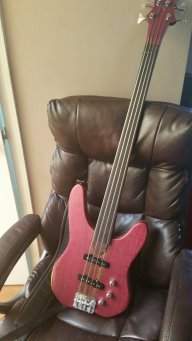
All my gigs are ampless. My "amp" is a pedalboard. Sort of - you can also think of it as me playing an active bass, but the preamp is on my pedalboard. What I send has an EQ on it (which is different for each bass), but the amount of EQ that's on there is less than you'd get boing through a tone stack in an amplifier, with one exception - one of my basses is Stingray-esque - one pickup similar location, and there is more eq on that bass, becaause....just like a Stingray, the thing needs a fair amount of eq to sound right (the eq in a Sting Ray, when the tone controls are at center detents, is NOT flat, or even close).
Anyway, it works. I do church gigs, and have played at a dozen locations, with a few dozen sound engineers. I get compliments on how my bass sounds; noone has ever asked for a signal pre-eq.
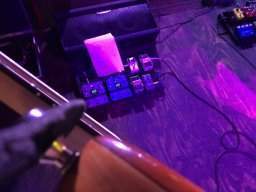

I send my di from my pedal board. My amp is just for me.When you guys connect your line out on your amp to the sound system, do you like to send the signal pre or post EQ, and why?
summary-sound guys are generally lazy with bass







